_edited.png)
Loka Lalitha Ambika
Yantras & Sadhanas
.png)
.png)
.png)
.png)
.png)


Mudra

Abhaya Mudra – The Gesture of Fearlessness & Divine Assurance
Abhaya Mudra is one of the most profound and universally recognized hand gestures (hasta mudrā) in the spiritual and tantric traditions of India. The word “Abhaya” comes from Sanskrit—“a” (absence) + “bhaya” (fear), meaning “fearlessness” or “protection from fear.” In this mudra, the right hand is raised to shoulder level, palm facing outward, fingers upright. This is not merely symbolic—it represents a direct transmission of śakti (divine energy) of assurance, protection, and stability from the deity or sādhaka. Energetically, it activates the Anāhata (heart chakra) and harmonizes prāṇa flow, dissolving inner भय (fear), doubt, and मानसिक चंचलता (mental restlessness).
Usage in Sādhanā & Tantric Context
Abhaya Mudra is widely used across Vedic, Tantric, Yogic, and Bhakti sādhanās. It appears prominently in the upāsanā of deities such as Shiva, Vishnu, Durga, Lakshmi, Ganesha, and even in Buddhist iconography of Gautama Buddha. It is especially invoked in:
-
Deity Avāhana (invocation rituals) – to establish a protective spiritual field
-
Nyāsa & Kavacha practices – for subtle body shielding
-
Mantra Japa & Dhyāna – to stabilize the mind and remove subconscious fear
-
Tantric Sādhanas (especially Devi & Bhairava upāsanā) – to neutralize unseen बाधाएँ
In higher tantric kriyās, the mudra is not merely shown—it is “charged” (āveśa) with mantra śakti and bhāva (intent), becoming an active spiritual tool.
Invocation Method & Energetic Activation
To properly invoke Abhaya Mudra in sādhanā:
-
Sit in a stable āsana (like Siddhāsana or Padmāsana).
-
Raise the right hand to chest/shoulder level, palm outward.
-
Keep fingers naturally extended (not stiff).
-
Internally chant a bīja mantra (like “ॐ”, “ह्रीं”, “श्रीं”, or deity-specific mantra).
-
Visualize divine light radiating from the palm, forming a protective aura around you.
Advanced sādhakas combine this with prāṇa-pratiṣṭhā, where the mudra becomes a channel of divine will (icchā śakti). It is often synchronized with breath retention (kumbhaka) and dr̥ṣṭi (focused gaze) to intensify its impact.
Scriptural References & Authentic Sources
Abhaya Mudra is not a modern construct—it is deeply rooted in classical texts and iconography:
-
Natya Shastra – describes hand gestures (hasta mudrās) and their meanings
-
Agamas – details deity iconography and ritual gestures
-
Vishnudharmottara Purana – explains murti lakṣaṇa (iconographic rules)
-
Buddhist texts like the Lalitavistara Sutra – depict Buddha using Abhaya Mudra to calm fear
These scriptures emphasize that mudras are not decorative—they are energetic seals (mudrā = seal/lock) controlling subtle forces.
Purpose, Benefits & Impact in Sādhanā
The use of Abhaya Mudra in spiritual practice yields both subtle (adhyātmic) and practical (laukika) benefits:
-
Removes fear & anxiety – stabilizes emotional and mental fields
-
Creates a protective aura (rakṣā kavacha) – especially useful in tantric sādhanas
-
Enhances mantra siddhi – by aligning intention with energy flow
-
Strengthens willpower (icchā śakti) and आत्मविश्वास (self-confidence)
-
Neutralizes negative influences – including graha pīḍā, unseen बाधाएँ, and psychic disturbances
During intense sādhanā, this mudra acts as a spiritual command gesture, signaling authority over inner and outer energies.
Beyond Deity Worship – Broader Applications
Abhaya Mudra is not limited to deity invocation. It is also used in:
-
Spiritual healing practices (like Reiki or pranic healing) – to transmit calming energy
-
Meditation therapy – for trauma release and grounding
-
Temple rituals & blessings by Gurus – symbolizing divine assurance
-
Classical dance (Bharatanatyam, etc.) – expressing protection and compassion
For an advanced sādhaka, this mudra becomes a state of consciousness, not just a hand gesture—where one radiates fearlessness and divine protection naturally.

Amṛta Mudra – The Gesture of Nectar, Immortality & Inner Elixir

Amṛta Mudra derives from the Sanskrit word “Amṛta”—meaning nectar of immortality, divine elixir, or soma tattva. In yogic and tantric understanding, this mudra is associated with the flow of subtle nectar (bindu/amṛta) from higher consciousness centers, particularly from the Sahasrāra and Bindu Visarga, descending into the subtle body to nourish and rejuvenate it. Unlike Abhaya Mudra (which projects outward protection), Amṛta Mudra is deeply internalized, focusing on preservation, rejuvenation, and transcendence of decay (jara–maraṇa tattva). It is often symbolically linked to deities holding the amṛta-kalaśa (nectar pot), especially Dhanvantari, Shiva, and certain forms of Devi.
Usage in Sādhanā & Tantric Context
Amṛta Mudra is primarily used in higher yogic and tantric sādhanās, especially those dealing with Kundalini awakening, soma preservation, and internal alchemy (rasa sādhana). It is commonly integrated into:
-
Kundalini Sādhanā & Chakra Dhyāna – to activate nectar flow from Sahasrāra
-
Khecarī Mudrā practices – where the tongue seals the upward flow, preventing amṛta “loss”
-
Śiva–Śakti Tantras – especially in subtle body rejuvenation and अमृत सिद्धि practices
-
Dhyāna of immortality (Amaratva bhāva) – transcending bodily limitations
This mudra is not widely used in basic पूजा, but rather in esoteric internal practices, often under Guru guidance. It aligns closely with bindu preservation, a key principle in advanced Tantra and Hatha Yoga.
Invocation Method & Energetic Activation
Amṛta Mudra can be practiced in both hasta (hand gesture) and internal yogic form:
Hasta Form (External Gesture):
-
Sit in Padmāsana or Siddhāsana.
-
Join the tips of thumb, ring finger, and little finger (variations exist), while other fingers remain relaxed.
-
Place hands on knees (chin or jñāna mudra variation may blend).
-
Focus awareness on crown (Sahasrāra) or Bindu point (back of head).
Internal Form (Advanced – True Amṛta Activation):
-
Practice Khechari Mudra
-
Combine with prāṇāyāma (especially kumbhaka)
-
Visualize cool, luminous nectar dripping down the spine (suṣumnā nāḍī)
-
Chant subtle bīja mantras like “सोम”, “ह्रीं”, “ॐ अमृताय नमः”
Here, the mudra becomes a psychic seal, preventing the dissipation of life-force and enabling ojas and tejas enhancement.
Scriptural References & Authentic Sources
Amṛta Mudra and its deeper concepts are referenced across yogic and tantric scriptures:
-
Hatha Yoga Pradipika – explains Khecarī Mudrā and nectar preservation
-
Gheranda Samhita – details mudrās for longevity and अमृत अनुभव
-
Shiva Samhita – discusses bindu, nāḍīs, and immortality principles
-
Agamas – symbolic depiction of nectar and divine sustenance
In Samudra Manthana (cosmic churning), amṛta is the essence of divine immortality, and these mudras are seen as microcosmic replication of that cosmic process within the human body.
Purpose, Benefits & Impact in Sādhanā
Amṛta Mudra offers profound spiritual and energetic benefits, especially for advanced practitioners:
-
Rejuvenation & longevity (āyur vardhana) – slows degeneration
-
Enhancement of Ojas & Tejas – vital essence and spiritual radiance
-
Deep mental cooling & शांतता – balances excess fire (pitta) and मानसिक अशांति
-
Supports higher states of meditation (dhyāna → samādhi)
-
Awakens blissful states (ānanda rasa) through inner nectar अनुभव
During sādhanā, it creates a continuous inner nourishment cycle, reducing dependency on external stimuli and stabilizing consciousness.
Beyond Deity Worship – Broader Applications
Amṛta Mudra extends beyond ritual into healing, longevity, and internal mastery:
-
Used in Ayurvedic and yogic healing systems for restoring vitality
-
Practiced by advanced sādhakas for fasting support (reducing hunger/thirst)
-
Helps in hormonal balance & nervous system regulation
-
In Tantra, it is linked to rasa siddhi—mastery over bodily fluids and energies
It is important to understand that true Amṛta Mudra is less about the hand and more about inner alchemy. Without proper guidance, its deeper states remain dormant.

Aṅga Nyāsa Mudrā – The Sacred Gesture of Energizing the Divine Body
Usage in Sādhanā & Tantric Context
Aṅga Nyāsa Mudrā is indispensable in almost all higher sādhanās, especially in:
-
Mantra Sādhanā & Japa Anuṣṭhāna – before beginning mantra repetition
-
Deity Upāsanā (Avāhana & Pūjā) – preparing the body as a divine seat
-
Tantric Sādhanas (Mahāvidyā, Bhairava, Śrī Vidyā) – for full शरीर शुद्धि & ऊर्जा जागरण
-
Kavacha & Protection Rituals – installing energetic shields in body parts
-
Homa & Yantra Pūjā – ensuring the sādhaka becomes a योग्य माध्यम (fit channel)
It is widely applied for deities such as Durga, Kali, Bhairava, Vishnu, Shiva, and Ganesha. In reality, any mantra-devatā sādhanā requires Nyāsa as a preparatory and activation step.
Invocation Method & Energetic Activation
Aṅga Nyāsa follows a precise क्रम (sequence) where specific parts of the body are touched with mudrā while chanting mantra fragments. A common structure is:
-
Hṛdaya (Heart) – touch chest: “ॐ [mantra] हृदयाय नमः”
-
Śiras (Head) – touch head: “… शिरसे स्वाहा”
-
Śikhā (Crown/Back of head) – “… शिखायै वषट्”
-
Kavacha (Shoulders/armor) – “… कवचाय हुं”
-
Netra (Eyes) – “… नेत्रत्रयाय वौषट्”
-
Astra (Entire body/gesture outward) – “… अस्त्राय फट्”
The fingers used may vary depending on the tradition (often middle + ring finger or specific hasta combinations). Advanced sādhakas visualize each अंग becoming luminous with mantra śakti, effectively transforming the body into a yantra of the deity. Breath (prāṇa), visualization (bhāva), and mantra (śabda) must align for full activation.
Scriptural References & Authentic Sources
Aṅga Nyāsa is deeply rooted in classical scriptures and tantric systems:
-
Agamas – detailed procedures of Nyāsa in temple and personal worship
-
Rudra Yamala Tantra – extensive Nyāsa methods in Bhairava sādhanā
-
Kularnava Tantra – emphasizes Nyāsa as essential for mantra siddhi
-
Devi Bhagavata Purana – includes Nyāsa in Devi worship procedures
These texts clearly state that without Nyāsa, mantra remains external; with Nyāsa, mantra becomes embodied (देहधारी शक्ति).
Purpose, Benefits & Impact in Sādhanā
The role of Aṅga Nyāsa Mudrā is transformational, not symbolic:
-
Divinizes the body (Devatā–tādātmya) – aligning self with deity
-
Activates subtle energy centers (nāḍī & chakra stimulation)
-
Creates a protective kavacha against negative or hostile energies
-
Enhances mantra siddhi speed & effectiveness
-
Improves concentration, grounding, and ritual precision
During sādhanā, the practitioner no longer feels separate from the deity—the body itself becomes a living altar (चैतन्य वेदी). This dramatically increases the power, safety, and परिणाम (outcome) of the practice.
Beyond Deity Worship – Broader Applications
Aṅga Nyāsa extends beyond formal rituals into deeper spiritual mastery:
-
Used in self-healing and prāṇic alignment practices
-
Applied before important life actions (yātra, decisions, rituals) for protection
-
Forms the basis of advanced Nyāsa systems like Kara Nyāsa, Hridayādi Nyāsa, and Chakra Nyāsa
-
In higher Tantra, it evolves into full-body mantra encoding, enabling siddhis and heightened awareness
For a serious sādhaka, Aṅga Nyāsa is not optional—it is a gateway from external worship to internal realization.
Aṅga Nyāsa Mudrā is not a single static hand gesture, but a system of sacred mudrās combined with mantra and touch, used to install (nyāsa = placing) divine energy into different parts of the body (aṅga = limbs). In Tantra and Mantra Śāstra, this is a foundational प्रक्रिया where the sādhaka transforms the physical body into a Deva Śarīra (divine body). Each touch, accompanied by specific mantras, acts as an energetic coding mechanism, aligning the शरीर with mantra vibration and deity consciousness. Unlike external mudrās, Aṅga Nyāsa is interactive and ritualistic, directly linking body, mantra, and consciousness.
Aṅkuśa Mudrā – The Gesture of Control, Direction & Divine Command

Aṅkuśa Mudrā derives from the Sanskrit word “Aṅkuśa”—the elephant goad, a sacred instrument used to guide and control a powerful force. In spiritual symbolism, it represents the ability to direct, restrain, and channel energies—both internal (mind, senses, desires) and external (situations, forces, entities). As a mudrā, it is typically formed by curling the index finger like a hook while other fingers support the gesture, symbolizing a commanding pull or नियंत्रण शक्ति (control power). Unlike Abhaya (protection) or Amṛta (nourishment), Aṅkuśa Mudrā is about authority, दिशा (direction), and शक्ति-नियंत्रण (energy governance).
Usage in Sādhanā & Tantric Context
Aṅkuśa Mudrā is primarily used in Tantric and Mantra-based sādhanās where control, attraction, or direction of energies is required. It is especially prominent in the upāsanā of:
-
Ganesha – who holds the aṅkuśa to guide devotees and remove obstacles
-
Durga and Tripura Sundari – representing control over cosmic forces
-
Bhairava – in fierce sādhanās requiring नियंत्रण over subtle realms
It is used in:
-
Vashya / Akarṣaṇa (attraction and influence) rituals
-
Energy निर्देशन (direction) during mantra japa or yantra activation
-
Tantric kriyās for controlling wandering mind (indriya nigraha)
-
Advanced rituals involving command over subtle forces or बाधा निवारण
This mudrā is rarely used in simple devotional pūjā; it belongs more to kriyā-oriented and result-driven sādhanā systems.
Invocation Method & Energetic Activation
To invoke Aṅkuśa Mudrā effectively:
-
Sit in a stable meditative posture.
-
Form the mudrā by bending the index finger like a hook, with thumb supporting it (variations exist).
-
Keep other fingers gently folded or extended depending on lineage.
-
Direct the mudrā outward or toward a yantra/deity image.
-
Chant a specific mantra (often with “हूं”, “फट्”, or deity bīja) while focusing intent.
Energetically, the mudrā acts as a “hook” that captures and redirects prāṇa or subtle vibrations. Advanced practitioners combine it with dṛṣṭi (focused gaze) and saṅkalpa (clear intention) to exert influence over internal states or ritual outcomes. It is often synchronized with forceful exhalation or kumbhaka to intensify control.
Scriptural References & Authentic Sources
Aṅkuśa Mudrā and its symbolism are referenced in multiple tantric and iconographic sources:
-
Kularnava Tantra – discusses control of energies and ritual gestures
-
Rudra Yamala Tantra – includes mudrās used in Bhairava sādhanā
-
Agamas – detail deity attributes like aṅkuśa and associated gestures
-
Vishnudharmottara Purana – iconographic descriptions of divine weapons and symbols
The aṅkuśa itself is a divine आयुध (weapon/tool), and its mudrā form is considered a subtle extension of that शक्ति.
Purpose, Benefits & Impact in Sādhanā
Aṅkuśa Mudrā is powerful and should be used with clarity and discipline, as its effects are direct:
-
Enhances control over mind and senses (indriya nigraha)
-
Helps in directing energy toward a लक्ष्य (goal)
-
Removes obstacles by forceful redirection of energy
-
Strengthens willpower (icchā śakti) and command authority
-
Supports advanced tantric kriyās involving attraction, नियंत्रण, or बाधा शमन
During sādhanā, it creates a focused and commanding energetic field, ensuring that scattered energies are brought under conscious direction.
Beyond Deity Worship – Broader Applications
Aṅkuśa Mudrā also has applications beyond ritual worship:
-
Used in meditation to discipline the mind and stop distractions
-
Applied in energy healing systems to “pull out” blockages or redirect flow
-
Symbolically represents self-mastery and leadership over one’s life forces
-
In higher Tantra, it is linked to śakti-sañcālana (movement/control of energy currents)
However, unlike calming or protective mudrās, Aṅkuśa Mudrā carries a directive and sometimes intense ऊर्जा, so it is best practiced with proper understanding or Guru guidance.
Arghya Mudrā – The Gesture of Offering, Reverence & Surrender
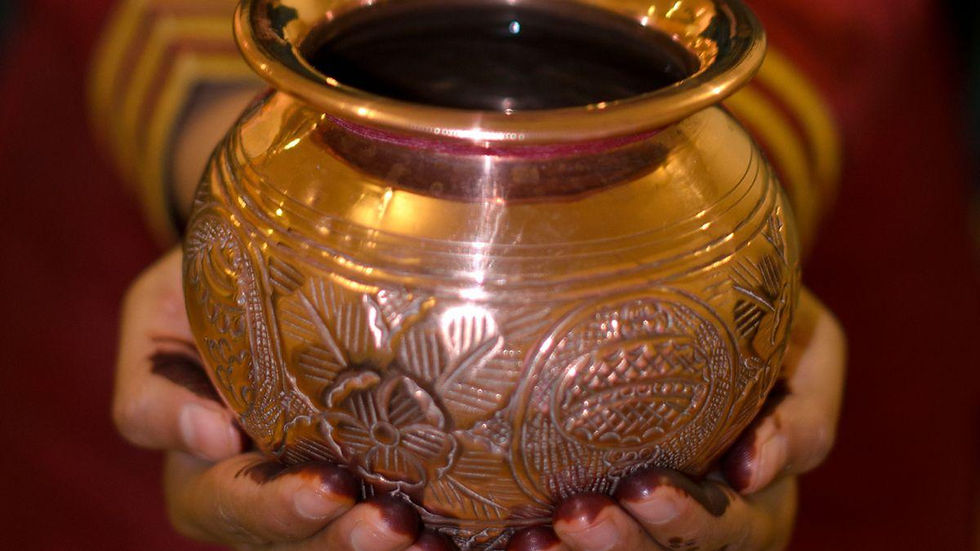
Arghya Mudrā is a sacred hand gesture (hasta mudrā) symbolizing offering, devotion, and surrender to the divine. The term “Arghya” in Sanskrit literally means “sacred offering”—traditionally water, flowers, rice, or light presented to a deity during pūjā or ritual. In mudrā form, the hands are cupped or brought together, palms facing upward, sometimes slightly forward, representing the devotee’s complete surrender and willingness to receive divine grace. Energetically, this mudrā aligns the heart (Anāhata) and head (Sahasrāra) centers, facilitating a smooth flow of prāṇa and bhakti energy, and enhancing receptivity to blessings.
Usage in Sādhanā & Tantric Context
Arghya Mudrā is primarily used in Bhakti, Puja, Yantra, and mantra-based sādhanās where the practitioner offers material or subtle offerings to invoke the deity’s presence.
Its applications include:
-
Deity Avāhana & Pūjā rituals – as the hands present the symbolic arghya (water, rice, flowers, or light)
-
Yantra pūjā – when offering energy or mantras to sacred diagrams
-
Mantra Sādhanā – for amplifying receptivity and creating a channel for divine blessings
-
Tantric sādhanā of Devi, Ganesha, Vishnu, Shiva, or Bhairava – especially when symbolic offerings are involved
This mudrā is associated with Devi (Durga, Lakshmi, Saraswati), Ganesha, Vishnu, Shiva, and Dhanvantari. In ritual practice, it is often paired with mantra chanting to imbue the offering with energy, effectively transforming a simple gesture into a spiritual transmission.
Invocation Method & Energetic Activation
To properly perform Arghya Mudrā:
-
Sit or stand in a respectful posture (Siddhāsana or standing in front of the deity).
-
Cupped hands are held at chest or waist level, palms upward.
-
Visualize the offering as pure light, water, or essence of devotion, flowing from your hands toward the deity.
-
Chant the appropriate offering mantra—for example, “Om Arghya Namah” or deity-specific bija/mantra.
-
Mentally dedicate the offering, establishing connection between your intention, energy, and the divine presence.
In advanced tantric sādhanā, the mudrā can be “charged” with prāṇa and mantric vibration, turning it into a medium for energetic exchange—where the practitioner both offers and receives divine śakti simultaneously.
Scriptural References & Authentic Sources
Arghya Mudrā is mentioned and exemplified in numerous classical texts:
-
Agamas – details hand gestures for offering and worship
-
Shiva Purana – prescribes arghya offerings and mudra placement in pūjā
-
Vishnudharmottara Purana – iconographic and ritual instructions for offering gestures
-
Devi Bhagavata Purana – shows Devi upāsanā incorporating arghya offerings
These scriptures emphasize that mudrā, mantra, and bhāva together convert a simple gesture into a powerful energetic offering, creating a direct spiritual channel between devotee and deity.
Purpose, Benefits & Impact in Sādhanā
Arghya Mudrā offers multiple benefits, both spiritual and practical:
-
Facilitates surrender (prāṇayoga of bhakti) – cultivates humility and receptivity
-
Enhances mantra efficacy – the offering gesture channels mantric energy
-
Strengthens devotional connection – transforms intention into divine communication
-
Creates protective and sanctified aura – when combined with visualization and mantra
-
Balances heart and crown energies – calming the mind and opening for grace
During sādhanā, this mudrā ensures that the practitioner’s act of devotion is consciously energetic, rather than mechanical, allowing blessings, protection, and siddhi to flow naturally.
Beyond Deity Worship – Broader Applications
Although primarily used for devotional offerings, Arghya Mudrā also finds applications in:
-
Energy transmission practices – as a symbolic offering of prāṇa in Reiki or pranic healing
-
Meditation for surrender and gratitude – cultivating openness and receptivity
-
Teaching and blessing by Gurus – where the mudrā represents giving and receiving shakti
-
Spiritual psychology – helps develop emotional balance, humility, and receptivity to abundance
In essence, Arghya Mudrā is a gesture of giving and receiving simultaneously, creating energetic reciprocity in any spiritual practice.
Astra Mudrā – The Gesture of Divine Force, Precision & Manifestation

Astra Mudrā comes from the Sanskrit word “Astra” meaning divine weapon. Symbolically, this mudrā represents focused energy, decisive action, and the projection of spiritual force. In tantric and yogic practice, Astra Mudrā is used to direct prāṇa or mantra energy toward a specific objective, much like a deity launching a divine weapon to remove obstacles, destroy negativity, or manifest desired results. The hand is often shaped with the index finger extended (representing precision) and the thumb aligned to symbolize control), while other fingers are folded or slightly open depending on the lineage.
Unlike Abhaya (protection) or Arghya (offering), Astra Mudrā is dynamic and outwardly projecting, functioning as an energetic arrow that channels focused willpower and intention into the external or subtle realms.
Usage in Sādhanā & Tantric Context
Astra Mudrā is primarily used in rituals and sādhanās requiring precise energy direction and obstacle removal. Typical applications include:
-
Bhairava, Kālī, and Durga Sādhanā – projecting energy to destroy negative influences
-
Mantra Sādhanā for siddhi or result-oriented practices – activating mantras with intent and force
-
Yantra activation – directing energy into specific yantra points or grids
-
Spiritual warfare rituals – neutralizing harmful subtle forces or adversities
Deities commonly associated with Astra Mudrā include Kali, Bhairava, Durga, and Vishnu in some cosmic weapon symbolism. In essence, any deity representing decisive action, protection, or energy projection can be invoked using this mudrā.
Invocation Method & Energetic Activation
To perform Astra Mudrā effectively:
-
Sit in a stable posture (Padmāsana, Siddhāsana) or stand if projecting outward energy.
-
Form the mudrā: extend the index finger as the “arrow” and align thumb for control; remaining fingers folded.
-
Visualize a concentration of energy or mantra śakti gathering at the tip of the index finger.
-
Chant a bīja mantra associated with the deity (e.g., “हूं फट्” for Bhairava, “क्लीं” for Durga).
-
Direct the energy mentally toward the goal—whether it is obstacle removal, protection, or spiritual manifestation.
Energetically, Astra Mudrā acts as a prāṇic arrow—focused, precise, and powerful—activating the body as a channel for divine force. Advanced sādhakas often synchronize this mudrā with breath retention (kumbhaka), dhyāna, and visualization of the deity’s weapon to amplify results.
Scriptural References & Authentic Sources
Astra Mudrā and its application are discussed in tantric, yogic, and iconographic texts:
-
Agamas – gestures of energy projection in deity worship
-
Rudra Yamala Tantra – detailed mudrās for invoking Bhairava and Kālī energy
-
Kularnava Tantra – use of Astra and other energy-directing mudrās in mantra siddhi
-
Vishnudharmottara Purana – iconography of weapons and symbolic gestures
These scriptures clarify that the hand gesture functions as both an internal and external weapon, amplifying intention and mantra vibrations.
Purpose, Benefits & Impact in Sādhanā
Astra Mudrā provides practical and spiritual benefits, particularly for focused and result-oriented sādhanā:
-
Removes obstacles (physical, mental, and subtle)
-
Enhances precision and direction of spiritual energy
-
Strengthens willpower and focused intention
-
Increases effectiveness of mantra siddhi and yantra activation
-
Protects the practitioner from negative subtle forces
When used during sādhanā, this mudrā sharpens mental clarity, directs prāṇa efficiently, and manifests desired outcomes faster, acting like a divine instrument in the hands of a practitioner.
Beyond Deity Worship – Broader Applications
While primarily associated with deity-based rituals, Astra Mudrā also serves in:
-
Focused meditation and intention practices – targeting mental or spiritual obstacles
-
Energy healing or subtle body interventions – projecting concentrated energy to affected areas
-
Manifestation sādhanā – consciously directing divine or prāṇic forces toward specific goals
-
Spiritual protection and purification rituals – dispersing negativity from surroundings
In essence, Astra Mudrā is both symbolic and functional, enabling the practitioner to embody the force, authority, and precision of divine weapons.
Avaguṇṭhana Mudrā – The Gesture of Concealment, Protection & Stabilization

Avaguṇṭhana Mudrā is a sacred hand gesture whose name comes from “Avaguṇṭhana”, meaning covering, concealing, or shielding. In spiritual practice, this mudrā symbolizes protection, stabilization, and containment of divine energy within the practitioner or ritual space. Unlike Abhaya (fearlessness) or Arghya (offering), Avaguṇṭhana Mudrā is introverted, used to enclose, stabilize, or shield the sādhaka and the energies being invoked. It is often formed by placing one hand over the other, palms inward, or cupping hands in a layered fashion, representing the act of holding, concealing, and focusing energy safely.
Energetically, it works as a protective seal, ensuring that the subtle powers activated during sādhanā do not dissipate or scatter, maintaining energetic integrity and concentration.
Usage in Sādhanā & Tantric Context
Avaguṇṭhana Mudrā is applied in Tantric, Mantra, and Deity Sādhanā where energy preservation, internalization, and subtle protection are required:
-
Deity Pūjā & Avāhana rituals – to stabilize the invoked deity’s energy within the sādhaka’s mandala
-
Tantric Mantra Sādhanā – when activating potent bija mantras or yantras
-
Shakti Sādhanā (Devi, Bhairavi, Kālī) – to contain rising prāṇa and avoid energy leakage
-
Homa / Havan rituals – to keep ritual energy directed and concentrated
This mudrā is particularly associated with deities like Kali, Durga, Bhairavi, and Bhairava. In principle, it can be used for any deity or energy work where containment, protection, and internalization of subtle energy are needed.
Invocation Method & Energetic Activation
To perform Avaguṇṭhana Mudrā correctly:
-
Sit in a stable posture (Padmāsana, Siddhāsana, or Vajrāsana).
-
Place one hand over or slightly in front of the other, palms inward, forming a layered protective seal.
-
Visualize a sphere or shield of light surrounding your energy field or the ritual space, safely containing the activated energies.
-
Chant deity-specific or protective mantras while maintaining the mudrā. Common bija mantras include “हूं फट्”, “क्लीं”, or “त्रां त्रिंग् त्रौम” depending on lineage.
-
Keep attention on breath and prāṇa flow, ensuring energy does not escape and the body becomes a sanctified vessel (shakti dhāra).
This mudrā is particularly effective during advanced Nyāsa and mantra activation, acting as an energetic lock.
Scriptural References & Authentic Sources
Avaguṇṭhana Mudrā is mentioned in classical tantric and ritualistic texts:
-
Rudra Yamala Tantra – protective and containment mudrās in Bhairava sādhanā
-
Kularnava Tantra – internalization and safeguarding of mantra energies
-
Agamas – detailed description of mudrās for energy containment
-
Devi Bhagavata Purana – protecting and internalizing divine energies during sādhanā
These texts emphasize that without containment mudrās like Avaguṇṭhana, activated energy may scatter or create imbalance, making the practice ineffective or unsafe.
Purpose, Benefits & Impact in Sādhanā
Avaguṇṭhana Mudrā provides protective, stabilizing, and integrative benefits:
-
Prevents energy leakage during mantra or yantra sādhanā
-
Shields the practitioner from external negative influences
-
Maintains focus and concentration, especially in high-energy practices
-
Supports internalization of deity energy, turning the body into a divine vessel
-
Stabilizes rising prāṇa and subtle forces within the body
During sādhanā, the practitioner feels secure, grounded, and energetically aligned, allowing powerful rituals or mantras to manifest safely and effectively.
Beyond Deity Worship – Broader Applications
While primarily for deity-centered sādhanā, Avaguṇṭhana Mudrā is also used in:
-
Energy protection practices – shielding oneself or space from disturbances
-
Meditation and subtle energy internalization – consolidating prāṇa or spiritual power
-
Advanced tantric kriyās – containing potent forces before manifestation
-
Healing rituals – as a stabilizing mudrā to hold and direct energy to affected areas
Essentially, Avaguṇṭhana Mudrā functions as a sacred energetic lock, keeping divine or subtle forces safely within the practitioner or ritual field, and is crucial for high-level tantric and mantra sādhanā.
Āvāhana Mudrā – The Gesture of Invocation, Invitation & Divine Presence

Āvāhana Mudrā derives from the Sanskrit word “Āvāhana”, meaning invocation, calling, or summoning. This sacred hand gesture is used in spiritual practice to invite a deity, subtle force, or cosmic energy into a ritual space, yantra, or the practitioner’s own consciousness. Typically, the mudrā involves hands slightly forward, palms open or cupped, with fingers gently extended or slightly bent, symbolizing receptivity and a welcoming stance. Energetically, Āvāhana Mudrā acts as a channel through which divine shakti enters and manifests, harmonizing the devotee’s energy with the deity’s presence.
Unlike Abhaya (protection) or Astra (projection), Āvāhana Mudrā is introductive, meant to draw in, welcome, and manifest divine energies, making it foundational for all deity invocation sādhanās.
Usage in Sādhanā & Tantric Context
Āvāhana Mudrā is primarily used in Tantric, Mantra, and Deity Sādhanā where direct contact with the deity or subtle energies is sought:
-
Deity Avāhana rituals – invoking Ganesha, Devi, Shiva, Vishnu, or Bhairava before worship or mantra recitation
-
Yantra Sādhanā – activating the yantra by inviting the presiding deity or shakti
-
Mantra Sādhanā – calling divine energy into the practitioner for siddhi and protection
-
Homa / Havan rituals – summoning the deity or fire energy into the ritual field
Deities commonly associated with Āvāhana Mudrā include:
-
Ganesha – as the remover of obstacles
-
Durga, Lakshmi, and Saraswati – for activating grace and abundance
-
Bhairava – for protective or fierce energy invocation
It can be used for any deity or subtle force in Tantric sādhanā where invocation is required, making it universally applicable across traditions.
Invocation Method & Energetic Activation
To perform Āvāhana Mudrā correctly:
-
Sit in a stable meditative posture (Padmāsana, Siddhāsana).
-
Extend hands forward slightly, palms open or cupped, fingers relaxed but intentional.
-
Visualize the deity or energy entering your space and filling your hands and consciousness.
-
Chant the appropriate invocation mantra or bija, for example: “Om Ganapataye Namah”, “Om Hreem Kleem Shreem”, or deity-specific seed mantras.
-
Maintain focused attention on energy reception and alignment, ensuring your mind-body system becomes a vessel for divine presence.
Energetically, this mudrā acts as a magnet, drawing subtle forces into the ritual field or practitioner’s aura. Combined with Nyāsa, mantra, and visualization, it facilitates full activation of the deity’s shakti within the practitioner.
Scriptural References & Authentic Sources
Āvāhana Mudrā is detailed in classical Tantric and ritual texts:
-
Agamas – prescribes mudrās for deity invocation and activation
-
Kularnava Tantra – describes gestures for summoning and internalizing divine shakti
-
Rudra Yamala Tantra – emphasizes precise hand gestures for deity Avāhana and mantra effectiveness
-
Devi Bhagavata Purana – outlines ritual procedures for inviting and pleasing Devi through gestures and offerings
These scriptures emphasize that gesture, mantra, and intention together manifest the deity within the sādhanā space, ensuring the practice is energetically potent and safe.
Purpose, Benefits & Impact in Sādhanā
Āvāhana Mudrā provides spiritual and energetic advantages:
-
Facilitates deity presence in yantra, ritual space, or practitioner consciousness
-
Enhances mantra efficacy and siddhi by directing divine shakti inward
-
Purifies and sanctifies the space and the practitioner
-
Strengthens receptivity and devotion (bhakti)
-
Serves as a foundation for all advanced tantric practices by ensuring the energy is correctly invoked
During sādhanā, using Āvāhana Mudrā creates a stable, focused, and receptive energetic field, allowing the practitioner to merge with the deity’s shakti and experience siddhi.
Beyond Deity Worship – Broader Applications
While primarily for deity invocation, Āvāhana Mudrā also serves in:
-
Energy alignment and meditation – drawing cosmic energy or universal prāṇa
-
Ritual and healing practices – calling subtle forces into a specific space or system
-
Spiritual guidance practices – symbolically “inviting” wisdom or guidance from higher consciousness
-
Mantra and yantra empowerment – activating objects or spaces with divine energy
Essentially, Āvāhana Mudrā is a universal gesture of invitation, creating energetic receptivity and alignment with higher powers.
Dhyāna Mudrā – The Gesture of Meditation, Concentration & Inner Stillness

Dhyāna Mudrā is the classical hand gesture used in meditation and tantric sādhanā to cultivate concentration, mental stability, and inner stillness. The term “Dhyāna” in Sanskrit means meditation or focused contemplation, and this mudrā embodies the balance of mind, body, and prāṇa. Traditionally, it is formed by placing both hands on the lap, right hand over left, palms facing upwards, with thumbs lightly touching, forming a subtle oval or triangle. Energetically, Dhyāna Mudrā channels prāṇa inward, stabilizes mental fluctuations, and harmonizes subtle energies, creating an ideal state for mantra chanting, deity visualization, or yogic absorption.
Unlike Abhaya Mudrā (protection) or Deepa Mudrā (illumination), Dhyāna Mudrā is passive and receptive, focusing on internalization, stillness, and meditative depth.
Usage in Sādhanā & Tantric Context
Dhyāna Mudrā is primarily used in:
-
Meditative Sādhanā – for mantra japa, visualization, or contemplation of a deity
-
Deity Sādhanā – aligning the practitioner’s mind and subtle body with the energetic presence of the deity
-
Tantric rituals – during Nyāsa, yantra worship, or mantra energization where inner focus is critical
-
Prāṇāyāma and Kundalini practices – to steady prāṇa flow while focusing on chakras
Common deities associated with Dhyāna Mudrā include:
-
Buddha – as the classical meditation deity
-
Shiva – particularly in yogic meditation forms
-
Saraswati – for meditative knowledge and clarity
This mudrā is universally applicable in any sādhanā requiring deep concentration or inner absorption, making it one of the most foundational mudrās in tantric and yogic practice.
Invocation Method & Energetic Activation
To perform Dhyāna Mudrā:
-
Sit in a stable meditative posture (Padmāsana, Siddhāsana, Vajrāsana, or Sukhasana).
-
Place the right hand over the left hand, palms facing upward, with thumbs gently touching to form a triangle or subtle oval.
-
Rest hands lightly on the lower abdomen or lap, maintaining relaxed shoulders and an erect spine.
-
Focus the mind on:
-
Breath awareness – inhalation and exhalation
-
Deity or mantra visualization – enhancing subtle energy alignment
-
Chakra focus – commonly Anāhata (heart) or Ajna (third eye)
-
-
Maintain inner stillness, receptive awareness, and prāṇic alignment throughout the practice.
Energetically, Dhyāna Mudrā stabilizes prāṇa in the body, enhances concentration, and amplifies mantra and deity siddhi.
Scriptural References & Authentic Sources
Dhyāna Mudrā is described in classical tantric and yogic texts:
-
Shiva Samhita – mudrā for meditation and prāṇic stability
-
Gheranda Samhita – techniques for inner absorption using hand gestures
-
Kularnava Tantra – mudrās to harmonize energy for sādhanā
-
Agamas – mudrā application during deity worship and meditation
These texts emphasize that gesture, breath, and focused awareness together enable deep meditation, concentration, and subtle energy harmonization.
Purpose, Benefits & Impact in Sādhanā
Dhyāna Mudrā provides profound spiritual benefits:
-
Enhances concentration and mental clarity
-
Stabilizes prāṇa and subtle energies
-
Facilitates deeper connection with deity and mantra siddhi
-
Promotes inner stillness, intuition, and awareness
-
Prepares the practitioner for advanced tantric or yogic absorption
During sādhanā, using Dhyāna Mudrā ensures focused meditation, energetic alignment, and enhanced spiritual receptivity, laying the foundation for all advanced practices.
Beyond Deity Worship – Broader Applications
Apart from deity invocation, Dhyāna Mudrā is also used in:
-
Mindfulness meditation – cultivating inner stillness and presence
-
Energy alignment practices – balancing subtle energies and chakras
-
Mantra or sound sādhanā – enhancing concentration for japa or bija mantras
-
Kundalini and yogic practices – controlling prāṇa while focusing on chakra awakening
Essentially, Dhyāna Mudrā is the foundational mudrā of meditation, enabling mental clarity, spiritual stability, and deep inner absorption, and is indispensable in both Tantric and Yogic sādhanā.
Digbandhana Mudrā – The Gesture of Directional Binding & Protective Energy
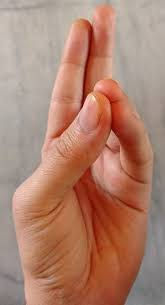
Digbandhana Mudrā is a tantric hand gesture whose name literally means “binding of directions” (Dig = directions, Bandhana = binding). This mudrā is primarily used to invoke protective energies, stabilize prāṇa, and contain or control directional forces during sādhanā. The practitioner forms the gesture in a way that symbolically locks or channels the energies from all eight directions (or more, depending on the ritual), creating a protective energetic boundary around themselves or a sacred space. Energetically, Digbandhana Mudrā anchors the practitioner’s subtle body, preventing dissipation of energy, and harmonizes the directional prāṇa (dik-śakti).
Unlike Dhyāna Mudrā (inner stillness) or Deepa Mudrā (illumination), Digbandhana Mudrā is dynamic and protective, often employed in rituals requiring energetic containment, invocation of guardians, or protective sādhanā.
Usage in Sādhanā & Tantric Context
Digbandhana Mudrā is primarily applied in:
-
Protective Sādhanā and Shaiva/Shakta tantric rituals – binding negative energies and stabilizing the ritual space
-
Deity invocation – especially guardian deities of directions (Lokapālas)
-
Yantra or Mandala Activation – ensuring energy remains within the sacred geometric boundaries
-
Mantra Sādhanā – supporting efficacy by preventing energetic leakage
Common deities associated with Digbandhana Mudrā include:
-
Kubera – controlling and safeguarding wealth energies
-
Indra – directional and protective energy alignment
-
Dikpāla – for specific directional protection in rituals
It can also be adapted to any sādhanā or yantra work requiring containment, protection, or directional control, making it a key mudrā in advanced tantric practice.
Invocation Method & Energetic Activation
To perform Digbandhana Mudrā:
-
Sit in a stable meditative posture (Padmāsana, Siddhāsana) or stand during ritual application.
-
Form the mudrā by positioning fingers and hands to symbolize energy binding—commonly interlocking fingers or connecting thumb and ring fingers while visualizing energy circuits from all directions.
-
Visualize energetic currents from all directions being drawn into the mudrā, stabilized, and harmonized.
-
Combine with protective mantras, such as Om Hreem Kleem Namah, or deities’ bija mantras depending on the ritual.
-
Maintain focus on directional energy stabilization, protection, and containment throughout the sādhanā.
Energetically, this mudrā prevents prāṇa leakage, creates a protective shield, and harmonizes subtle directional energies, enhancing the practitioner’s safety and ritual efficacy.
Scriptural References & Authentic Sources
Digbandhana Mudrā is mentioned in classical Shaiva and tantric texts:
-
Agamas – mudrās for deity protection and space sanctification
-
Rudra Yamala Tantra – prescribes directional mudrās for binding energies during rituals
-
Kularnava Tantra – gestures for protective sādhanā and energy containment
-
Shiva Samhita – discusses hand gestures for stabilizing prāṇa and subtle energies
These texts emphasize that gesture, visualization, and mantra together create a secure, harmonious, and protected energetic environment, which is essential for advanced sādhanā.
Purpose, Benefits & Impact in Sādhanā
Digbandhana Mudrā provides several benefits:
-
Protects the practitioner and ritual space from negative energies
-
Stabilizes prāṇa and directional energies (dik-śakti)
-
Enhances mantra and yantra effectiveness by containing energy
-
Supports invocation of protective deities and guardians
-
Prevents dissipation of subtle energies during sādhanā
During sādhanā, using Digbandhana Mudrā ensures safety, energetic stability, and focused spiritual practice, particularly in rituals involving powerful mantras, yantras, or directional energies.
Beyond Deity Worship – Broader Applications
Apart from deity invocation, Digbandhana Mudrā is also used in:
-
Protective sādhanā – warding off negative influences during meditation or ritual
-
Energy containment in tantric or yantra rituals – maintaining subtle energy within sacred space
-
Prāṇic stabilization for advanced yogic practices – controlling the flow and circulation of prāṇa
-
Meditation requiring energy anchoring – preventing scattered or unbalanced mental and subtle energies
Essentially, Digbandhana Mudrā serves as a gesture of protective containment, harmonizing directional energies and safeguarding both practitioner and sādhanā.
Gada Mudrā – The Gesture of Power, Strength & Protection

Gada Mudrā is a symbolic hand gesture representing the “Gada” (mace or club), a divine weapon associated with power, authority, and protection. In Sanskrit, Gada signifies strength, control, and the ability to remove obstacles. This mudrā is typically formed by clenching the hand as if holding a mace, often with the forearm slightly extended, symbolically projecting energy outward to subdue negative forces and protect the practitioner. Energetically, Gada Mudrā channels the practitioner’s prāṇa into a concentrated, protective force, invoking courage, fortitude, and spiritual power.
Unlike Dhyāna Mudrā (inner stillness) or Deepa Mudrā (illumination), Gada Mudrā is active and assertive, emphasizing energetic projection, protection, and the destruction of obstacles or negativity.
Usage in Sādhanā & Tantric Context
Gada Mudrā is primarily used in:
-
Tantric rituals requiring protection – especially when invoking energy to ward off negativity
-
Deity invocation – particularly for warrior deities or deities associated with strength and courage
-
Mantra sādhanā – amplifying assertive and protective energies in mantric practices
-
Yantra or sacred object energization – focusing prāṇa to empower protective yantras
Common deities associated with Gada Mudrā include:
-
Vishnu – wielding his symbolic gada for protection and dharma
-
Hanuman – for courage, strength, and victory
-
Durga – representing power to overcome obstacles
It can also be adapted for any sādhanā requiring courage, protection, or removal of energetic obstacles, making it a versatile mudrā in advanced tantric and yogic practice.
Invocation Method & Energetic Activation
To perform Gada Mudrā:
-
Sit or stand in a stable posture, depending on ritual context.
-
Form the mudrā by clenching the fist as if holding a mace, with the forearm slightly extended or angled outward, projecting energy.
-
Visualize the energy of divine strength flowing through the fist, radiating outward to dispel obstacles and negative energies.
-
Combine with appropriate protective mantras, such as:
-
“Om Namo Bhagavate Vasudevaya” for Vishnu
-
“Om Hanumate Namah” for Hanuman
-
-
Maintain focus on protection, courage, and the destruction of spiritual obstacles during sādhanā.
Energetically, Gada Mudrā strengthens willpower, amplifies protective energy, and focuses subtle energy toward removing negativity.
Scriptural References & Authentic Sources
Gada Mudrā is referenced in several classical tantric and ritual texts:
-
Agamas – mudrās for protective and empowering rituals
-
Kularnava Tantra – gestures representing divine weapons and their energy
-
Rudra Yamala Tantra – hand gestures for activating protective and assertive energies
-
Vishnu Purana – descriptions of Vishnu wielding gada, symbolic of divine authority and protection
These sources emphasize that gesture, visualization, and mantra together manifest the energy of divine power and protection, critical in advanced sādhanā.
Purpose, Benefits & Impact in Sādhanā
Gada Mudrā provides multiple benefits:
-
Strengthens spiritual and mental fortitude
-
Protects the practitioner from negative energies and influences
-
Enhances focus, courage, and assertive energy in sādhanā
-
Supports deity invocation with protective and warrior aspects
-
Removes obstacles and stabilizes prāṇa during ritual practice
During sādhanā, using Gada Mudrā ensures energetic protection, enhanced confidence, and effective obstacle removal, making the practitioner empowered and energetically fortified.
Beyond Deity Worship – Broader Applications
Apart from deity invocation, Gada Mudrā is also used in:
-
Protective sādhanā – safeguarding self and ritual space
-
Energy projection and assertion practices – channeling prāṇa outward for clearing negativity
-
Mantra and yantra empowerment – energizing protective yantras and ritual tools
-
Courage and confidence cultivation – internal fortification in spiritual practice
Essentially, Gada Mudrā serves as a gesture of power, protection, and divine authority, enabling the practitioner to invoke strength, remove obstacles, and assert spiritual energy safely and effectively.
Garuḍa Mudrā – The Gesture of Swift Protection, Victory & Divine Mobility

Garuḍa Mudrā is a tantric and ritual hand gesture symbolizing the “Garuḍa”, the divine eagle and vahana (vehicle) of Vishnu, representing speed, protection, and the swift removal of obstacles. In Sanskrit, Garuḍa is associated with powerful, protective, and purifying energies, able to carry and elevate the practitioner’s sādhanā to higher planes. The mudrā is typically formed by interlocking the thumbs and fingers in a way that resembles wings or a grasping eagle, symbolizing control over energies, rapid clearance of negativity, and divine protection. Energetically, Garuḍa Mudrā mobilizes prāṇa swiftly, removes stagnant energies, and invokes the protective qualities of Garuḍa, creating a dynamic shield around the practitioner.
Unlike Dhyāna Mudrā (passive absorption) or Gada Mudrā (strength), Garuḍa Mudrā is kinetic and protective, emphasizing swift spiritual action and energetic clearing.
Usage in Sādhanā & Tantric Context
Garuḍa Mudrā is primarily used in:
-
Protective Sādhanā and Shakti rituals – to remove obstacles and negative influences quickly
-
Deity invocation – particularly with Vishnu or Garuḍa-oriented rituals
-
Yantra and Mantra activation – to accelerate the flow of prāṇa and energize protective yantras
-
Tantric and esoteric sādhanā – enhancing mobility, swiftness, and agility in subtle energy control
Common deities associated with Garuḍa Mudrā include:
-
Vishnu – invoking Garuḍa as his vahana for protection
-
Garuḍa – directly, for protective and purifying energies
-
Hanuman – occasionally, to symbolize agility and swift removal of obstacles
It can also be applied in any sādhanā requiring rapid purification, protection, or energetic mobilization, making it highly versatile in advanced tantric practice.
Invocation Method & Energetic Activation
To perform Garuḍa Mudrā:
-
Sit in a stable meditation posture or stand if required for ritual application.
-
Form the mudrā by interlacing fingers and thumbs to mimic the grasping wings of Garuḍa, keeping the hands slightly raised or centered at the heart or chest level.
-
Visualize divine Garuḍa energy enveloping the space, purifying, protecting, and swiftly removing obstacles.
-
Combine with protective mantras such as:
-
“Om Namo Bhagavate Vasudevaya”
-
Garuḍa bija mantra: Om Garuḍāya Namah
-
-
Maintain focus on rapid energetic clearing, divine protection, and elevated prāṇa flow throughout the sādhanā.
Energetically, this mudrā mobilizes prāṇa swiftly, removes stagnant or negative energies, and establishes a dynamic protective shield.
Scriptural References & Authentic Sources
Garuḍa Mudrā is documented in classical tantric and ritual texts:
-
Agamas – for deity protection and energetic purification
-
Kularnava Tantra – prescribing mudrās for invoking vahanas and dynamic energies
-
Rudra Yamala Tantra – detailing mudrās to remove obstacles and activate protective energies
-
Vishnu Purana – mentions Garuḍa as a divine vehicle and protective agent
These sources emphasize that gesture, visualization, and mantra together invoke protective and mobile divine energy, critical for advanced sādhanā.
Purpose, Benefits & Impact in Sādhanā
Garuḍa Mudrā offers several key benefits:
-
Rapid removal of obstacles and negative influences
-
Protection of practitioner and ritual space
-
Enhancement of spiritual swiftness and prāṇa mobility
-
Increased efficacy of mantras and yantra energization
-
Invokes divine guardianship and purification energies
During sādhanā, Garuḍa Mudrā ensures energetic protection, rapid purification, and dynamic spiritual empowerment, making the practitioner resilient, alert, and energetically agile.
Beyond Deity Worship – Broader Applications
Apart from deity invocation, Garuḍa Mudrā is also used in:
-
Rapid energetic clearing of spaces or subtle bodies
-
Protective sādhanā for warding off psychic or negative influences
-
Yantra activation requiring swift prāṇa mobilization
-
Meditation and yogic practices needing energetic agility and focus
Essentially, Garuḍa Mudrā serves as a gesture of swift protection, energetic clearing, and divine mobility, allowing the practitioner to invoke rapid purification and protective energies safely and effectively.
Hr̥daya Mudrā – The Gesture of Heart, Devotion & Inner Purity

Hr̥daya Mudrā is a sacred hand gesture symbolizing the heart (Hr̥daya), representing love, devotion, purity of emotions, and the awakening of the spiritual heart center (Anāhata Chakra). In Sanskrit, Hr̥daya literally means “heart,” and this mudrā is used to cultivate emotional balance, divine love, and spiritual receptivity. It is typically performed by touching the tips of the index fingers and thumbs together while keeping the other fingers relaxed and slightly curved, forming a triangular or heart-shaped energetic field over the chest region. Energetically, Hr̥daya Mudrā channels prāṇa into the heart center, harmonizes emotional energies, and opens the practitioner to divine consciousness and devotional attunement.
Unlike Abhaya Mudrā (protection) or Gada Mudrā (strength), Hr̥daya Mudrā is receptive, devotional, and purifying, focusing on the awakening of inner love, devotion, and spiritual empathy.
Usage in Sādhanā & Tantric Context
Hr̥daya Mudrā is primarily used in:
-
Bhakti and devotional sādhanā – for cultivating love, surrender, and connection with the deity
-
Meditative practices – to focus on the heart center, chakras, or Anāhata energy
-
Tantric rituals emphasizing inner purification and emotional harmonization
-
Mantra sādhanā for devotion, compassion, or selfless service energies
Common deities associated with Hr̥daya Mudrā include:
-
Krishna – for devotion and divine love
-
Radha – representing surrender and emotional devotion
-
Saraswati – for purity of heart, knowledge, and inspiration
This mudrā can also be applied in any sādhanā requiring purification of emotions, devotional focus, or heart-centered spiritual awakening, making it indispensable in Bhakti Tantra and yogic meditative practices.
Invocation Method & Energetic Activation
To perform Hr̥daya Mudrā:
-
Sit in a comfortable meditative posture (Padmāsana, Sukhasana, or Vajrāsana).
-
Bring hands to the chest region.
-
Touch the tips of the thumbs and index fingers together, forming a triangle or heart-shaped field over the chest.
-
Keep the remaining fingers relaxed, slightly curved, to direct energy into the heart center.
-
Focus the mind on:
-
Divine love or chosen deity
-
Anāhata Chakra visualization
-
Mantra repetition such as: Om Hr̥dayaya Namah or deity-specific bija mantras
-
-
Maintain mental stillness, receptivity, and devotional focus, allowing prāṇa to harmonize within the heart.
Energetically, Hr̥daya Mudrā purifies emotional patterns, strengthens heart chakra energies, and deepens devotion and receptivity to divine grace.
Scriptural References & Authentic Sources
Hr̥daya Mudrā is cited in tantric and yogic texts focused on devotion, chakras, and emotional purification:
-
Gheranda Samhita – mudrās for heart chakra activation and spiritual purification
-
Shiva Samhita – describes hand gestures for internal energy harmonization and devotion
-
Kularnava Tantra – uses Hr̥daya Mudrā for bhakti, inner purification, and spiritual receptivity
-
Bhakti-Agamas – emphasizes devotional gestures and heart-centered worship
These texts highlight that gesture, mantra, and focused visualization together awaken the spiritual heart, harmonize emotions, and facilitate devotional alignment.
Purpose, Benefits & Impact in Sādhanā
Hr̥daya Mudrā provides profound benefits:
-
Purifies emotional and subtle energy layers
-
Opens and energizes the Anāhata Chakra (heart center)
-
Deepens devotion, surrender, and inner love
-
Enhances receptivity to divine guidance and grace
-
Supports mental clarity, emotional balance, and spiritual empathy
During sādhanā, using Hr̥daya Mudrā ensures heart-centered focus, emotional purification, and deep devotional absorption, facilitating a harmonious connection between mind, heart, and divine consciousness.
Beyond Deity Worship – Broader Applications
Apart from deity invocation, Hr̥daya Mudrā is also used in:
-
Meditative practices for emotional balance and stress relief
-
Bhakti-focused sādhanā for love, compassion, and selfless service energies
-
Heart-centered chakra meditation – aligning emotional and prāṇic energies
-
Mantra sādhanā for devotion, purification, or inner peace
Essentially, Hr̥daya Mudrā serves as a gesture of devotion, inner purity, and heart-centered spiritual awakening, allowing the practitioner to cultivate love, receptivity, and divine alignment safely and effectively.
Kalasha Mudrā – The Gesture of Abundance, Fertility & Divine Nourishment

Kalasha Mudrā is a sacred hand gesture symbolizing the “Kalasha” (sacred pot or vessel), representing abundance, fertility, prosperity, and the containment of divine energies. In Sanskrit, Kalasha literally means “pitcher” or “vessel,” and in tantric sādhanā it is used to hold, concentrate, and sanctify prāṇa, shakti, or divine blessings. The mudrā is typically performed by cupping both hands together as if holding a pot, sometimes with fingers slightly interlaced to create a vessel shape, often visualized as containing nectar, energy, or mantra vibrations. Energetically, Kalasha Mudrā focuses prāṇa, accumulates divine energies, and symbolizes receptivity to abundance and auspiciousness.
Unlike Abhaya Mudrā (protection) or Hr̥daya Mudrā (heart/devotion), Kalasha Mudrā is symbolic of accumulation, sanctification, and the harvesting of divine blessings, making it particularly powerful in rituals involving prosperity, nourishment, or divine energy storage.
Usage in Sādhanā & Tantric Context
Kalasha Mudrā is primarily used in:
-
Prosperity and abundance sādhanā – for wealth, nourishment, and auspicious outcomes
-
Fertility and generative rituals – both spiritually and materially
-
Mantra sādhanā for storing and channeling energy
-
Yantra energization or ritual sanctification – visualizing the vessel holding divine prāṇa or nectar
-
Deity invocation rituals – particularly for goddesses and deities associated with abundance
Common deities associated with Kalasha Mudrā include:
-
Lakshmi – goddess of wealth, fortune, and prosperity
-
Kubera – guardian of wealth and abundance
-
Ganga Devi – symbolizing nourishing energies and purification
-
Kamala Devi – for spiritual and material prosperity
It can also be applied in any sādhanā requiring energetic accumulation, sanctification, or invocation of auspiciousness, making it versatile in tantric and devotional practices.
Invocation Method & Energetic Activation
To perform Kalasha Mudrā:
-
Sit or stand in a stable and receptive posture, keeping the spine erect.
-
Form the mudrā by cupping both hands together as if holding a sacred pot.
-
Visualize the hands as a vessel containing divine energy, nectar (amrita), or blessings, radiating abundance.
-
Combine with mantras and bija sounds appropriate to the deity, such as:
-
Om Shreem Mahalakshmiyei Namah for Goddess Lakshmi
-
Om Kubera Namah for Kubera
-
-
Maintain focus on energizing the vessel, accumulating divine blessings, and sanctifying your sādhanā space.
Energetically, this mudrā focuses prāṇa, accumulates positive energy, and channels abundance into the practitioner or ritual space.
Scriptural References & Authentic Sources
Kalasha Mudrā is mentioned in classical tantric and ritual texts:
-
Agamas – mudrās for ritual sanctification and abundance
-
Kularnava Tantra – prescribes Kalasha Mudrā for accumulation of energy and prosperity
-
Rudra Yamala Tantra – hand gestures for holding and channeling divine energies
-
Vishnu Purana – references sacred vessels for abundance and blessings
These sources emphasize that gesture, mantra, and visualization together create a concentrated, auspicious, and protective field, essential for prosperity-focused sādhanā.
Purpose, Benefits & Impact in Sādhanā
Kalasha Mudrā provides numerous benefits:
-
Attracts abundance, prosperity, and auspicious energy
-
Enhances focus during mantra sādhanā and ritual practices
-
Sanctifies energy, amrita, or divine vibrations in rituals
-
Supports fertility, nourishment, and spiritual growth
-
Stabilizes and accumulates prāṇa within the practitioner or ritual space
During sādhanā, using Kalasha Mudrā ensures energetic accumulation, protection, and sanctification, amplifying the effectiveness of prosperity or abundance practices.
Beyond Deity Worship – Broader Applications
Apart from deity invocation, Kalasha Mudrā is also used in:
-
Mantra or yantra energization – storing and channeling concentrated energy
-
Meditative practices – focusing on abundance, nourishment, and inner prosperity
-
Ritual sanctification – empowering offerings, sacred water, or amrita in rituals
-
Spiritual cultivation – aligning subtle energies with divine abundance and auspiciousness
Essentially, Kalasha Mudrā serves as a gesture of divine receptivity, energy accumulation, and abundance, enabling the practitioner to harness, channel, and sanctify spiritual and material blessings safely and effectively.
Kara Nyāsa Mudrā – The Gesture of Divine Imprinting & Energetic Alignment

Kara Nyāsa Mudrā is a sacred hand gesture used in tantric rituals and sādhanā for imprinting divine energy (nyāsa) into the hands. In Sanskrit, Kara means “hand,” and Nyāsa means “placing” or “imprinting,” so this mudrā is essentially the hand gesture used to energize and consecrate the body and fingers with specific deities, bija mantras, or prāṇic energy. Typically, the practitioner touches various fingers, palm areas, and hand points in a specific sequence, while mentally visualizing the corresponding deity, mantra, or energy being placed into that point. Energetically, Kara Nyāsa Mudrā aligns the microcosm of the body (especially the hands) with divine energies, turning the hands into conduits for ritual actions, blessings, or mantric empowerment.
Unlike Abhaya Mudrā (protection) or Kalasha Mudrā (abundance), Kara Nyāsa Mudrā is highly ritualistic and precise, focusing on activation, alignment, and divine imprinting, forming the energetic foundation for most deity-focused tantric sādhanās.
Usage in Sādhanā & Tantric Context
Kara Nyāsa Mudrā is primarily used in:
-
Deity invocation and nyāsa rituals – activating fingers and palms with divine energies
-
Tantric sādhanā for mantra and yantra empowerment – ensuring correct energy channels before worship
-
Pūjā and mantra sādhanā – as preparatory mudrā for offering, consecration, and energetic alignment
-
Advanced tantric practices – aligning hands for siddhi (spiritual powers) and precise energy manipulation
Common deities associated with Kara Nyāsa Mudrā include virtually all major deities, as it is a preparatory mudrā for body and hand alignment:
-
Shiva
-
Durga
-
Lakshmi
-
Ganapati
It can also be applied in any sādhanā requiring precise energetic imprinting into the hands, making it foundational in ritual, tantra, and advanced mantra sādhanā.
Invocation Method & Energetic Activation
To perform Kara Nyāsa Mudrā:
-
Sit in a stable posture (Padmāsana, Vajrāsana, or Sukhasana).
-
Hold your hands in front of the body or lap, palms open and relaxed.
-
Touch specific fingers, joints, and palm areas in a predefined sequence, visualizing each as associated with a deity or bija mantra.
-
Mentally recite or whisper the corresponding mantra for each point:
-
Example: For index finger – Om Ganapataye Namah, middle finger – Om Mahadevaya Namah, etc.
-
-
Visualize the divine energy being imprinted and stabilized in each point, turning hands into energetic instruments for ritual or sādhanā.
Energetically, Kara Nyāsa Mudrā activates and aligns the hands with prāṇic currents, enhancing ritual efficacy, protective energy flow, and mantric potency.
Scriptural References & Authentic Sources
Kara Nyāsa Mudrā is widely cited in tantric and ritual texts:
-
Agamas – detailed instructions on nyāsa for hand and body activation
-
Kularnava Tantra – prescribes Kara Nyāsa for deity alignment and mantra empowerment
-
Rudra Yamala Tantra – outlines hand placements for protective and empowering nyāsa
-
Shiva Samhita – includes hand gestures for energetic alignment and spiritual activation
These sources emphasize that proper hand positioning, combined with visualization and mantra, creates a precise energetic imprint for ritual and sādhanā success.
Purpose, Benefits & Impact in Sādhanā
Kara Nyāsa Mudrā provides several key benefits:
-
Activates and aligns hands with divine energy
-
Enhances ritual precision and effectiveness
-
Strengthens the flow of prāṇa for mantras and yantras
-
Prepares practitioner for advanced tantric sādhanā
-
Serves as a conduit for blessings, siddhi, and protective energy
During sādhanā, using Kara Nyāsa Mudrā ensures hands are energized and consecrated, amplifying mantra potency, ritual efficacy, and overall spiritual alignment.
Beyond Deity Worship – Broader Applications
Apart from deity invocation, Kara Nyāsa Mudrā is also used in:
-
Preparation for ritual offerings and yantra energization
-
Mantra sādhanā requiring precise energetic control
-
Protective or siddhi-focused sādhanā – activating hands as instruments of energy
-
Tantric sādhanā for alignment of subtle energies in the practitioner
Essentially, Kara Nyāsa Mudrā serves as a foundational hand gesture for energetic imprinting, ritual precision, and divine alignment, allowing the practitioner to perform advanced sādhanā safely, effectively, and with full energetic awareness.
Kavacha Mudrā – The Gesture of Protection & Spiritual Shield

Kavacha Mudrā is a sacred hand gesture used in tantric and yogic sādhanā to invoke protective energy, form a spiritual shield, and safeguard the practitioner from negative influences. In Sanskrit, Kavacha means “armor” or “shield,” and this mudrā symbolizes energetic fortification of the body, mind, and aura. Typically, Kavacha Mudrā is performed by placing the hands in a specific interlocking or overlaying position over the chest, head, or body—visualizing a protective layer of divine energy enveloping oneself. Energetically, this mudrā creates a subtle prāṇic armor that wards off malefic energies, psychic disturbances, and adverse influences, while allowing the practitioner to focus on sādhanā without interference.
Unlike Abhaya Mudrā (fearlessness) which dispels fear, or Hr̥daya Mudrā (heart-centered devotion), Kavacha Mudrā actively protects and shields, forming a defensive yet energetic armor for spiritual practice.
Usage in Sādhanā & Tantric Context
Kavacha Mudrā is primarily used in:
-
Protective sādhanā – guarding against negative energies, black magic, or psychic attacks
-
Tantric rituals and pūjās – creating a shield around oneself or the ritual space
-
Deity invocation rituals – especially for protective deities or guardian energies
-
Mantra sādhanā for safeguarding – enhancing the efficacy of protective bija mantras
-
Yantra energization – fortifying yantras or sacred objects with protective energies
Common deities associated with Kavacha Mudrā include:
-
Durga – protector and vanquisher of evil
-
Bhairava – guardian and destroyer of negative forces
-
Hanuman – divine protector and remover of obstacles
-
Shiva – for protective and purifying energies
Kavacha Mudrā can also be applied in any sādhanā or meditation requiring energetic protection, making it versatile for both devotional and tantric practices.
Invocation Method & Energetic Activation
To perform Kavacha Mudrā:
-
Sit or stand in a stable posture (Padmāsana, Vajrāsana, or Sukhasana).
-
Place your hands in a protective overlay or interlocking formation over the chest, head, or body.
-
Visualize a divine shield of light or energy enveloping yourself, creating a protective aura.
-
Combine with protective mantras or bija sounds, such as:
-
Om Hreem Durgaaya Namah for Durga
-
Om Kreem Bhairavaya Namah for Bhairava
-
-
Maintain focus on fortification, mental clarity, and uninterrupted sādhanā, allowing the protective energy to stabilize.
Energetically, Kavacha Mudrā forms a prāṇic shield that protects, stabilizes, and enhances the efficacy of the spiritual practice.
Scriptural References & Authentic Sources
Kavacha Mudrā is mentioned in tantric and ritual texts:
-
Kularnava Tantra – prescribing protective mudrās for sādhanā and deity worship
-
Rudra Yamala Tantra – hand gestures for spiritual shielding and protection
-
Agamas – detailed mudrās for defensive and protective purposes
-
Shiva Samhita – includes protective gestures for safeguarding prāṇa and spiritual energy
These texts emphasize that gesture, visualization, and mantra together create a shield of divine energy, ensuring safety and continuity in sādhanā.
Purpose, Benefits & Impact in Sādhanā
Kavacha Mudrā provides several benefits:
-
Forms a protective energetic shield around the practitioner
-
Guards against malefic energies, psychic disturbances, and negative influences
-
Stabilizes prāṇa and subtle energy during sādhanā
-
Enhances focus and concentration for uninterrupted spiritual practice
-
Strengthens ritual or mantra potency by securing the energetic environment
During sādhanā, using Kavacha Mudrā ensures energetic protection, mental stability, and uninterrupted connection with the deity or mantra, enhancing spiritual safety and effectiveness.
Beyond Deity Worship – Broader Applications
Apart from deity invocation, Kavacha Mudrā is also used in:
-
Energy protection during meditation or pranayama
-
Shielding oneself during intense mantra sādhanā
-
Protecting yantras, ritual objects, or sacred spaces
-
Strengthening personal aura and prāṇic integrity
Essentially, Kavacha Mudrā serves as a gesture of divine armor, energetic protection, and spiritual fortification, enabling the practitioner to perform advanced sādhanā safely, securely, and with full energetic alignment.
Kurma Mudrā – The Gesture of Steadfastness & Inner Focus

Kurma Mudrā is a sacred hand gesture inspired by the Kurma (tortoise) incarnation of Vishnu, symbolizing stability, inner focus, endurance, and calmness amidst challenges. In Sanskrit, Kurma means “tortoise,” and this mudrā embodies the qualities of stillness, patience, and energy conservation. Practically, Kurma Mudrā is performed by interlocking or folding the fingers in a way that represents a contained and centered energy, often visualizing the hands as a tortoise shell enclosing prāṇa and stabilizing subtle energies. Energetically, this mudrā anchors the practitioner’s mind and body, preventing scattered energy, and creating a stable foundation for meditation or ritual practices.
Unlike Abhaya Mudrā (protection) which disperses fear, or Dhyāna Mudrā (meditation) which focuses mental absorption, Kurma Mudrā emphasizes grounding, containment, and preservation of spiritual energy, making it ideal for extended sādhanā or advanced tantric practices requiring energetic stability.
Usage in Sādhanā & Tantric Context
Kurma Mudrā is primarily used in:
-
Meditation and dhyāna sādhanā – fostering concentration, calm, and focus
-
Prāṇāyāma and energy stabilization – anchoring subtle energies during prolonged practices
-
Tantric rituals – supporting rituals that require patience, steadiness, or slow activation of shakti
-
Deity-focused sādhanā – particularly for Vishnu or forms associated with steadiness, preservation, and protection
Common deities associated with Kurma Mudrā include:
-
Vishnu – particularly Kurma avatar, representing stability and preservation
-
Narasimha – as a stabilizing energy for protection and focus
-
Durga – in sādhanā requiring steadfast focus and energy containment
It can also be applied in any sādhanā requiring mental steadiness, energy containment, or controlled prāṇic activation.
Invocation Method & Energetic Activation
To perform Kurma Mudrā:
-
Sit in a stable meditation posture (Padmāsana, Siddhāsana, or Vajrāsana) with a straight spine.
-
Place the hands in a folded or interlocking position resembling a tortoise shell, resting on the lap or thighs.
-
Visualize energy contained within your hands and body, like a tortoise safely enclosing its vital essence.
-
Combine with mantras or bija sounds appropriate to the deity, such as:
-
Om Namo Bhagavate Vasudevaya for Vishnu
-
Om Hreem Durgaaye Namah for Durga (if used in protective steadiness sādhanā)
-
-
Maintain focus on inner stability, energy preservation, and sustained attention, allowing the mudrā to anchor prāṇa.
Energetically, Kurma Mudrā prevents energy dissipation, cultivates endurance, and stabilizes both subtle and gross energies during sādhanā.
Scriptural References & Authentic Sources
Kurma Mudrā is mentioned in classical tantric, yogic, and ritual texts:
-
Shiva Samhita – hand gestures for energy anchoring and meditation support
-
Agamas – hand mudrās for stabilizing prāṇa and ritual efficiency
-
Kularnava Tantra – describes mudrās for mental focus and controlled energy activation
-
Vishnu Purana – references Kurma avatar as an archetype of steadiness, which inspired associated mudrās
These texts emphasize that combined with visualization and mantra, the mudrā provides a stabilized energetic and mental field, critical for prolonged sādhanā.
Purpose, Benefits & Impact in Sādhanā
Kurma Mudrā provides several key benefits:
-
Anchors mind and prāṇa, fostering mental steadiness
-
Prevents energy dissipation, conserving spiritual vitality
-
Enhances focus during meditation, ritual, and mantra sādhanā
-
Supports prolonged or intensive tantric practices
-
Instills qualities of patience, endurance, and inner calm
During sādhanā, using Kurma Mudrā ensures steady energy flow, mental clarity, and enduring focus, making it ideal for both long-duration meditation and energy-intensive rituals.
Beyond Deity Worship – Broader Applications
Apart from deity invocation, Kurma Mudrā is also used in:
-
Meditative practices requiring deep focus and concentration
-
Prāṇāyāma to stabilize and contain subtle energies
-
Tantric sādhanā to prevent shakti dissipation during activation
-
Rituals needing sustained energy alignment and grounding
Essentially, Kurma Mudrā serves as a gesture of energy containment, steadfastness, and spiritual stability, enabling the practitioner to maintain focus, conserve prāṇa, and perform advanced sādhanā safely and effectively.
Liṅga Mudrā – The Gesture of Divine Creation & Conscious Energy

Liṅga Mudrā is a sacred hand gesture used in tantric and yogic sādhanā to invoke, concentrate, and symbolize the creative and sustaining energies of the divine, particularly Śiva. In Sanskrit, Liṅga means “sign” or “symbol,” most prominently associated with Śiva Liṅga, representing the union of cosmic consciousness (Śiva) and energy (Śakti). In practice, Liṅga Mudrā is performed by placing one hand vertically over the other, or shaping the hands to form a cylindrical or upright symbol, visualizing Śiva’s creative energy manifesting through the mudrā. Energetically, this mudrā channels prāṇa into a concentrated point, activating the sādhanā for creation, transformation, and spiritual empowerment.
Unlike Abhaya Mudrā (protection) or Dhyāna Mudrā (meditation), Liṅga Mudrā represents the dynamic interplay of creation and consciousness, making it particularly suitable for tantric sādhanā focused on divine awakening, spiritual potency, and śakti activation.
Usage in Sādhanā & Tantric Context
Liṅga Mudrā is primarily used in:
-
Śiva or Śiva Liṅga sādhanā – invoking the energy of the cosmic Liṅga
-
Tantric rituals for creation and transformation – activating spiritual energy centers
-
Mantra sādhanā – especially with bija mantras like Om Namah Śivāya or Om Hreem Śivāya Namah
-
Yantra and energy worship – focusing divine energy in the central channel (sushumnā)
-
Meditative practices – connecting with cosmic consciousness and inner creative energy
Deities associated with Liṅga Mudrā include:
-
Shiva – primary deity, cosmic consciousness and energy
-
Ardhanarishvara – embodying the union of Śiva and Śakti
-
Bhairava – for transformative energy and protective power
While it is primarily Śiva-oriented, Liṅga Mudrā can also enhance sādhanā invoking creative or transformative energies in other deities, particularly in advanced tantric practices.
Invocation Method & Energetic Activation
To perform Liṅga Mudrā:
-
Sit in a stable posture (Padmāsana, Siddhāsana, or Vajrāsana) with a straight spine.
-
Place one hand vertically (representing the Liṅga) and the other horizontally or in a supportive base (representing the yoni), forming the cosmic union.
-
Visualize prāṇa concentrated in the mudrā, flowing upward like the central channel, radiating divine energy throughout the body.
-
Chant or mentally recite mantras or bija sounds:
-
Om Namah Śivāya
-
Om Hreem Śivāya Namah
-
-
Focus on awakening, transformation, and cosmic energy alignment, letting the mudrā direct and concentrate spiritual force.
Energetically, Liṅga Mudrā channels concentrated creative energy, stabilizes sādhanā, and activates spiritual potential for transformation, siddhi, and enlightenment.
Scriptural References & Authentic Sources
Liṅga Mudrā is referenced in several classical texts:
-
Shiva Samhita – for meditative and tantric mudrās related to Śiva Liṅga
-
Rudra Yamala Tantra – outlines mudrās and nyāsa for transformative energy
-
Agamas – hand gestures for Liṅga worship and cosmic energy alignment
-
Kularnava Tantra – prescribes Liṅga Mudrā for creation, transformation, and spiritual potency
These sources emphasize that gesture, visualization, and mantra together create a concentrated channel of divine creative energy, essential for advanced sādhanā.
Purpose, Benefits & Impact in Sādhanā
Liṅga Mudrā provides several key benefits:
-
Concentrates divine creative energy within the practitioner
-
Enhances spiritual potency and transformational sādhanā
-
Activates central prāṇic channels (sushumnā) for higher consciousness
-
Supports mantra and yantra sādhanā, increasing efficacy
-
Fosters union of Śiva and Śakti energies within the practitioner
During sādhanā, Liṅga Mudrā ensures focused energy flow, heightened spiritual awareness, and potent transformative power, making it crucial for advanced tantric practices.
Beyond Deity Worship – Broader Applications
Apart from deity invocation, Liṅga Mudrā is also used in:
-
Tantric sādhanā to awaken inner shakti
-
Meditation to stabilize and channel central prāṇic energy
-
Rituals involving transformation, purification, and spiritual empowerment
-
Mantra sādhanā for concentrated creative force
Essentially, Liṅga Mudrā serves as a gesture of creation, energy concentration, and spiritual transformation, enabling the practitioner to connect with cosmic energy, activate inner potential, and perform advanced sādhanā with precision and efficacy.
Matsya Mudrā – The Gesture of Divine Flow & Spiritual Liberation

Matsya Mudrā is a sacred hand gesture used in tantric and yogic sādhanā to invoke the fluidity, protection, and life-sustaining energy associated with Lord Vishnu’s Matsya (fish) incarnation. In Sanskrit, Matsya means “fish,” symbolizing movement, adaptability, and spiritual rescue from chaos or ignorance. This mudrā is usually performed by shaping the hands to represent the flowing, embracing form of a fish or enclosing energy like a vessel, visualizing prāṇa and divine energy moving fluidly through the body, sweeping away obstacles and awakening latent spiritual potential. Energetically, Matsya Mudrā enhances adaptability in sādhanā, protects from negative energies, and ensures the smooth flow of spiritual energy in meditation or rituals.
Unlike Kurma Mudrā (steadiness) or Liṅga Mudrā (creative energy), Matsya Mudrā represents dynamic flow, salvation, and protective guidance, ideal for sādhanā focused on spiritual rescue, cleansing, and transformational energy.
Usage in Sādhanā & Tantric Context
Matsya Mudrā is primarily used in:
-
Sādhanā for protection and removal of obstacles – invoking divine rescue energy
-
Tantric rituals involving purification or cleansing of subtle energies
-
Meditation and energy work – enhancing fluidity and adaptability in prāṇic channels
-
Deity-focused sādhanā – particularly for Vishnu in his Matsya incarnation
-
Mantra sādhanā – aligning with bija mantras for protection and liberation
Deities associated with Matsya Mudrā include:
-
Vishnu – Matsya Avatar, preserver and rescuer
-
Varaha – for protective and life-preserving energy
-
Lakshmi – during sādhanā invoking prosperity and protection
It can also be applied in any sādhanā requiring energetic flow, obstacle removal, or divine intervention, making it versatile for advanced spiritual practices.
Invocation Method & Energetic Activation
To perform Matsya Mudrā:
-
Sit in a stable meditation posture (Padmāsana, Siddhāsana, or Vajrāsana).
-
Form the hands to enclose prāṇa in a flowing, fish-like shape, with palms curved and fingers slightly apart to symbolize fluidity.
-
Visualize divine energy circulating smoothly through your body, clearing obstacles and ensuring spiritual flow.
-
Chant or mentally recite mantras or bija sounds:
-
Om Namo Bhagavate Vasudevaya
-
Om Hreem Vishnave Namah
-
-
Maintain focus on fluidity, adaptability, and divine protection, letting the mudrā harmonize energy channels and remove blockages.
Energetically, Matsya Mudrā activates protective and cleansing prāṇic currents, facilitates spiritual rescue, and supports smooth energy flow in meditation or ritual practice.
Scriptural References & Authentic Sources
Matsya Mudrā is mentioned in tantric, yogic, and ritual texts:
-
Shiva Samhita – for hand mudrās facilitating energy flow and protection
-
Agamas – protective mudrās for deity worship and sādhanā
-
Kularnava Tantra – describes mudrās for cleansing, protection, and spiritual rescue
-
Vishnu Purana – Matsya Avatar as archetype for preservation, rescue, and divine flow
These sources emphasize that gesture, visualization, and mantra together create a protective and transformative flow of divine energy, crucial for advanced sādhanā.
Purpose, Benefits & Impact in Sādhanā
Matsya Mudrā provides several key benefits:
-
Enhances spiritual energy flow and adaptability
-
Protects the practitioner from obstacles, malefic energies, and negative influences
-
Facilitates purification and removal of subtle blockages
-
Strengthens sādhanā requiring divine rescue or preservation energy
-
Activates prāṇic channels for smooth, uninterrupted meditation or ritual performance
During sādhanā, using Matsya Mudrā ensures energetic fluidity, spiritual safety, and effective channeling of divine protective energy.
Beyond Deity Worship – Broader Applications
Apart from deity invocation, Matsya Mudrā is also used in:
-
Meditation to enhance inner adaptability and flexibility of energy
-
Prāṇāyāma and energy circulation
-
Tantric sādhanā for cleansing, obstacle removal, and preservation
-
Rituals requiring smooth energy movement or spiritual intervention
Essentially, Matsya Mudrā serves as a gesture of divine flow, protection, and spiritual adaptability, enabling the practitioner to perform advanced sādhanā with fluid energy, resilience, and divine support.
Naivedya Mudrā – The Gesture of Offering & Divine Devotion

Naivedya Mudrā is a sacred hand gesture used in tantric, yogic, and pūjā sādhanā to symbolically offer food, fruits, or sacred substances to the deity, representing complete surrender, devotion, and the exchange of energy between devotee and divine. In Sanskrit, Naivedya refers to the ritual offering made to a deity during pūjā, and this mudrā embodies the attitude of humility, gratitude, and selfless giving. It is typically performed by holding the hands as if presenting a plate or bowl, fingers together, palms upward or slightly cupped, visualizing the offering being energetically transmitted to the deity. Energetically, Naivedya Mudrā activates the heart center, increases receptivity to divine blessings, and strengthens the spiritual connection between the practitioner and the deity.
Unlike Abhaya Mudrā (protection) or Dhyāna Mudrā (meditation), Naivedya Mudrā emphasizes devotion, offering, and the principle of giving without expectation, making it highly effective in rituals, pūjās, and sādhanā focused on cultivating bhakti.
Usage in Sādhanā & Tantric Context
Naivedya Mudrā is primarily used in:
-
Pūjā sādhanā – offering food, flowers, or symbolic substances to the deity
-
Mantra and Yantra sādhanā – energizing offerings with intent and divine focus
-
Tantric rituals – where subtle energies or substances are offered to deities or spirits
-
Meditation – cultivating bhakti, surrender, and receptivity to divine grace
Deities associated with Naivedya Mudrā include virtually all Hindu deities for whom offerings are made:
-
Ganesha – for removing obstacles and invoking blessings
-
Lakshmi – for abundance, wealth, and prosperity
-
Shiva – for spiritual awakening and energy alignment
-
Devi Durga – for protection, courage, and spiritual empowerment
This mudrā is universally applicable for deity worship and can also be used symbolically in sādhanā to offer one’s own actions, thoughts, and energy to the divine.
Invocation Method & Energetic Activation
To perform Naivedya Mudrā:
-
Sit in a stable meditation or pūjā posture (Padmāsana, Siddhāsana, or Vajrāsana) with a straight spine.
-
Hold your hands as if presenting an offering, fingers together and palms slightly cupped upward.
-
Visualize the offering being energetically transmitted to the deity, charging it with devotion, intention, and love.
-
Chant or mentally recite appropriate mantras or bija sounds:
-
Om Gam Ganapataye Namah (for Ganesha)
-
Om Shreem Mahalakshmiye Namah (for Lakshmi)
-
Om Namah Shivaya (for Shiva)
-
-
Focus on surrender, devotion, and the energetic exchange between you and the deity, letting the mudrā enhance receptivity and spiritual connection.
Energetically, Naivedya Mudrā activates the heart center, purifies intention, and transforms offerings—physical or symbolic—into a channel for divine grace.
Scriptural References & Authentic Sources
Naivedya Mudrā is referenced in classical ritual and tantric texts:
-
Agamas – detailed procedures for offerings and hand mudrās
-
Shiva Samhita – describes mudrās that enhance spiritual receptivity and ritual efficacy
-
Kularnava Tantra – prescribes mudrās for offering energy, devotion, and surrender
-
Bhagavata Purana – emphasizes bhakti, devotion, and the importance of offerings (Naivedya) in worship
These sources highlight that the act of offering through Naivedya Mudrā is both symbolic and energetic, transforming material and subtle offerings into a channel for divine grace.
Purpose, Benefits & Impact in Sādhanā
Naivedya Mudrā provides several key benefits:
-
Enhances bhakti and devotional focus
-
Strengthens energetic connection between practitioner and deity
-
Purifies intention and transforms offerings into spiritual energy
-
Facilitates receipt of divine blessings and grace
-
Supports mantra, yantra, and ritual sādhanā by energizing offerings
During sādhanā, using Naivedya Mudrā ensures devotion is fully expressed, energy flows harmoniously, and the practitioner experiences greater receptivity to divine blessings.
Beyond Deity Worship – Broader Applications
Apart from deity invocation, Naivedya Mudrā can also be used for:
-
Offering one’s thoughts, actions, and energy to the divine
-
Meditation on surrender and selfless giving
-
Symbolic purification of karma and intention
-
Tantric or ritual practices where energy or substances are offered to subtle forces
Essentially, Naivedya Mudrā serves as a gesture of selfless offering, devotion, and energy transformation, enabling the practitioner to connect deeply with divine grace and enhance the potency of sādhanā.
Narasiṁha Mudrā – The Gesture of Divine Protection & Fierce Energy

Narasiṁha Mudrā is a sacred gesture used in tantric and yogic sādhanā to invoke the fierce, protective, and transformative energy of Lord Narasiṁha, the half-lion, half-man incarnation of Vishnu. In Sanskrit, Nara means “man” and Siṁha means “lion,” symbolizing the fusion of human intelligence with divine courage and power to overcome evil. This mudrā is typically performed by positioning the hands in a claw-like or supportive manner, visualizing the energy of Narasiṁha radiating protection, strength, and fearlessness. Energetically, it activates the prāṇic channels associated with courage, protection, and destruction of obstacles or negative influences, making it ideal for sādhanā where divine intervention and intense energy are needed.
Unlike Abhaya Mudrā (protection through reassurance) or Dhyāna Mudrā (meditative absorption), Narasiṁha Mudrā represents active, fierce protection and energy transformation, suitable for sādhanā targeting removal of powerful obstacles, spiritual fortification, and inner courage.
Usage in Sādhanā & Tantric Context
Narasimha Mudrā is primarily used in:
-
Sādhanā for protection from malefic forces and enemies
-
Tantric rituals invoking destructive and transformative energies
-
Mantra sādhanā – especially Om Ugra Narasiṁhaya Namah or related bija mantras
-
Meditation for inner courage, fearlessness, and spiritual fortitude
-
Pūjā of Lord Narasiṁha – for intense protection and energy activation
Deities associated with Narasiṁha Mudrā include:
-
Narasimha – primary deity, fierce protector, remover of obstacles
-
Vishnu – as the preserver, for protective and stabilizing energy
-
Garuda – invoked for divine swiftness and protection against negative forces
While primarily linked to Narasiṁha worship, this mudrā can also be adapted for any sādhanā requiring fierce protection or removal of deeply rooted obstacles.
Invocation Method & Energetic Activation
To perform Narasiṁha Mudrā:
-
Sit in a stable posture (Padmāsana, Siddhāsana, or Vajrāsana) with a straight spine.
-
Shape the hands to symbolize claws or protective energy, fingers slightly curved, palms outward or in a supportive alignment.
-
Visualize divine Narasiṁha energy radiating from the mudrā, surrounding the practitioner and transforming obstacles into spiritual power.
-
Chant or mentally recite mantras:
-
Om Ugra Narasiṁhaya Namah
-
Om Hreem Narasiṁhaya Namah
-
-
Focus on fearlessness, protection, and transformational energy, allowing the mudrā to channel fierce divine force.
Energetically, Narasiṁha Mudrā activates courage, removes negative influences, strengthens willpower, and aligns the practitioner with divine protective energy.
Scriptural References & Authentic Sources
Narasimha Mudrā is described in classical tantric, yogic, and pūjā texts:
-
Agamas – detailed hand gestures for protection and energy activation
-
Kularnava Tantra – prescribes mudrās for fierce energy, protection, and removal of obstacles
-
Vishnu Purana – outlines Narasiṁha incarnation, symbolism, and worship practices
-
Padma Purana – references rituals and protective mantras for Narasiṁha
These sources emphasize that gesture, visualization, and mantra combined enable the practitioner to access fierce protective energy and overcome significant obstacles.
Purpose, Benefits & Impact in Sādhanā
Narasimha Mudrā provides several key benefits:
-
Invokes divine protection and fearlessness
-
Removes deeply rooted obstacles, enemies, and negative influences
-
Enhances courage, inner strength, and transformational energy
-
Activates prāṇic channels for protective and destructive spiritual force
-
Supports mantra, yantra, and ritual sādhanā involving intense energy work
During sādhanā, using Narasiṁha Mudrā ensures energetic fortification, spiritual resilience, and effective removal of karmic or external obstacles.
Beyond Deity Worship – Broader Applications
Apart from deity invocation, Narasiṁha Mudrā can also be used for:
-
Meditation on fearlessness and personal empowerment
-
Tantric sādhanā targeting removal of negative energies or protection of sacred spaces
-
Energy work to transform intense emotional or spiritual blockages
-
Rituals requiring activation of fierce divine energy or spiritual courage
Essentially, Narasiṁha Mudrā serves as a gesture of protection, courage, and divine intervention, enabling the practitioner to connect with fierce divine energy, remove obstacles, and perform advanced sādhanā with confidence and spiritual fortitude.
Netra Mudrā – The Gesture of Vision, Focus & Spiritual Insight

Netra Mudrā is a sacred hand gesture used in yogic, tantric, and deity-focused sādhanā to enhance spiritual vision, mental clarity, and divine insight. In Sanskrit, Netra means “eye,” symbolizing perception, discernment, and inner seeing. This mudrā is typically performed by specific finger positions that stimulate energy channels associated with the third eye (Ajñā chakra) and visual faculties, often with the thumbs and fingers forming subtle points or loops, visualizing divine light entering through the inner eye and illuminating consciousness. Energetically, Netra Mudrā enhances focus, sharpens intuition, and clears mental obstacles, making it particularly effective in sādhanā aimed at clairvoyance, spiritual discernment, or subtle energy perception.
Unlike Dhyāna Mudrā (meditative absorption) or Abhaya Mudrā (protection), Netra Mudrā directly activates the inner faculty of vision and insight, ideal for sādhanā requiring clairvoyant perception, energetic observation, or spiritual awareness.
Usage in Sādhanā & Tantric Context
Netra Mudrā is primarily used in:
-
Meditation on the third eye (Ajñā chakra) or spiritual perception
-
Tantric sādhanā for enhancing subtle vision and clairvoyant faculties
-
Yantra or mantra sādhanā – aligning the mind with divine insight
-
Deity-focused sādhanā – especially deities associated with wisdom and vision
Deities associated with Netra Mudrā include:
-
Shiva – for awakening the third eye, higher perception, and spiritual insight
-
Saraswati – for wisdom, learning, and discernment
-
Durga – for protective insight and intuitive awareness
This mudrā can also be applied in any sādhanā requiring mental clarity, enhanced focus, or subtle perception, beyond just deity worship.
Invocation Method & Energetic Activation
To perform Netra Mudrā:
-
Sit in a stable meditation posture (Padmāsana, Siddhāsana, or Vajrāsana) with a straight spine.
-
Position the fingers to stimulate energy flow towards the third eye, often by forming loops or joining tips in symbolic patterns.
-
Visualize divine light entering through the inner eye (Ajñā chakra), illuminating mental and spiritual faculties.
-
Chant or mentally recite mantras:
-
Om Namah Shivaya (for Shiva and inner awakening)
-
Om Aim Saraswatyai Namah (for Saraswati and wisdom)
-
-
Focus on enhancing perception, intuition, and clarity, letting the mudrā activate subtle energy channels associated with vision and insight.
Energetically, Netra Mudrā stimulates the pineal and third eye regions, clears mental fog, improves focus, and enhances spiritual and intuitive vision.
Scriptural References & Authentic Sources
Netra Mudrā is referenced in classical yogic, tantric, and ritual texts:
-
Hatha Yoga Pradipika – for mudrās enhancing mental clarity and prāṇic flow
-
Shiva Samhita – describes hand gestures activating inner vision and spiritual insight
-
Kularnava Tantra – prescribes mudrās for clairvoyance, subtle energy perception, and focus
-
Tantrasara – mentions mudrās to stimulate intuitive faculties and mental discernment
These texts emphasize that gesture, visualization, and mantra together awaken the faculty of inner vision and strengthen the practitioner’s spiritual insight.
Purpose, Benefits & Impact in Sādhanā
Netra Mudrā provides several key benefits:
-
Enhances spiritual perception, intuition, and clairvoyance
-
Clears mental fog and enhances concentration
-
Activates Ajñā chakra for inner vision and insight
-
Strengthens focus during mantra, yantra, or deity sādhanā
-
Purifies the subtle energy channels associated with visual and mental faculties
During sādhanā, using Netra Mudrā ensures clarity of perception, intuitive awareness, and effective channeling of divine insight.
Beyond Deity Worship – Broader Applications
Apart from deity invocation, Netra Mudrā can also be used for:
-
Meditation to sharpen focus and cognitive clarity
-
Tantric or yogic sādhanā to enhance subtle perception
-
Prāṇāyāma and energy circulation targeting Ajñā chakra
-
Rituals requiring heightened awareness, discernment, or spiritual insight
Essentially, Netra Mudrā serves as a gesture of inner vision, intuitive perception, and spiritual awareness, enabling the practitioner to access divine insight and perform advanced sādhanā with mental clarity and discernment.
Padma Mudrā – The Gesture of the Lotus & Divine Purity

Padma Mudrā is a sacred hand gesture used in tantric, yogic, and pūjā sādhanā to invoke purity, spiritual blossoming, and divine beauty, symbolizing the sacred lotus (Padma) which represents spiritual awakening, purity, and the unfolding of consciousness. In this mudrā, the hands are typically held together with palms facing upward or cupped to mimic a blooming lotus, sometimes with fingers spread slightly to represent petals. Energetically, Padma Mudrā opens the heart and crown chakras, enhances receptivity to divine grace, and supports meditation on spiritual expansion and purity of mind and soul.
Unlike Dhyāna Mudrā (deep meditation) or Abhaya Mudrā (protection), Padma Mudrā symbolizes blossoming consciousness, offering of beauty and devotion, and the awakening of spiritual potential, making it ideal for sādhanā focused on divine grace, prosperity, and inner spiritual refinement.
Usage in Sādhanā & Tantric Context
Padma Mudrā is primarily used in:
-
Pūjā sādhanā – offering prayers and symbolic lotus to deities
-
Mantra and Yantra sādhanā – enhancing receptivity and spiritual blossoming
-
Meditation – focusing on spiritual expansion, purity, and heart opening
-
Tantric rituals – for invoking divine energy associated with beauty, grace, and prosperity
Deities associated with Padma Mudrā include:
-
Lakshmi – for wealth, prosperity, and spiritual grace
-
Saraswati – for wisdom, learning, and artistic inspiration
-
Bhuvaneshwari – for divine energy, creation, and cosmic blessings
Padma Mudrā can be universally applied in any sādhanā where purity, spiritual growth, or divine receptivity is the goal, beyond just specific deity worship.
Invocation Method & Energetic Activation
To perform Padma Mudrā:
-
Sit in a stable meditation or pūjā posture (Padmāsana, Siddhāsana, or Vajrāsana) with a straight spine.
-
Bring the hands together in front of the chest or at heart level, palms upward and fingers slightly spread to mimic the lotus petals.
-
Visualize a radiant lotus blooming from your hands, radiating divine energy and purity, offering it to the deity or the universe.
-
Chant or mentally recite mantras:
-
Om Shreem Mahalakshmiye Namah (for Lakshmi, abundance, and grace)
-
Om Aim Saraswatyai Namah (for Saraswati, knowledge, and wisdom)
-
-
Focus on purity, blossoming consciousness, and receptivity to divine blessings, letting the mudrā enhance spiritual expansion.
Energetically, Padma Mudrā activates the heart, crown, and subtle energy channels, facilitating spiritual opening, inner beauty, and enhanced devotional connection.
Scriptural References & Authentic Sources
Padma Mudrā is referenced in classical ritual, yogic, and tantric texts:
-
Agamas – hand gestures for devotional offering and spiritual energy flow
-
Shiva Samhita – describes mudrās for energy alignment and spiritual blossoming
-
Kularnava Tantra – prescribes mudrās for divine receptivity, purity, and heart opening
-
Tantrasara – emphasizes mudrās to enhance devotion, grace, and subtle energy transformation
These texts highlight that the symbolic lotus in hand gestures channels divine beauty, purity, and spiritual blossoming into the practitioner and their sādhanā.
Purpose, Benefits & Impact in Sādhanā
Padma Mudrā provides several key benefits:
-
Enhances spiritual purity, devotion, and receptivity to divine grace
-
Opens heart and crown chakras for emotional and spiritual expansion
-
Supports mantra, yantra, and deity sādhanā
-
Promotes inner beauty, spiritual blossoming, and grace in actions
-
Transforms offerings or intentions into a channel for divine energy
During sādhanā, using Padma Mudrā ensures energetic alignment, deepened devotion, and a heightened sense of spiritual refinement and receptivity.
Beyond Deity Worship – Broader Applications
Apart from deity invocation, Padma Mudrā can also be used for:
-
Meditation to cultivate inner beauty, grace, and compassion
-
Tantric or yogic practices to enhance spiritual opening and subtle energy flow
-
Visualization exercises for prosperity, creativity, or divine inspiration
-
Rituals requiring purity, blossoming consciousness, or heart-centered focus
Essentially, Padma Mudrā serves as a gesture of spiritual blossoming, purity, and devotional offering, enabling the practitioner to connect deeply with divine grace, enhance heart-centered energy, and perform advanced sādhanā with refined focus.
Pāśa Mudrā – The Gesture of Bondage & Control

Pāśa Mudrā is a sacred hand gesture used in tantric, yogic, and pūjā sādhanā to symbolically bind, restrain, or control energies, obstacles, or negative forces. In Sanskrit, Pāśa means “noose” or “bond,” representing the power to capture, control, and subdue adverse influences or inner vices. In this mudrā, the hands are arranged in a manner that resembles a looped or entwined form, often with fingers interlocked or the thumb forming a circle with another finger, visualizing the energy of restraint and control. Energetically, Pāśa Mudrā activates channels that regulate prāṇic flow, suppresses negative tendencies, and channels focused energy for control over external and internal disturbances.
Unlike Abhaya Mudrā (protection) or Narasiṁha Mudrā (fierce destruction of obstacles), Pāśa Mudrā represents subtle control, binding, and regulation, making it ideal for sādhanā focused on binding negative influences, controlling energies, or overcoming inner limitations.
Usage in Sādhanā & Tantric Context
Pāśa Mudrā is primarily used in:
-
Tantric rituals for controlling or neutralizing negative energies
-
Sādhanā to restrain enemies, malefic forces, or adverse influences
-
Mantra sādhanā for discipline, self-control, and spiritual restraint
-
Deity-focused sādhanā, especially deities associated with binding, protection, and destruction of negativity
Deities associated with Pāśa Mudrā include:
-
Yama – for binding negative karma and controlling the cycle of life and death
-
Ganesha – for overcoming obstacles and restraining negative forces
-
Durga – for binding enemies, malefic influences, and destructive energies
This mudrā can also be applied in any sādhanā requiring energy control, restraint, or protective binding, beyond just deity worship.
Invocation Method & Energetic Activation
To perform Pāśa Mudrā:
-
Sit in a stable meditation or ritual posture (Padmāsana, Siddhāsana, or Vajrāsana) with a straight spine.
-
Arrange the hands to form a symbolic noose or loop, often by interlocking fingers or joining the thumb with another finger.
-
Visualize divine energy binding negative forces, controlling obstacles, or restraining undesirable influences, both internally and externally.
-
Chant or mentally recite mantras:
-
Om Hreem Durgaaye Namah (for binding negative energies and protection)
-
Om Ganapataye Namah (for overcoming obstacles and controlling adverse forces)
-
-
Focus on discipline, control, and energetic regulation, letting the mudrā channel focused power.
Energetically, Pāśa Mudrā binds chaotic energies, enhances self-discipline, restrains negative influences, and channels prāṇic energy for precise sādhanā outcomes.
Scriptural References & Authentic Sources
Pāśa Mudrā is referenced in classical tantric, yogic, and ritual texts:
-
Agamas – for mudrās that bind or control energies in ritual context
-
Kularnava Tantra – describes mudrās for energy binding, restraint, and protective functions
-
Tantrasara – prescribes mudrās for controlling negative influences and internal vices
-
Shiva Samhita – mentions hand gestures to channel prāṇic energy for focused control
These texts emphasize that gesture, visualization, and mantra combined enable the practitioner to bind, control, and restrain negative or chaotic energies.
Purpose, Benefits & Impact in Sādhanā
Pāśa Mudrā provides several key benefits:
-
Binds negative energies, obstacles, and malefic influences
-
Enhances self-discipline, energetic control, and focused willpower
-
Supports mantra, yantra, and deity sādhanā requiring restraint of forces
-
Activates prāṇic channels for protective and controlling energy
-
Removes karmic blockages or disruptive influences through symbolic binding
During sādhanā, using Pāśa Mudrā ensures energetic regulation, spiritual discipline, and the ability to control obstacles effectively.
Beyond Deity Worship – Broader Applications
Apart from deity invocation, Pāśa Mudrā can also be used for:
-
Meditation on self-discipline, focus, and internal restraint
-
Energy work to bind negative thought patterns or emotions
-
Tantric sādhanā targeting removal or control of malefic influences
-
Rituals requiring containment or neutralization of chaotic energies
Essentially, Pāśa Mudrā serves as a gesture of control, restraint, and energetic binding, enabling the practitioner to regulate external and internal forces, strengthen willpower, and perform advanced sādhanā with disciplined focus.
Puṣpa Mudrā – The Gesture of the Sacred Flower

Puṣpa Mudrā is a sacred hand gesture used in tantric, yogic, and pūjā sādhanā to symbolically offer flowers, cultivate devotion, and invoke purity and beauty. In Sanskrit, Puṣpa means “flower,” representing spiritual blossoming, devotion, and the offering of one’s heart and consciousness to the divine. The mudrā is typically formed by placing the fingers in a manner that resembles a blooming flower, often with the palms slightly cupped or fingertips joined delicately, visualizing a radiant lotus or flower being offered to the deity. Energetically, Puṣpa Mudrā opens the heart and crown chakras, enhances receptivity to divine grace, and elevates the sādhanā with beauty, devotion, and purity of intention.
Unlike Abhaya Mudrā (protection) or Padma Mudrā (lotus offering), Puṣpa Mudrā emphasizes devotional offering, the delicate beauty of consciousness, and the symbolic surrender of the self to divine energy, making it ideal for sādhanā focused on spiritual devotion, grace, and aesthetic refinement.
Usage in Sādhanā & Tantric Context
Puṣpa Mudrā is primarily used in:
-
Deity pūjā sādhanā – offering symbolic flowers to gods and goddesses
-
Mantra and Yantra sādhanā – enhancing receptivity and devotional focus
-
Meditation – cultivating purity, love, and devotional surrender
-
Tantric rituals – invoking divine grace, beauty, and spiritual blossoming
Deities associated with Puṣpa Mudrā include:
-
Lakshmi – for wealth, prosperity, and divine grace
-
Saraswati – for wisdom, learning, and artistic inspiration
-
Parvati – for devotion, love, and spiritual harmony
This mudrā can be universally applied in any sādhanā where devotion, purity, or spiritual offering is intended, beyond just specific deity worship.
Invocation Method & Energetic Activation
To perform Puṣpa Mudrā:
-
Sit in a stable meditation or pūjā posture (Padmāsana, Siddhāsana, or Vajrāsana) with a straight spine.
-
Arrange the hands to resemble a blooming flower, with fingers gently extended or cupped.
-
Visualize a radiant flower or lotus forming in your hands, radiating divine energy and purity, offering it mentally to the deity.
-
Chant or mentally recite mantras:
-
Om Shreem Mahalakshmiye Namah (for Lakshmi, abundance, and grace)
-
Om Aim Saraswatyai Namah (for Saraswati, wisdom, and learning)
-
-
Focus on purity, devotion, and surrender, allowing the mudrā to elevate spiritual receptivity and the aesthetic quality of your sādhanā.
Energetically, Puṣpa Mudrā activates heart and crown chakras, enhances subtle energy flow, and channels devotion, grace, and purity into the practitioner’s consciousness.
Scriptural References & Authentic Sources
Puṣpa Mudrā is referenced in classical ritual, yogic, and tantric texts:
-
Agamas – hand gestures for devotional offering and spiritual receptivity
-
Shiva Samhita – mudrās for heart opening and devotional alignment
-
Kularnava Tantra – prescribes mudrās for spiritual devotion and offering
-
Tantrasara – emphasizes gestures to enhance devotion, purity, and subtle energy transformation
These texts highlight that gesture, visualization, and mantra together invoke purity, devotion, and the symbolic offering of the self in sādhanā.
Purpose, Benefits & Impact in Sādhanā
Puṣpa Mudrā provides several key benefits:
-
Enhances devotion, purity, and receptivity to divine grace
-
Opens heart and crown chakras for spiritual blossoming
-
Supports mantra, yantra, and deity sādhanā
-
Promotes inner beauty, grace, and spiritual refinement
-
Transforms offerings and intentions into a channel for divine energy
During sādhanā, using Puṣpa Mudrā ensures energetic alignment, heightened devotion, and deepened receptivity to divine blessings.
Beyond Deity Worship – Broader Applications
Apart from deity invocation, Puṣpa Mudrā can also be used for:
-
Meditation to cultivate purity, love, and inner beauty
-
Tantric or yogic practices to enhance subtle energy flow and heart opening
-
Visualization exercises for spiritual blossoming, grace, or aesthetic focus
-
Rituals emphasizing devotion, surrender, and the refinement of consciousness
Essentially, Puṣpa Mudrā serves as a gesture of spiritual offering, purity, and devotion, enabling the practitioner to connect deeply with divine grace, elevate consciousness, and perform advanced sādhanā with refined focus and heart-centered energy.
Sannidhāpana Mudrā – The Gesture of Divine Presence and Invocation

Sannidhāpana Mudrā is a sacred hand gesture used in tantric, yogic, and pūjā sādhanā to invoke the divine presence, attract auspicious energies, and establish a sanctified spiritual atmosphere. In Sanskrit, Sannidhā means “proximity” or “presence,” and Sannidhāpana translates to “bringing into presence.” This mudrā is designed to symbolically welcome the deity into the sādhanā space and the practitioner’s consciousness, creating a powerful field of divine energy. Typically, the hands are positioned with palms open or cupped, sometimes with specific finger alignments, as if inviting and holding the sacred energy, visualizing the deity or cosmic energy manifesting before the practitioner. Energetically, Sannidhāpana Mudrā opens channels for divine reception, heightens spiritual receptivity, and stabilizes energies for ritual and meditation.
Unlike Abhaya Mudrā (protection) or Padma Mudrā (symbolic offering), Sannidhāpana Mudrā focuses on invocation and establishing divine presence, making it essential for sādhanā that requires direct contact, guidance, or blessings from the deity.
Usage in Sādhanā & Tantric Context
Sannidhāpana Mudrā is primarily used in:
-
Pūjā and homa rituals – to invoke the deity and sanctify the space
-
Mantra sādhanā – to enhance divine receptivity and energetic alignment
-
Yantra sādhanā – to invite the divine energy into the yantra or ritual setup
-
Meditation – for direct communion with the deity or cosmic consciousness
Deities associated with Sannidhāpana Mudrā include:
-
Shiva – for presence, guidance, and blessings
-
Devi Durga – to invoke protective and empowering energies
-
Ganesha – to establish auspicious beginnings and remove obstacles
This mudrā is versatile and can be used for any deity invocation or energy work where establishing presence and sanctity is the primary objective.
Invocation Method & Energetic Activation
To perform Sannidhāpana Mudrā:
-
Sit in a stable meditation or pūjā posture (Padmāsana, Siddhāsana, or Vajrāsana) with a straight spine.
-
Position the hands open, cupped, or in a specific finger alignment, visualizing holding or welcoming divine energy.
-
Mentally or verbally invite the deity into the space and your consciousness, imagining their presence manifesting vividly.
-
Chant mantras aligned with the deity:
-
Om Namah Shivaya (for Shiva, divine guidance and presence)
-
Om Shreem Durgaaye Namah (for Durga, protection and empowerment)
-
Om Gam Ganapataye Namah (for Ganesha, auspiciousness and obstacle removal)
-
-
Focus on stability, receptivity, and sanctification, allowing the mudrā to draw and sustain divine presence in the sādhanā.
Energetically, Sannidhāpana Mudrā activates heart, crown, and third-eye chakras, harmonizes the aura, and establishes a sacred, receptive field for divine energy.
Scriptural References & Authentic Sources
Sannidhāpana Mudrā is referenced in tantric, yogic, and ritual texts:
-
Agamas – for deity invocation, sanctification, and energy alignment
-
Kularnava Tantra – prescribes mudrās to invite divine presence during sādhanā
-
Tantrasara – emphasizes mudrās for enhancing receptivity and stabilizing energies
-
Shiva Samhita – outlines gestures to harmonize subtle energy for communion with the divine
These texts stress that gesture, visualization, and mantra together enable the practitioner to invite, stabilize, and sustain the deity’s presence in sādhanā.
Purpose, Benefits & Impact in Sādhanā
Sannidhāpana Mudrā provides several key benefits:
-
Invokes divine presence and establishes sacred energy
-
Enhances receptivity to blessings, guidance, and grace
-
Supports mantra, yantra, and deity sādhanā
-
Stabilizes subtle energies and harmonizes the aura
-
Facilitates deep spiritual communion and sanctification of space
During sādhanā, using Sannidhāpana Mudrā ensures energetic stability, enhanced spiritual presence, and strengthened connection with the deity.
Beyond Deity Worship – Broader Applications
Apart from deity invocation, Sannidhāpana Mudrā can also be used for:
-
Meditation to cultivate inner sanctity and spiritual presence
-
Energy work for harmonizing and stabilizing surrounding energies
-
Rituals emphasizing sacred space, divine guidance, or aura alignment
-
Visualization sādhanā to deepen connection with cosmic consciousness
Essentially, Sannidhāpana Mudrā serves as a gesture of divine invitation, sanctification, and energetic presence, enabling the practitioner to draw, stabilize, and commune with higher energies during advanced sādhanā.
Śaṅkha Mudrā – The Gesture of the Divine Conch

Śaṅkha Mudrā is a sacred hand gesture used in tantric, yogic, and pūjā sādhanā to invoke auspiciousness, purity, and the vibrational energy of the divine conch. In Sanskrit, Śaṅkha refers to the conch, a symbol of victory, purity, and the cosmic sound of creation (Om). The mudrā is formed by curling or arranging the fingers and hands to mimic the shape of a conch, visualizing the flow of sacred energy radiating outward as sound and vibration. Energetically, Śaṅkha Mudrā activates the throat, heart, and third-eye chakras, facilitating the projection of divine vibrations, cleansing of subtle energies, and harmonization of the sādhanā environment.
Unlike Abhaya Mudrā (protection) or Padma Mudrā (offering), Śaṅkha Mudrā focuses on resonance, purification, and auspicious invocation, making it particularly suitable for sādhanā emphasizing divine sound, protection, and spiritual alignment.
Usage in Sādhanā & Tantric Context
Śaṅkha Mudrā is primarily used in:
-
Deity pūjā sādhanā – invoking auspiciousness and cosmic blessings
-
Mantra and mantra-sound sādhanā – amplifying vibrations and resonance
-
Homa and ritual ceremonies – symbolically broadcasting sacred sound energy
-
Meditation – enhancing divine resonance and clearing subtle energies
Deities associated with Śaṅkha Mudrā include:
-
Vishnu – conch as a symbol of cosmic sound, purity, and auspiciousness
-
Lakshmi – for prosperity, purity, and abundance
-
Durga – for protection, victory, and spiritual empowerment
This mudrā can also be applied in any sādhanā requiring purification, auspicious energy, or vibrational alignment, beyond specific deity invocation.
Invocation Method & Energetic Activation
To perform Śaṅkha Mudrā:
-
Sit in a stable meditation or pūjā posture (Padmāsana, Siddhāsana, Vajrāsana) with a straight spine.
-
Arrange the hands to mimic the spiral or form of a conch, often with one hand cupped and the other supporting in a swirling motion.
-
Visualize sacred vibrations radiating outward from the mudrā, purifying the surroundings and aligning energies.
-
Chant mantras in synchronization with the mudrā:
-
Om Namo Bhagavate Vasudevaya (for Vishnu, aligning cosmic resonance)
-
Om Shreem Lakshmiyai Namah (for Lakshmi, prosperity and purity)
-
Om Dum Durgayei Namah (for Durga, protection and victory)
-
-
Focus on resonance, purity, and auspicious energy, letting the mudrā radiate divine vibrations throughout your sādhanā.
Energetically, Śaṅkha Mudrā cleanses the aura, strengthens pranic flow, harmonizes subtle vibrations, and enhances the spiritual efficacy of mantra and ritual work.
Scriptural References & Authentic Sources
Śaṅkha Mudrā is referenced in tantric, yogic, and ritual texts:
-
Agamas – hand gestures for auspicious invocation and energy purification
-
Kularnava Tantra – prescribes mudrās for resonance, purification, and spiritual alignment
-
Tantrasara – emphasizes mudrās to amplify mantra vibrations and sanctify sādhanā
-
Shiva Samhita – outlines gestures to harmonize subtle energy and invoke auspiciousness
These texts highlight that gesture, visualization, and mantra together generate a sacred field, purify the practitioner and surroundings, and invoke divine blessings.
Purpose, Benefits & Impact in Sādhanā
Śaṅkha Mudrā provides several key benefits:
-
Invokes auspiciousness and purity in sādhanā
-
Amplifies the vibrational power of mantras and rituals
-
Purifies subtle energies in the practitioner and environment
-
Supports deity sādhanā and homa practices
-
Activates throat, heart, and third-eye chakras for spiritual resonance
During sādhanā, using Śaṅkha Mudrā ensures energetic purification, enhanced divine resonance, and strengthened spiritual presence.
Beyond Deity Worship – Broader Applications
Apart from deity invocation, Śaṅkha Mudrā can also be used for:
-
Meditation to enhance pranic flow and spiritual resonance
-
Energy work for cleansing, harmonization, and vibrational alignment
-
Rituals emphasizing auspicious beginnings, victory, and protection
-
Visualization sādhanā for inner purification and alignment with cosmic energy
Essentially, Śaṅkha Mudrā serves as a gesture of auspicious resonance, purification, and divine invocation, enabling practitioners to invoke blessings, align subtle energies, and enhance spiritual efficacy in advanced sādhanā.
Śikhā Mudrā – The Gesture of Spiritual Focus and Energy Concentration

Śikhā Mudrā is a specialized hand gesture used in tantric, yogic, and pūjā sādhanā to concentrate spiritual energy and elevate the practitioner’s focus toward higher consciousness. In Sanskrit, Śikhā means “crest” or “top,” symbolizing the summit of spiritual attainment or the crown of consciousness. This mudrā is designed to channel pranic energy upward toward the Sahasrāra (crown) chakra, assisting in meditation, mantra sādhanā, and divine communion. Energetically, Śikhā Mudrā activates subtle channels along the spine, aligns the chakras, and enhances receptivity to higher energies, making it invaluable in practices that require heightened focus, spiritual clarity, and awakening of inner perception.
Unlike Abhaya Mudrā (protection) or Padma Mudrā (offering), Śikhā Mudrā focuses on energy elevation and spiritual concentration, making it essential for sādhanā where connection with higher consciousness, cosmic energy, or subtle perception is the goal.
Usage in Sādhanā & Tantric Context
Śikhā Mudrā is primarily used in:
-
Meditation and dhyāna sādhanā – to enhance focus and spiritual clarity
-
Mantra sādhanā – to channel vibrations toward higher chakras for intensified effect
-
Tantric rituals – for connecting with cosmic consciousness and subtle energies
-
Pranayama practices – to direct pranic flow upward, supporting spiritual awakening
Deities associated with Śikhā Mudrā include:
-
Shiva – for higher consciousness, spiritual awakening, and cosmic alignment
-
Devi Saraswati – for wisdom, clarity, and mental focus
-
Shakti – for harnessing spiritual energy and activating higher chakras
This mudrā is versatile and can be applied in sādhanā for any deity or practice requiring heightened spiritual awareness, energy focus, or divine communion.
Invocation Method & Energetic Activation
To perform Śikhā Mudrā:
-
Sit in a stable meditation posture (Padmāsana, Siddhāsana, or Vajrāsana) with a straight spine.
-
Place the hands in a specific upward or pointed alignment, often involving the index finger or thumb pointing upward to symbolize energy rising toward the crown.
-
Visualize pranic energy ascending from the base of the spine to the Sahasrāra chakra, connecting with cosmic consciousness.
-
Combine with mantra or silent focus:
-
Om Namah Shivaya (to align with Shiva’s cosmic energy)
-
Om Aim Saraswatyai Namah (to enhance clarity and wisdom)
-
-
Focus on spiritual elevation, clarity of consciousness, and energetic alignment, letting the mudrā facilitate subtle energy flow toward the crown.
Energetically, Śikhā Mudrā stimulates the crown chakra, aligns subtle energies along the spine, and strengthens receptivity to divine or cosmic forces.
Scriptural References & Authentic Sources
Śikhā Mudrā is referenced in classical tantric and yogic texts:
-
Hatha Yoga Pradipika – gestures for energy channeling and meditation focus
-
Shiva Samhita – outlines mudrās for elevating consciousness and pranic alignment
-
Gheranda Samhita – prescribes gestures to enhance dhyāna and subtle energy flow
-
Kularnava Tantra – describes mudrās for invoking higher energies and cosmic alignment
These texts highlight that gesture, visualization, and mantra together enable practitioners to elevate their consciousness and harmonize subtle energies.
Purpose, Benefits & Impact in Sādhanā
Śikhā Mudrā provides several key benefits:
-
Elevates spiritual consciousness and mental clarity
-
Enhances focus during meditation and mantra sādhanā
-
Channels pranic energy toward higher chakras
-
Supports awakening of inner perception and intuition
-
Facilitates connection with cosmic or divine energies
During sādhanā, using Śikhā Mudrā ensures enhanced spiritual focus, improved energy flow along subtle channels, and a stronger connection with higher consciousness.
Beyond Deity Worship – Broader Applications
Apart from deity invocation, Śikhā Mudrā can also be used for:
-
Meditation to enhance mental clarity and intuitive perception
-
Pranayama to direct energy upward for spiritual awakening
-
Rituals emphasizing spiritual elevation or cosmic alignment
-
Visualization sādhanā to cultivate higher awareness and subtle energy mastery
Essentially, Śikhā Mudrā serves as a gesture of spiritual elevation, energy concentration, and divine focus, enabling practitioners to channel pranic energy, enhance meditation, and commune with higher consciousness.
Sthāpana Mudrā – The Gesture of Establishment and Manifestation:

Sthāpana Mudrā is a sacred hand gesture used in tantric, yogic, and pūjā sādhanā to establish, anchor, and manifest divine energies or yantras in a sacred space. In Sanskrit, Sthāpana means “establishment” or “installation,” and this mudrā symbolizes the act of firmly invoking and stabilizing the presence of a deity or cosmic energy. Energetically, Sthāpana Mudrā creates a concentrated field that anchors spiritual vibrations, harmonizes pranic flow, and sustains divine energy within the sādhanā environment. It is particularly used in sādhanā that involves deity invocation, yantra activation, or ritual stabilization, ensuring that the energy invoked does not disperse but remains vibrant and accessible.
Unlike Abhaya Mudrā (protection) or Dhyāna Mudrā (meditative absorption), Sthāpana Mudrā focuses on anchoring, manifestation, and stabilization of spiritual energies, making it crucial in rituals requiring energetic establishment and continuity of divine presence.
Usage in Sādhanā & Tantric Context
Sthāpana Mudrā is primarily used in:
-
Yantra sādhanā – to activate and stabilize yantra energies
-
Deity pūjā – to establish the deity’s presence firmly in the sacred space
-
Homa and ritual ceremonies – to anchor mantric vibrations and divine forces
-
Meditation and mantra sādhanā – to strengthen the connection with the invoked energy
Deities associated with Sthāpana Mudrā include:
-
Shiva – for stabilizing transformative energies and spiritual anchoring
-
Durga – for establishing protective and empowering energies
-
Lakshmi – for anchoring prosperity and abundance
This mudrā can be used with any deity or sādhanā requiring stabilization, manifestation, or energetic anchoring, not limited to a particular divine form.
Invocation Method & Energetic Activation
To perform Sthāpana Mudrā:
-
Sit in a stable meditation or pūjā posture (Padmāsana, Siddhāsana, or Vajrāsana) with a straight spine.
-
Arrange the hands in a firm, grounding position, often with palms forming a base or supportive structure as if “planting” energy.
-
Visualize the energy or deity being firmly established in your sacred space or within your consciousness.
-
Chant the associated mantras for the deity or yantra:
-
Om Namah Shivaya (for Shiva, anchoring transformative energies)
-
Om Shreem Durgaaye Namah (for Durga, stabilizing protective energies)
-
Om Shreem Lakshmiyai Namah (for Lakshmi, manifesting prosperity)
-
-
Focus on anchoring, manifestation, and energetic stability, allowing the mudrā to solidify the divine presence.
Energetically, Sthāpana Mudrā grounds spiritual vibrations, enhances pranic stability, and ensures continuity of sacred energy during sādhanā.
Scriptural References & Authentic Sources
Sthāpana Mudrā is mentioned in classical tantric and ritual texts:
-
Agamas – detailing gestures for establishing deity presence and stabilizing energies
-
Kularnava Tantra – prescribes mudrās for yantra and deity anchoring
-
Tantrasara – emphasizes gestures for energetic stabilization and sādhanā efficacy
-
Shiva Samhita – outlines mudrās to harmonize subtle energy and manifest divine presence
These sources stress that gesture, visualization, and mantra together enable firm establishment of the deity or energy, ensuring sustained presence and spiritual effectiveness.
Purpose, Benefits & Impact in Sādhanā
Sthāpana Mudrā provides several key benefits:
-
Anchors and stabilizes divine energies or yantras
-
Enhances the efficacy of rituals, pūjā, and mantra sādhanā
-
Supports manifestation of spiritual intentions
-
Strengthens pranic flow and harmonizes subtle energies
-
Facilitates sustained connection with the deity or cosmic energy
During sādhanā, using Sthāpana Mudrā ensures energy remains anchored, spiritual intentions manifest effectively, and the practitioner maintains a stable divine connection.
Beyond Deity Worship – Broader Applications
Apart from deity or yantra invocation, Sthāpana Mudrā can also be used for:
-
Energy stabilization during meditation or pranayama
-
Manifesting intentions aligned with spiritual or cosmic forces
-
Rituals emphasizing continuity, protection, and energetic integrity
-
Visualization sādhanā to solidify subtle energies within a sacred space
Essentially, Sthāpana Mudrā serves as a gesture of energetic anchoring, manifestation, and divine establishment, enabling practitioners to invoke, stabilize, and sustain sacred energies during advanced sādhanā.
Triśūla Mudrā – The Gesture of the Divine Trident

Triśūla Mudrā is a sacred hand gesture used in tantric, yogic, and pūjā sādhanā to invoke the power, protection, and transformative energy of the divine trident (Triśūla). In Sanskrit, Triśūla means “three-pronged spear,” symbolizing the union of creation, preservation, and destruction—the cosmic functions governed by Shiva. This mudrā channels spiritual authority, protective energy, and transformational power, allowing the practitioner to align with the triple aspects of divine energy (Sṛṣṭi, Sthiti, Samhāra). Energetically, Triśūla Mudrā activates the root, navel, and crown chakras, supporting grounding, energy circulation, and higher awareness, making it particularly important in sādhanā focused on protection, inner transformation, and spiritual empowerment.
Unlike Abhaya Mudrā (protection alone) or Dhyāna Mudrā (meditative absorption), Triśūla Mudrā combines protective, empowering, and transformative functions, making it crucial in sādhanā requiring spiritual strength, divine authority, and karmic clearance.
Usage in Sādhanā & Tantric Context
Triśūla Mudrā is primarily used in:
-
Shiva sādhanā – invoking the trident’s power and the divine functions of creation, preservation, and destruction
-
Tantric rituals – to ward off negative energies and stabilize spiritual authority
-
Mantra and dhyāna practices – to amplify transformative power and protective energy
-
Homa and protective ceremonies – ensuring energy clearance and divine safeguarding
Deities associated with Triśūla Mudrā include:
-
Shiva – for empowerment, protection, and spiritual transformation
-
Kali – for destructive energy against negativity and obstacles
-
Durga – for protection, courage, and divine strength
This mudrā can also be applied in sādhanā requiring karmic clearance, spiritual fortitude, or energetic authority, beyond specific deity invocation.
Invocation Method & Energetic Activation
To perform Triśūla Mudrā:
-
Sit in a stable meditation or pūjā posture (Padmāsana, Siddhāsana, Vajrāsana) with a straight spine.
-
Position the fingers and hands to mimic the three-pronged trident, often with the index, middle, and ring fingers forming the prongs and the thumb and little finger providing support.
-
Visualize divine energy radiating from the trident, purifying surroundings, removing obstacles, and empowering the practitioner.
-
Chant mantras in synchronization:
-
Om Namah Shivaya (align with Shiva’s transformative energy)
-
Om Dum Durgayei Namah (for courage, protection, and empowerment)
-
Om Krim Kalikaye Namah (to invoke Kali’s transformative power)
-
-
Focus on protection, spiritual authority, and energy transformation, letting the mudrā channel cosmic power through your sādhanā.
Energetically, Triśūla Mudrā activates core chakras, enhances pranic circulation, clears negativity, and strengthens spiritual resilience.
Scriptural References & Authentic Sources
Triśūla Mudrā is referenced in classical tantric and ritual texts:
-
Agamas – hand gestures for invoking divine power and protection
-
Kularnava Tantra – prescribes mudrās for invoking Shiva’s trident and transformative energy
-
Tantrasara – emphasizes mudrās to channel protective and transformative energies
-
Shiva Samhita – outlines gestures for energy alignment, spiritual protection, and chakra activation
These sources confirm that gesture, visualization, and mantra together invoke divine authority, protection, and transformative energy, enhancing the potency of sādhanā.
Purpose, Benefits & Impact in Sādhanā
Triśūla Mudrā provides several key benefits:
-
Invokes divine protection and spiritual authority
-
Enhances transformative and purifying energies in sādhanā
-
Supports karmic clearance and spiritual resilience
-
Strengthens connection with Shiva, Durga, or Kali
-
Activates key chakras for energy alignment and empowerment
During sādhanā, using Triśūla Mudrā ensures removal of obstacles, energetic empowerment, and heightened spiritual protection.
Beyond Deity Worship – Broader Applications
Apart from deity invocation, Triśūla Mudrā can also be used for:
-
Meditation to cultivate courage, focus, and inner strength
-
Energy work to clear negativity and reinforce protective fields
-
Rituals emphasizing empowerment, karmic clearing, and spiritual authority
-
Visualization sādhanā to align with cosmic forces and transformative energies
Essentially, Triśūla Mudrā serves as a gesture of divine power, protection, and transformation, enabling practitioners to invoke strength, remove obstacles, and channel the cosmic functions of creation, preservation, and destruction in advanced sādhanā.
Varadā Mudrā – The Gesture of Divine Blessing and Boon

Varadā Mudrā is one of the most widely recognized mudrās in Hindu and tantric sādhanā, symbolizing granting of blessings, fulfillment of desires, and the dispensation of divine grace. In Sanskrit, Varadā means “giver of boons,” representing the act of a deity bestowing protection, prosperity, knowledge, or spiritual liberation. Energetically, this mudrā opens channels of receiving energy from the divine, aligning the practitioner with abundance, wisdom, and spiritual guidance. Varadā Mudrā is commonly depicted in images of Ganesha, Lakshmi, Saraswati, and Shiva, emphasizing its universal application in granting boons, spiritual favor, and prosperity.
Unlike Abhaya Mudrā (protection) which wards off fear, Varadā Mudrā actively invites blessings and supports the fulfillment of material, spiritual, and intellectual aspirations.
Usage in Sādhanā & Tantric Context
Varadā Mudrā is primarily used in:
-
Deity pūjā and mantra sādhanā – to receive divine favor and blessings
-
Prosperity sādhanā – especially associated with Lakshmi for wealth and abundance
-
Knowledge and wisdom practices – linked to Saraswati
-
Protection and guidance rituals – often combined with Abhaya Mudrā for complete divine support
This mudrā can be applied for any deity or practice where divine blessings, grace, or spiritual support are required, making it versatile across rituals and sādhanās.
Invocation Method & Energetic Activation
To perform Varadā Mudrā:
-
Sit in a stable meditation or pūjā posture (Padmāsana, Siddhāsana, Vajrāsana) with a straight spine.
-
Extend the palm of one hand downward or slightly forward, fingers naturally relaxed, symbolizing giving or granting.
-
Visualize divine energy flowing from the deity into your palm and into the environment, blessing the practitioner and others.
-
Synchronize with relevant mantras:
-
Om Ganapataye Namah (for Ganesha, to remove obstacles and grant favor)
-
Om Shreem Mahalakshmyai Namah (for Lakshmi, for abundance and prosperity)
-
Om Aim Saraswatyai Namah (for Saraswati, for wisdom and learning)
-
-
Focus on receiving divine grace, spiritual insight, and worldly blessings, letting the mudrā facilitate the flow of divine energy.
Energetically, Varadā Mudrā enhances receptivity, strengthens pranic flow toward receiving blessings, and harmonizes the subtle energy channels for prosperity, protection, and wisdom.
Scriptural References & Authentic Sources
Varadā Mudrā is described in classical texts:
-
Agamas – gestures for invoking blessings and divine grace
-
Shilpa Shastra – details mudrā depiction for deities and sculptural alignment
-
Kularnava Tantra – prescribes mudrās for receiving spiritual energy and blessings
-
Shiva Samhita – outlines hand gestures for energy flow and spiritual favor
These references emphasize that gesture, visualization, and mantra together enable practitioners to align with divine grace and receive blessings effectively.
Purpose, Benefits & Impact in Sādhanā
Varadā Mudrā provides several key benefits:
-
Attracts divine blessings and spiritual favor
-
Enhances prosperity, abundance, and material fulfillment
-
Supports wisdom, knowledge, and intellectual clarity
-
Strengthens spiritual receptivity and energy alignment
-
Facilitates protection and divine guidance in sādhanā
During sādhanā, using Varadā Mudrā ensures energetic openness to divine favor, enhanced spiritual receptivity, and flow of blessings for oneself and the surroundings.
Beyond Deity Worship – Broader Applications
Apart from deity invocation, Varadā Mudrā can also be used for:
-
Meditation to cultivate gratitude, generosity, and openness
-
Energy sādhanā to channel blessings or positive vibrations
-
Visualization practices for manifestation and fulfillment of spiritual or worldly intentions
-
Healing rituals where divine grace supports restoration and well-being
Essentially, Varadā Mudrā serves as a gesture of blessing, grace, and energy reception, allowing practitioners to align with divine favor, manifest intentions, and enhance spiritual, intellectual, and material prosperity.
Varāha Mudrā – The Gesture of Cosmic Rescue and Stability

Varāha Mudrā is a sacred hand gesture used in tantric and yogic sādhanā to invoke the energy and protective power of Lord Varāha, the boar incarnation of Vishnu, who rescues the earth and restores cosmic order. In Sanskrit, Varāha refers to “boar,” symbolizing strength, stability, and the power to lift the world from chaos or adversity. Energetically, this mudrā activates grounding, stabilizes pranic flow, and strengthens the practitioner’s protective and transformative energy, making it particularly useful in sādhanā focused on protection, karmic clearance, and restoration of balance. Varāha Mudrā is often used in rituals and meditations invoking cosmic order, divine intervention, and spiritual strength.
Unlike Abhaya Mudrā (protection alone) or Dhyāna Mudrā (meditation), Varāha Mudrā emphasizes active rescue, stabilization, and the cosmic removal of obstacles, symbolically channeling Lord Varāha’s energy into the practitioner’s sādhanā.
Usage in Sādhanā & Tantric Context
Varāha Mudrā is primarily used in:
Lord Varāha sādhanā – invoking his protective and restorative energy
Cosmic or karmic correction rituals – to remove deep-seated doshas or imbalances
Yantra sādhanā – especially related to protection, stability, or earth energy
Mantra meditation – to cultivate courage, fortitude, and spiritual strength
Deities associated with Varāha Mudrā include:
Vishnu (Varāha Avatar) – to lift obstacles, stabilize life situations, and restore dharma
Earth Goddess – invoked together to harmonize earthly and cosmic energies
This mudrā can also be applied in sādhanā needing stability, protection, or energetic restoration, not limited to Varāha alone.
Invocation Method & Energetic Activation
To perform Varāha Mudrā:
Sit in a stable meditation or pūjā posture (Padmāsana, Siddhāsana, Vajrāsana) with a straight spine.
Position the hands to simulate the lifting and support of the earth, typically with one palm facing upward and the other forming a supportive arc, symbolizing the boar raising the earth from chaos.
Visualize the divine power of Lord Varāha lifting all obstacles, balancing energies, and stabilizing your spiritual and material world.
Recite associated mantras:
Om Namo Bhagavate Vasudevaya (invoking Vishnu’s divine intervention)
Om Hreem Varāhāya Namah (directly addressing the Varāha Avatar)
Focus on stability, protection, and energetic rescue, letting the mudrā channel the cosmic energy of restoration.
Energetically, Varāha Mudrā grounds prana, stabilizes subtle energies, and strengthens courage, resilience, and spiritual fortitude.
Scriptural References & Authentic Sources
Varāha Mudrā is mentioned in classical tantric and Vaishnava texts:
Agamas – prescribing mudrās for deity invocation and cosmic stabilization
Padma Purana – detailing the Varāha Avatar and associated gestures for spiritual practice
Bhagavata Purana – references the lifting of Bhudevi and the symbolic significance of hand gestures in worship
Kularnava Tantra – prescribing mudrās for grounding, protection, and cosmic alignment
These sources affirm that gesture, visualization, and mantra together channel the divine rescue and stabilizing energies of Lord Varāha.
Purpose, Benefits & Impact in Sādhanā
Varāha Mudrā provides several key benefits:
Invokes protection and divine intervention
Restores balance and cosmic order within sādhanā and life situations
Strengthens grounding, courage, and spiritual fortitude
Clears karmic obstacles and stabilizes subtle energy flows
Enhances the efficacy of related mantras, yantras, and rituals
During sādhanā, using Varāha Mudrā ensures energetic stabilization, removal of obstacles, and a direct alignment with Lord Varāha’s restorative power.
Beyond Deity Worship – Broader Applications
Apart from deity invocation, Varāha Mudrā can also be used for:
Meditation to cultivate courage, resilience, and stability
Energy practices for grounding and balancing chaotic or scattered energies
Rituals emphasizing karmic clearance, life restoration, or protection from misfortune
Visualization sādhanā to manifest divine rescue in critical life situations
Essentially, Varāha Mudrā serves as a gesture of cosmic rescue, energetic stabilization, and divine protection, enabling practitioners to invoke strength, remove obstacles, and restore balance in both spiritual and material dimensions.
Ācamana Mudrā – The Gesture of Divine Purification and Sipping

Ācamana Mudrā is a sacred hand gesture used in Vedic, tantric, and pūjā sādhanā to symbolically take divine nectar or holy water (ācamana) for internal purification and sanctification. The term Ācamana literally refers to “sipping” or “sacred drinking,” and it represents the ritual act of purifying the body, mind, and subtle energies before commencing worship, meditation, or mantra sādhanā. Energetically, this mudrā clears internal channels (nāḍīs), activates the prāṇic flow, and prepares the subtle body to receive spiritual energy, making it essential in sādhanā focused on purification, mantra potency, and receptive meditation.
Ācamana Mudrā is closely associated with Ganesha, Shiva, and Vishnu, symbolically invoking their blessings and purity before engaging in worship. Unlike Abhaya or Varadā Mudrās, Ācamana Mudrā is primarily a preparatory and purificatory gesture, ensuring that the practitioner’s energies are aligned and sanctified for the upcoming ritual or meditation.
Usage in Sādhanā & Tantric Context
Ācamana Mudrā is primarily used in:
-
Pūjā rituals – especially before mantra chanting, homa, or deity worship
-
Tantric sādhanā – to purify subtle energies before invoking deities or performing yantra sādhanā
-
Daily spiritual discipline – to align body, mind, and prāṇa before meditation
-
Mantra japa sādhanā – enhancing receptivity and potency of mantras
Deities associated with Ācamana Mudrā include:
-
Ganesha – remover of obstacles and granter of auspicious beginnings
-
Shiva – purification and energy alignment before deeper meditation
-
Vishnu – alignment with cosmic order and energy flow
This mudrā can be applied anytime purification or preparation of spiritual energies is required, making it highly versatile across rituals and sādhanās.
Invocation Method & Energetic Activation
To perform Ācamana Mudrā:
-
Sit in a stable meditation or pūjā posture (Padmāsana, Siddhāsana, Vajrāsana) with a straight spine.
-
Form the mudrā by placing the fingertips of the right hand near the lips as if sipping sacred water or nectar, while the left hand supports or rests on the lap.
-
Visualize divine nectar or holy water flowing from the deity into your palm and mouth, purifying your body, mind, and subtle energies.
-
Recite associated purification mantras:
-
Om Ganapataye Namah (to remove obstacles and purify intentions)
-
Om Namo Bhagavate Rudraya (for purification and alignment with Shiva)
-
Om Namo Narayanaya (to align subtle energies with Vishnu)
-
-
Focus on inner purification, prāṇic activation, and readiness to receive divine energy, letting the mudrā sanctify your sādhanā.
Energetically, Ācamana Mudrā clears mental and energetic blockages, aligns subtle channels, and enhances receptivity to mantras and divine presence.
Scriptural References & Authentic Sources
Ācamana Mudrā is mentioned in classical Vedic and tantric texts:
-
Grihya Sutras – prescribing sipping gestures for ritual purification before worship
-
Agamas – hand gestures for cleansing, sanctifying, and deity invocation
-
Kularnava Tantra – detailing preparatory mudrās for energetic alignment before sādhanā
-
Shiva Samhita – outlining mudrās for prāṇic purification and readiness for meditation
These references confirm that gesture, visualization, and mantra together ensure purification and energetic readiness before performing spiritual practices.
Purpose, Benefits & Impact in Sādhanā
Ācamana Mudrā provides several key benefits:
-
Purifies the body, mind, and subtle energies before sādhanā
-
Enhances receptivity and potency of mantras and rituals
-
Clears energetic and prāṇic blockages
-
Invites divine grace and auspiciousness into spiritual practice
-
Prepares the practitioner for protection, empowerment, and deeper meditation
During sādhanā, using Ācamana Mudrā ensures energetic alignment, ritual efficacy, and spiritual readiness, enhancing the transformative power of the practice.
Beyond Deity Worship – Broader Applications
Apart from deity invocation, Ācamana Mudrā can also be used for:
-
Meditation to cultivate inner purification and clarity
-
Energy alignment practices to prepare for advanced pranayama or mantra sādhanā
-
Healing or cleansing rituals for subtle body purification
-
Visualization sādhanā to absorb divine energy or prāṇa efficiently
Essentially, Ācamana Mudrā serves as a preparatory, purifying gesture, allowing practitioners to enter spiritual practice fully cleansed, aligned, and receptive to divine energies.
Prāṇa Pratiṣṭhā Mudrā – The Gesture of Life Force Activation

Prāṇa Pratiṣṭhā Mudrā is a sacred and highly potent mudrā used in tantric, Vedic, and yogic sādhanā to invoke, stabilize, and sanctify prāṇa (life force) within the body, deity, or yantra. In Sanskrit, Pratiṣṭhā means “establishment” or “consecration,” and this mudrā is primarily employed to anchor and harmonize the vital energy (prāṇa) before or during sādhanā, ensuring that divine energy flows smoothly through the subtle body. Energetically, Prāṇa Pratiṣṭhā Mudrā activates the nāḍīs (energy channels), strengthens the flow of prāṇa, and energizes the practitioner or deity for maximum effectiveness of rituals, mantras, or yantra meditation.
This mudrā is closely associated with Shiva, Vishnu, Durga, and Ganesha, making it applicable in sādhanās where divine energy needs to be awakened, stabilized, or transferred. Unlike Dhyāna Mudrā, which facilitates meditation, or Abhaya Mudrā, which provides protection, Prāṇa Pratiṣṭhā Mudrā focuses specifically on establishing the vital energy in both the practitioner and the ritual space.
Usage in Sādhanā & Tantric Context
Prāṇa Pratiṣṭhā Mudrā is primarily used in:
-
Deity consecration (Prāṇa Pratiṣṭhā rituals) – energizing idols or yantras before worship
-
Mantra and tantra sādhanā – to stabilize and amplify energy flow
-
Prāṇic awakening practices – preparing the subtle body for deeper meditation or Kundalini sādhanā
-
Yantra and yantra-based sādhanā – activating the energetic core of the sacred geometric forms
Deities commonly associated with this mudrā include:
-
Shiva – awakening divine consciousness and prāṇa flow
-
Vishnu – energizing yantras and divine forms
-
Durga – empowering protective and transformative energies
-
Ganesha – stabilizing spiritual practice and removing obstacles
This mudrā can also be applied to other deities, yantras, or subtle energy practices where life force establishment is required, making it versatile and crucial in tantric and Vedic rituals.
Invocation Method & Energetic Activation
To perform Prāṇa Pratiṣṭhā Mudrā:
-
Sit in a stable meditation posture (Padmāsana, Siddhāsana, or Vajrāsana) with a straight spine.
-
Position the hands so that energy is drawn upward from the root of the spine into the palm, often forming a supportive and consecrating gesture towards the deity or yantra.
-
Visualize prāṇa entering the body or idol, filling it with divine vitality, and stabilizing the subtle energies.
-
Recite the relevant mantra:
-
Om Prāṇāya Namah (general life force activation)
-
Specific deity mantras: Om Namah Shivaya, Om Namo Bhagavate Vasudevaya, or Om Dum Durgayei Namah to channel energy appropriately.
-
-
Focus on establishing and stabilizing the vital energy, ensuring it circulates throughout the subtle body and ritual space.
Energetically, this mudrā anchors divine prāṇa, harmonizes the subtle channels, and empowers both the practitioner and the ritual object with heightened spiritual energy.
Scriptural References & Authentic Sources
Prāṇa Pratiṣṭhā Mudrā is described in classical tantric and Vedic texts:
-
Agamas – outlining mudrās for deity consecration and energy stabilization
-
Kularnava Tantra – detailing hand gestures for prāṇa activation and consecration
-
Shiva Samhita – prescribing mudrās for prāṇic alignment in meditation and sādhanā
-
Vishnu Agama – emphasizing establishment of divine energy in idols and yantras
These texts confirm that gesture, mantra, and visualization together enable the effective establishment of prāṇa in both ritual and practitioner, making the sādhanā energetically potent.
Purpose, Benefits & Impact in Sādhanā
Prāṇa Pratiṣṭhā Mudrā provides several key benefits:
-
Activates and stabilizes life force (prāṇa) within the practitioner and deity
-
Enhances the efficacy of mantras, yantras, and ritual practices
-
Prepares the subtle body for advanced meditation or Kundalini activation
-
Facilitates energetic balance, protection, and spiritual empowerment
-
Supports consecration of idols, yantras, and sacred spaces
During sādhanā, this mudrā ensures energetic alignment, effective prāṇa flow, and heightened spiritual receptivity, making rituals and meditation profoundly transformative.
Beyond Deity Worship – Broader Applications
Apart from deity invocation, Prāṇa Pratiṣṭhā Mudrā can also be used for:
-
Advanced meditation to stabilize life force and subtle energies
-
Prāṇic healing or energy alignment in yoga and tantra practices
-
Activation of yantras or sacred objects for protective or empowering purposes
-
Visualization sādhanā to manifest strength, vitality, and spiritual empowerment
Essentially, Prāṇa Pratiṣṭhā Mudrā serves as a powerful gesture for anchoring, activating, and harmonizing the vital energy, enabling practitioners to perform sādhanā with precision, potency, and spiritual protection.
Samhāra Mudrā – The Gesture of Dissolution and Transformation

Samhāra Mudrā is a sacred hand gesture widely used in tantric, yogic, and pūjā sādhanā to invoke the transformative and dissolving energy of the Divine, especially for the removal of obstacles, destruction of negativity, and the dissolution of karmic blockages. In Sanskrit, Samhāra means “dissolution” or “collection,” referring to the act of bringing energies together to resolve, transform, or eliminate impurities. Energetically, this mudrā channels the fierce, yet controlled, power of deities who govern destruction and renewal, harmonizing prāṇa flow and awakening transformative energies in both the practitioner and the ritual space.
Samhāra Mudrā is especially linked to Shiva (as Mahākāla or Rudra), Durga, and Kali, symbolizing the destruction of ignorance, negativity, and karmic obstacles, thereby allowing renewal, spiritual purification, and the flow of divine energy. Unlike Abhaya Mudrā (protection) or Dhyāna Mudrā (meditation), Samhāra Mudrā focuses on active dissolution of energies that hinder spiritual progress.
Usage in Sādhanā & Tantric Context
Samhāra Mudrā is primarily used in:
-
Tantric sādhanā for dissolution of negative karmas
-
Rituals invoking Mahākāla, Rudra, or Kali – to destroy negativity and restore energetic balance
-
Mantra sādhanā – to amplify transformative potency of fierce or protective mantras
-
Karmic cleansing and protective rituals – clearing psychic blockages, obstacles, or malevolent energies
Deities commonly associated with Samhāra Mudrā include:
-
Shiva (Mahākāla/Rudra) – for destructive transformation and purification
-
Durga – to remove obstacles and empower protective energies
-
Kali – to dissolve ignorance, negativity, and karmic blockages
This mudrā can also be applied to other deities or sādhanā requiring energetic transformation, karmic removal, or protective dissolution, making it versatile in both Vedic and tantric contexts.
Invocation Method & Energetic Activation
To perform Samhāra Mudrā:
-
Sit in a stable meditation or pūjā posture with a straight spine.
-
Form the mudrā by clasping or positioning the fingers to represent gathering, focusing, and dissolving energies, often with one hand symbolically drawing negative energy and the other channeling divine dissolution.
-
Visualize the energy of the deity entering your palms, dissolving negativity, karmic residues, and obstacles, while stabilizing and renewing your prāṇa and subtle body.
-
Recite the relevant mantra:
-
Om Hreem Shreem Klim Kali Mahākāla Samhāra Namah (for Kali)
-
Om Namah Shivaya (for Shiva/Rudra)
-
Om Dum Durgayei Namah (for Durga)
-
-
Focus on active removal, transformation, and energetic purification, allowing the mudrā to dissolve obstacles and restore spiritual potency.
Energetically, Samhāra Mudrā activates transformative forces, dissolves karmic or energetic blockages, and empowers the practitioner with clarity, protection, and spiritual resilience.
Scriptural References & Authentic Sources
Samhāra Mudrā is described in classical tantric and Shaiva texts:
-
Kularnava Tantra – outlining mudrās for destruction of obstacles and karmic purification
-
Shiva Samhita – prescribing gestures for transformative energy activation
-
Rudra Yamala Tantra – detailing mudrās for invoking Rudra/Kali energy
-
Tantra Sara – referencing mudrās for energetic dissolution and spiritual empowerment
These texts confirm that gesture, mantra, and visualization together facilitate active transformation, karmic removal, and energetic cleansing.
Purpose, Benefits & Impact in Sādhanā
Samhāra Mudrā provides several key benefits:
-
Dissolves karmic blockages and energetic impurities
-
Activates transformative energies within the practitioner and ritual space
-
Strengthens protective, fierce, and purifying energies
-
Enhances the efficacy of related mantras and tantric sādhanā
-
Restores clarity, balance, and spiritual potency
During sādhanā, using Samhāra Mudrā ensures energetic purification, spiritual protection, and active removal of obstacles, allowing for deeper connection with transformative divine forces.
Beyond Deity Worship – Broader Applications
Apart from deity invocation, Samhāra Mudrā can also be used for:
-
Energetic cleansing and protection of the practitioner
-
Removal of psychic, subtle, or karmic blockages
-
Meditation focused on personal transformation and inner renewal
-
Visualization sādhanā to manifest resolution of challenges and obstacles
Essentially, Samhāra Mudrā serves as a gesture of divine dissolution, karmic purification, and transformational empowerment, enabling practitioners to clear negativity, restore balance, and channel potent divine energies for spiritual progress.
Tarpanā Mudrā – The Gesture of Nourishment and Satisfaction
Tarpanā Mudrā is a sacred hand gesture primarily used in Vedic, tantric, and pūjā sādhanā to offer nourishment, satisfaction, and fulfillment to the deities, ancestors, or cosmic energies. In Sanskrit, Tarpanā means “satisfying” or “offering that fulfills,” and this mudrā represents the symbolic act of feeding divine forces or pacifying subtle energies to gain blessings and harmonious alignment. Energetically, Tarpanā Mudrā balances subtle energies, promotes contentment in the mind and heart, and facilitates the flow of prāṇa in a harmonious and nourishing manner, preparing the practitioner for deeper sādhanā or ritual offerings.
This mudrā is especially associated with Agni, Vishnu, Pitrs, and Chandra, symbolizing offering, nourishment, and harmonization of cosmic or subtle energies. Unlike Abhaya Mudrā (protection) or Samhāra Mudrā (dissolution), Tarpanā Mudrā focuses on fulfillment, contentment, and energizing offerings, making it essential in sādhanā involving gratitude, offerings, or spiritual nourishment.
Usage in Sādhanā & Tantric Context
Tarpanā Mudrā is primarily used in:
-
Pitṛ Tarpana rituals – to offer water, food, or symbolic nourishment to ancestors
-
Deity worship – to satisfy and honor the deity before or during pūjā
-
Yantra and mantra sādhanā – to energize sacred forms or mantras with fulfilling energy
-
Meditation for contentment and inner satisfaction – to harmonize subtle energies and prāṇa flow
Deities commonly associated with Tarpanā Mudrā include:
-
Agni – for offerings and energizing rituals
-
Vishnu – balancing cosmic and subtle energies
-
Pitrs – to honor and satisfy departed souls
-
Chandra – harmonizing mind and emotions through nourishing energy
This mudrā can also be applied to any ritual or sādhanā involving gratitude, energy offering, or satisfaction of subtle forces, making it versatile in both Vedic and tantric practices.
Invocation Method & Energetic Activation
To perform Tarpanā Mudrā:
-
Sit in a stable meditation or pūjā posture with a straight spine.
-
Form the mudrā by holding the hands as if offering water, nectar, or energy to the deity or subtle entity, often cupped together to symbolize giving and satisfaction.
-
Visualize divine energy, offerings, or subtle nourishment flowing from your hands to the deity, ancestor, or yantra, fulfilling their cosmic or subtle needs.
-
Recite the relevant mantra:
-
Om Tarpayā Namah (general satisfaction and offering)
-
Om Agnaye Namah (energizing offerings to Agni)
-
Om Namo Bhagavate Vasudevaya (for Vishnu-related nourishment)
-
-
Focus on harmonizing energies, fostering gratitude, and establishing contentment, allowing the mudrā to energize both the practitioner and the ritual space.
Energetically, Tarpanā Mudrā balances subtle channels, harmonizes prāṇa flow, and fosters inner and outer fulfillment, ensuring offerings and rituals are spiritually effective.
Scriptural References & Authentic Sources
Tarpanā Mudrā is described in classical Vedic and tantric texts:
-
Grihya Sutras – prescribing hand gestures for Pitṛ Tarpana and ritual offerings
-
Agamas – detailing mudrās for offering, satisfaction, and energetic fulfillment
-
Tantra Sara – outlining mudrās for energizing rituals and subtle offerings
-
Shiva Samhita – describing mudrās for aligning prāṇa and subtle energies during offerings and meditation
These references confirm that gesture, visualization, and mantra together facilitate proper energetic offering, satisfaction, and nourishment, making the sādhanā potent and spiritually aligned.
Purpose, Benefits & Impact in Sādhanā
Tarpanā Mudrā provides several key benefits:
-
Fulfills and nourishes subtle energies and deities
-
Balances prāṇa and harmonizes the subtle body
-
Enhances the efficacy of offerings, rituals, and mantras
-
Promotes contentment, gratitude, and spiritual alignment
-
Supports karmic balance through proper honoring of ancestors and divine forces
During sādhanā, using Tarpanā Mudrā ensures energetic satisfaction, spiritual nourishment, and harmonious flow, creating a conducive environment for divine blessings and inner peace.
Beyond Deity Worship – Broader Applications
Apart from deity invocation, Tarpanā Mudrā can also be used for:
-
Meditation for cultivating gratitude and contentment
-
Energetic nourishment of oneself or others through visualization
-
Preparation before mantra sādhanā or pranayama to stabilize prāṇa
-
Rituals involving subtle energy offerings or harmonization of spiritual space
Essentially, Tarpanā Mudrā serves as a gesture of nourishment, satisfaction, and energetic fulfillment, enabling practitioners to perform rituals, sādhanā, and offerings with proper alignment, balance, and spiritual potency.
Nyāsa Samarpana Mudrā – The Gesture of Consecration and Offering
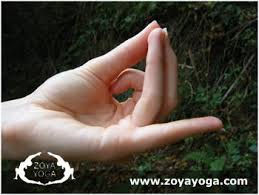
Nyāsa Samarpana Mudrā is a sacred hand gesture used extensively in tantric, Vedic, and pūjā sādhanā to offer, consecrate, and dedicate energies, mantras, or the subtle body to a deity or divine principle. In Sanskrit, Nyāsa means “placement or instillation,” and Samarpana means “offering or surrender.” This mudrā symbolizes complete surrender of one’s body, mind, and energies into the hands of the divine, ensuring that the practitioner becomes a vessel for divine will. Energetically, Nyāsa Samarpana Mudrā anchors prāṇa in designated areas of the body while consecrating it to the deity or yantra, making it a foundational gesture in advanced tantric and mantra-based sādhanā.
This mudrā is primarily associated with Shiva, Vishnu, Durga, and Ganesha, as these deities often receive dedicated energy placements through Nyāsa practices. While some mudrās are specific to protection (Abhaya) or empowerment (Varada), Nyāsa Samarpana Mudrā is specifically for conscious energy dedication, aligning both subtle and gross body with divine will.
Usage in Sādhanā & Tantric Context
Nyāsa Samarpana Mudrā is used extensively in:
-
Nyāsa sādhanā – placing mantras in various parts of the body to sanctify and energize the practitioner
-
Deity invocation rituals – offering the practitioner’s energies to empower the deity or yantra
-
Mantra and tantra sādhanā – dedicating subtle energy to enhance mantra potency
-
Advanced meditation and ritual empowerment – harmonizing body, mind, and subtle energies for divine alignment
Deities commonly associated with this mudrā include:
-
Shiva – for internalizing Rudra or Mahākāla energy
-
Vishnu – energizing yantras or visualizations
-
Durga – establishing protective and transformative energies
-
Ganesha – empowering sādhanā and removing obstacles
Nyāsa Samarpana Mudrā is applicable for any deity, yantra, or subtle energy practice requiring consecration or energy offering, making it versatile in ritual, tantric, and meditation contexts.
Invocation Method & Energetic Activation
To perform Nyāsa Samarpana Mudrā:
-
Sit in a stable meditation or pūjā posture, with a straight spine.
-
Begin by mentally or physically touching specific points of the body (head, shoulders, heart, hands, etc.) while offering the energy of each point to the deity.
-
Visualize prāṇa and subtle energies from the body flowing into the deity, yantra, or mantra, consecrating each part of your being as an offering.
-
Recite the relevant mantra:
-
Om Nyāsaya Namah (general offering and consecration)
-
Specific deity mantras: Om Namah Shivaya, Om Namo Bhagavate Vasudevaya, Om Dum Durgayei Namah
-
-
Focus on surrendering ego, intention, and energy, allowing the mudrā to align the subtle body with divine will.
Energetically, this mudrā creates a channel through which the practitioner’s body and mind become vessels for divine energy, amplifying the potency of sādhanā and mantras.
Scriptural References & Authentic Sources
Nyāsa Samarpana Mudrā is described in classical tantric and Agamic texts:
-
Agamas – detailing nyāsa mudrās for deity consecration and energy placement
-
Kularnava Tantra – outlining mudrās for subtle energy offering and surrender
-
Shiva Samhita – describing hand gestures for dedicating prāṇa to deities
-
Tantra Sara – prescribing Nyāsa and Samarpana mudrās for ritual empowerment
These texts confirm that gesture, mantra, and visualization together enable effective consecration, energy offering, and subtle body alignment, enhancing the spiritual potency of sādhanā.
Purpose, Benefits & Impact in Sādhanā
Nyāsa Samarpana Mudrā provides several key benefits:
-
Consecrates the practitioner’s body, mind, and subtle energies to the deity
-
Enhances mantra potency and ritual efficacy
-
Aligns subtle prāṇa flow with divine energy
-
Facilitates surrender, spiritual discipline, and heightened receptivity
-
Supports advanced tantric and Vedic sādhanā for transformation and protection
During sādhanā, this mudrā ensures energetic alignment, spiritual empowerment, and precise energy placement, allowing the practitioner to become a conscious vessel for divine power.
Beyond Deity Worship – Broader Applications
Apart from deity invocation, Nyāsa Samarpana Mudrā can also be used for:
-
Advanced meditation to consecrate personal energy toward spiritual goals
-
Prāṇic alignment and subtle energy healing
-
Enhancing yantra or mantra activation through personal energy offering
-
Energetic surrender practices to purify the body-mind system
Essentially, Nyāsa Samarpana Mudrā serves as a gesture of dedication, consecration, and surrender, enabling practitioners to offer their energies consciously and enhance the effectiveness of any spiritual or tantric practice.
Śakti Mudrā – The Gesture of Divine Power and Energy Activation

Śakti Mudrā is a powerful hand gesture used primarily in tantric, mantra, and advanced pūjā sādhanā to invoke, channel, and activate divine feminine energy (Śakti) within the practitioner and the ritual space. In Sanskrit, Śakti signifies “cosmic energy, power, or divine force,” and this mudrā represents the conscious awakening and transmission of spiritual energy through hand gestures, visualization, and mantra. Energetically, Śakti Mudrā stimulates kundalini, harmonizes subtle energies, and amplifies the potency of sādhanā, making it indispensable in practices that require spiritual empowerment, protection, and transformative energy.
This mudrā is particularly associated with Durga, Kali, Parvati, and Tripura Sundari, symbolizing divine power, protection, and spiritual activation. While other mudrās may emphasize offering (Samarpana) or protection (Abhaya), Śakti Mudrā is uniquely designed to awaken latent energies and empower the practitioner with divine force.
Usage in Sādhanā & Tantric Context
Śakti Mudrā is widely used in:
-
Kundalini awakening and energy activation sādhanā – to stimulate subtle energy channels (nāḍīs)
-
Mantra sādhanā – enhancing mantra potency, particularly Śakti or goddess mantras
-
Tantric pūjā and yantra sādhanā – empowering yantras and ritual space with divine energy
-
Protective and transformative rituals – for dissolving obstacles, negative influences, and karmic blocks
Deities commonly associated with this mudrā include:
-
Durga – to embody courage, protection, and strength
-
Kali – to awaken transformative energy and destroy negativity
-
Parvati – to invoke creative and nurturing energy
-
Tripura Sundari – for supreme spiritual awakening and bliss
This mudrā can also be applied to any deity, yantra, or ritual requiring divine energy activation, making it central to advanced tantric and spiritual sādhanā.
Invocation Method & Energetic Activation
To perform Śakti Mudrā:
-
Sit in a meditative or pūjā posture with a straight spine, grounding your body and mind.
-
Form the mudrā by specific hand positions prescribed for channeling energy, often involving interlocking fingers, thumb placement, or cupped gestures that symbolize containment and activation of divine power.
-
Visualize the awakening of Śakti energy rising from the base of the spine through the chakras, converging at the heart and crown, radiating through the mudrā into the deity or ritual space.
-
Recite the relevant mantra to empower energy:
-
Om Shaktiyai Namah (general divine power invocation)
-
Om Dum Durgayei Namah (for Durga-related sādhanā)
-
Om Krim Kali Namah (for Kali energy activation)
-
-
Focus on empowering intention, channeling prāṇa, and embodying the divine force, allowing the mudrā to amplify energy, protection, and spiritual potency.
Energetically, this mudrā activates latent power, strengthens subtle energy flow, and harmonizes the practitioner with cosmic feminine energy.
Scriptural References & Authentic Sources
Śakti Mudrā is detailed in classical tantric, Agamic, and Hatha Yoga texts:
-
Kularnava Tantra – outlining mudrās for divine energy activation
-
Shakta Agamas – prescribing gestures to awaken Śakti and empower rituals
-
Shiva Samhita – describing hand positions for prāṇa and kundalini flow during sādhanā
-
Tantra Sara – detailing mudrās for protection, energy empowerment, and transformative rituals
These texts confirm that gesture, visualization, and mantra together enable the awakening and channeling of divine power, making sādhanā highly effective.
Purpose, Benefits & Impact in Sādhanā
Śakti Mudrā provides several key benefits:
-
Awakens and channels divine feminine energy (Śakti) within the practitioner
-
Enhances mantra potency and ritual efficacy
-
Stimulates kundalini and harmonizes subtle energy flow
-
Provides spiritual protection and transformative power
-
Empowers practitioner with courage, creativity, and divine alignment
During sādhanā, using Śakti Mudrā ensures energetic activation, spiritual empowerment, and alignment with cosmic forces, elevating both personal and ritual spiritual potency.
Beyond Deity Worship – Broader Applications
Apart from deity invocation, Śakti Mudrā can also be used for:
-
Kundalini and chakra meditation to awaken latent spiritual energy
-
Energy healing and prāṇa activation practices
-
Protection and purification rituals
-
Empowerment for manifesting spiritual goals and overcoming karmic obstacles
Essentially, Śakti Mudrā serves as a gesture of empowerment, activation, and divine energy channeling, enabling practitioners to consciously awaken and direct cosmic energy in spiritual practices, meditation, and rituals.
Prāṇa Mudrā – The Gesture of Vital Life Force

Prāṇa Mudrā is a vital hand gesture used in yoga, tantric, and pūjā sādhanā to activate, channel, and balance the life force (prāṇa) within the body and subtle energy system. In Sanskrit, Prāṇa signifies “vital energy” or “life force,” and this mudrā serves to enhance vitality, energize the chakras, and harmonize the flow of prāṇa throughout the body. It is considered one of the most important mudrās for spiritual sādhanā because it supports both physical well-being and subtle energy mastery, allowing the practitioner to perform higher meditative and tantric practices with optimal energy alignment.
Prāṇa Mudrā is generally associated with Shiva, Vishnu, and Devi, as these deities symbolize cosmic energy, life force, and divine sustenance. While other mudrās focus on protection (Abhaya) or empowerment (Shakti), Prāṇa Mudrā specifically enhances the practitioner’s own vital energy, creating a strong foundation for all sādhanā.
Usage in Sādhanā & Tantric Context
Prāṇa Mudrā is used extensively in:
-
Yoga and Prāṇāyāma sādhanā – to increase vitality, lung capacity, and prāṇa flow
-
Mantra and tantric sādhanā – to energize the subtle body for more effective mantra vibrations
-
Meditation and chakra practices – stimulating Muladhāra and Svādhiṣṭhāna chakras to awaken energy flow
-
Ritual and pūjā practices – strengthening the prāṇic connection between practitioner and deity
Deities commonly associated with this mudrā include:
-
Shiva – energizing sādhanā and aligning life force with cosmic prāṇa
-
Vishnu – supporting vitality, sustenance, and spiritual balance
-
Devi – empowering creative and sustaining energy within the practitioner
Prāṇa Mudrā can also be applied to any sādhanā that requires vital energy activation or prāṇic alignment, making it highly versatile.
Invocation Method & Energetic Activation
To perform Prāṇa Mudrā:
-
Sit in a comfortable meditation or pūjā posture with a straight spine.
-
Join the tips of the ring and little fingers to the tip of the thumb, keeping the index and middle fingers extended.
-
Focus on drawing prāṇa from the surroundings, activating the Muladhāra and Svādhiṣṭhāna chakras, and distributing it through the body.
-
Recite appropriate mantras for energy activation:
-
Om Prāṇāya Namah (general life force enhancement)
-
Om Namah Shivaya (for Shiva-aligned prāṇa sādhanā)
-
-
Visualize prāṇa circulating through the nadis, awakening vitality, and harmonizing mind and body, enhancing overall sādhanā performance.
Energetically, this mudrā balances the vital energy, supports the subtle body, and strengthens physical, mental, and spiritual stamina.
Scriptural References & Authentic Sources
Prāṇa Mudrā is described in classical yoga, tantric, and Vedic texts:
-
Hatha Yoga Pradipika – detailing mudrās for prāṇa and subtle energy mastery
-
Gheranda Samhita – describing hand gestures to balance life force and awaken energy
-
Shiva Samhita – outlining mudrās for prāṇa flow, meditation, and subtle body alignment
-
Tantra Sara – prescribing prāṇic mudrās for energy activation in ritual and meditation
These sources confirm that gesture, visualization, and mantra together enable optimal prāṇic flow, vitality, and subtle energy alignment.
Purpose, Benefits & Impact in Sādhanā
Prāṇa Mudrā provides numerous benefits:
-
Activates and balances life force (prāṇa) within the body
-
Enhances vitality, stamina, and overall health
-
Supports meditation, mantra sādhanā, and chakra awakening
-
Strengthens subtle energy channels (nāḍīs) and prāṇic flow
-
Facilitates higher spiritual practices and energetic alignment
During sādhanā, using Prāṇa Mudrā ensures energetic stability, improved concentration, and enhanced spiritual and physical potency.
Beyond Deity Worship – Broader Applications
Apart from deity invocation, Prāṇa Mudrā can also be used for:
-
Prāṇayāma and yoga practices for energy and vitality
-
Healing and rejuvenation of body and mind
-
Chakra activation and kundalini practices
-
Enhancing personal spiritual and ritual energy for better sādhanā outcomes
Essentially, Prāṇa Mudrā serves as a gesture to awaken, balance, and direct vital energy, enabling practitioners to strengthen life force, support spiritual practices, and align subtle energies with divine consciousness.
Uttama Mudrā – The Gesture of Supreme Excellence and Spiritual Alignment
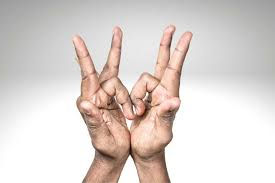
Uttama Mudrā is a highly revered mudrā in tantric, yogic, and pūjā sādhanā that symbolizes supreme alignment, excellence, and the highest level of spiritual energy activation. In Sanskrit, Uttama means “highest” or “supreme,” and this mudrā is designed to harmonize body, mind, and subtle energies to optimize sādhanā outcomes. Practitioners use Uttama Mudrā to enhance prāṇa flow, elevate consciousness, and strengthen the connection with cosmic energies, making it especially valuable in rituals that require clarity, power, and spiritual refinement.
Uttama Mudrā is most commonly associated with Vishnu, Shiva, Tripura Sundari, and Durga, representing cosmic order, divine protection, spiritual awakening, and supreme power. While simpler mudrās may focus on protection or energy activation alone, Uttama Mudrā combines energetic empowerment with precise spiritual alignment, making it effective for both deity sādhanā and personal spiritual elevation.
Usage in Sādhanā & Tantric Context
Uttama Mudrā is used in multiple spiritual practices:
-
Advanced mantra sādhanā – amplifying vibrations and increasing potency of recitation
-
Tantric pūjā and yantra rituals – energizing sacred objects and ritual space
-
Meditation and energy control practices – harmonizing prāṇa and subtle energy channels
-
Chakra activation sādhanā – aligning Muladhāra to Sahasrāra for supreme energy flow
Deities commonly invoked with Uttama Mudrā include:
-
Vishnu – for sustaining cosmic energy and spiritual harmony
-
Shiva – for purification, meditation, and energy awakening
-
Tripura Sundari – for supreme feminine energy activation and blissful consciousness
-
Durga – for protection, courage, and divine empowerment
This mudrā can also be applied to any sādhanā requiring supreme energetic and spiritual alignment, making it versatile for advanced spiritual practices.
Invocation Method & Energetic Activation
To perform Uttama Mudrā:
-
Sit in a stable meditative posture with spine straight and body relaxed.
-
Arrange the hands in specific alignment, usually combining aspects of prāṇa, bindu, and energy channeling mudrās, forming a gesture that channels energy upwards and harmonizes consciousness.
-
Visualize divine energy flowing from the base of the spine through all chakras, radiating through the hands into the sādhanā or deity space.
-
Recite mantras appropriate for your sādhanā:
-
Om Namah Vishnave (Vishnu energy alignment)
-
Om Namah Shivaya (Shiva energy activation)
-
Om Shrim Tripura Sundariyai Namah (Tripura Sundari sādhanā)
-
Om Dum Durgayei Namah (Durga empowerment)
-
-
Maintain focus on harmonizing breath, prāṇa, and mental intention, allowing Uttama Mudrā to integrate spiritual, energetic, and physical alignment.
Energetically, Uttama Mudrā strengthens subtle energy channels, enhances prāṇa flow, and aligns consciousness with cosmic forces, facilitating deep spiritual empowerment.
Scriptural References & Authentic Sources
Uttama Mudrā is cited in classical tantric and yoga texts:
-
Shakta Agamas – detailing mudrās for supreme energy activation
-
Tantra Sara – outlining gestures for spiritual alignment and energy mastery
-
Hatha Yoga Pradipika – describing hand positions to optimize prāṇa flow and spiritual focus
-
Gheranda Samhita – emphasizing gestures for supreme energy integration and meditation efficacy
These texts confirm that Uttama Mudrā combines body, breath, and intention to produce maximum spiritual and energetic results.
Purpose, Benefits & Impact in Sādhanā
Uttama Mudrā offers numerous benefits:
-
Aligns physical, prāṇic, and subtle energies for spiritual mastery
-
Enhances mantra efficacy and meditation focus
-
Activates and harmonizes chakras and subtle energy channels
-
Provides spiritual protection, empowerment, and alignment with cosmic forces
-
Facilitates higher sādhanā and advanced tantric practices
During sādhanā, using Uttama Mudrā ensures supreme energetic integration, mental clarity, and spiritual potency, making it essential for serious practitioners.
Beyond Deity Worship – Broader Applications
Apart from deity invocation, Uttama Mudrā can also be applied for:
-
Advanced meditation and prāṇa alignment
-
Energy healing, chakra balancing, and kundalini activation
-
Purification rituals and personal empowerment sādhanā
-
Enhancing subtle energy awareness and spiritual refinement
In essence, Uttama Mudrā is a gesture of supreme spiritual alignment, enabling practitioners to harmonize body, mind, and prāṇa, amplify ritual power, and achieve advanced sādhanā benefits.
Vajra Mudrā – The Gesture of Indestructible Power

Vajra Mudrā is a powerful hand gesture used in tantric sādhanā, mantra pūjā, and advanced yogic practices, symbolizing indestructible strength, spiritual firmness, and the unbreakable nature of divine consciousness. In Sanskrit, Vajra means “thunderbolt” or “diamond,” signifying supreme stability, clarity, and transformative power. This mudrā is designed to empower the practitioner, sharpen spiritual focus, and activate both prāṇic and subtle energies for higher sādhanā, making it essential for rituals that demand courage, protection, and mastery over obstacles.
Vajra Mudrā is primarily associated with Indra, Shiva, and Kali, representing cosmic power, protective energy, and transformative divine force. Unlike mudrās that enhance prāṇa or provide calm, Vajra Mudrā embodies firmness, spiritual authority, and the capacity to overcome inner and outer obstacles, making it critical in advanced sādhanā and protective rituals.
Usage in Sādhanā & Tantric Context
Vajra Mudrā is widely applied in:
-
Tantric pūjā and mantra sādhanā – invoking unbreakable spiritual energy
-
Protection sādhanā – warding off negative energies and malefic influences
-
Meditation and energy control practices – fortifying mental, prāṇic, and subtle stability
-
Kundalini and chakra sādhanā – directing transformative energy for spiritual awakening
Deities commonly invoked with Vajra Mudrā include:
-
Indra – representing divine authority, protection, and cosmic force
-
Shiva – empowering inner transformation and dissolution of ego
-
Kali – unleashing transformative energy and protective power
Vajra Mudrā can also be applied in any sādhanā requiring spiritual firmness, energy activation, or protection against subtle or material obstacles.
Invocation Method & Energetic Activation
To perform Vajra Mudrā:
-
Sit in a meditative posture with spine straight and body relaxed.
-
Position the hands so that the index and middle fingers form the central axis while the other fingers lock in a specific pattern, symbolizing the thunderbolt or diamond’s firmness.
-
Visualize immovable divine energy flowing through the hands, fortifying chakras, and radiating through the sādhanā space, creating unshakable spiritual stability.
-
Recite mantras appropriate for the practice:
-
Om Vajraya Namah (general indestructible energy activation)
-
Om Namah Shivaya (for Shiva-aligned transformation)
-
Om Krim Kali Namah (for Kali’s transformative protection)
-
-
Maintain focus on harmonizing breath, prāṇa, and mental intent, allowing Vajra Mudrā to integrate strength, protection, and spiritual firmness.
Energetically, this mudrā fortifies prāṇa flow, mental focus, and subtle energies, ensuring unshakable sādhanā stability and spiritual empowerment.
Scriptural References & Authentic Sources
Vajra Mudrā is referenced in classical tantric and yogic texts:
-
Tantra Sara – prescribing gestures for strength, protection, and divine energy alignment
-
Hatha Yoga Pradipika – outlining mudrās for prāṇa stabilization and spiritual focus
-
Gheranda Samhita – detailing advanced gestures for energy firmness and mental steadiness
-
Shiva Samhita – describing mudrās for protection, transformation, and mastery of subtle energies
These sources confirm that Vajra Mudrā unifies body, mind, and subtle energies to create indestructible spiritual power and stability.
Purpose, Benefits & Impact in Sādhanā
Vajra Mudrā provides multiple benefits:
-
Instills spiritual firmness and inner stability
-
Activates protective and transformative divine energy
-
Enhances meditation, mantra, and tantric sādhanā potency
-
Strengthens chakras and subtle energy channels for unshakable sādhanā
-
Facilitates mastery over obstacles and protection from malefic forces
During sādhanā, Vajra Mudrā ensures mental clarity, energetic stability, and empowered spiritual presence, making it indispensable for practitioners facing challenging sādhanā or protective rituals.
Beyond Deity Worship – Broader Applications
Apart from deity invocation, Vajra Mudrā can also be used for:
-
Energy fortification during advanced meditation
-
Protection against negative energies or subtle disturbances
-
Chakra and prāṇa stabilization
-
Empowerment of ritual space, yantras, or sacred objects
-
Enhancing personal spiritual authority and inner resilience
In essence, Vajra Mudrā is the gesture of indestructible spiritual power, allowing practitioners to fortify mind, prāṇa, and subtle energies, achieve advanced protection, and harness transformative spiritual energy.
Pataka Mudrā – The Flag Gesture of Spiritual Command
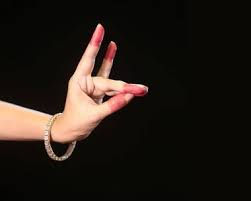
Pataka Mudrā is a classical mudrā used extensively in tantric rituals, deity pūjā, and yogic sādhanā. The name Pataka literally means “flag” in Sanskrit, symbolizing command, authority, and the spreading of divine energy. It is designed to direct prāṇa, project spiritual intent, and establish energetic order within ritual or meditation practice. Pataka Mudrā is often employed in rituals that require assertion, protection, purification, or initiation of a spiritual act, making it essential in both mantra pūjā and advanced tantric sādhanā.
Pataka Mudrā is commonly associated with deities such as Shiva, Durga, and Vishnu, representing authority, protection, and divine command. This mudrā can also be applied to any deity or sādhanā requiring the projection of energy or spiritual intention, making it a versatile gesture for multiple spiritual contexts.
Usage in Sādhanā & Tantric Context
Pataka Mudrā is used in several spiritual practices:
-
Tantric pūjā and mantra sādhanā – directing divine energy and spiritual intent
-
Protection rituals – warding off negative influences and stabilizing energy
-
Meditation practices – focusing mind and prāṇa for clarity and spiritual alignment
-
Ritual actions or offerings – signaling initiation, command, or empowerment
Deities commonly invoked with Pataka Mudrā include:
-
Shiva – for spiritual authority and destruction of obstacles
-
Durga – for courage, protection, and divine command
-
Vishnu – for maintaining cosmic order and stabilizing energy flow
Beyond these, Pataka Mudrā is applied in any sādhanā where projection, purification, or control of spiritual energy is required.
Invocation Method & Energetic Activation
To perform Pataka Mudrā:
-
Sit in a stable meditative posture or stand for ritual gestures.
-
Extend all fingers straight and together, keeping the thumb slightly apart, forming a “flag” shape that directs energy outward.
-
Visualize prāṇa flowing through the arm and hand, radiating intention and spiritual command into the sādhanā or deity space.
-
Recite mantras suitable for the sādhanā:
-
Om Namah Shivaya (Shiva empowerment)
-
Om Dum Durgayei Namah (Durga energy projection)
-
Om Namo Bhagavate Vasudevaya (Vishnu alignment)
-
-
Maintain awareness of breath, energy flow, and mental focus, allowing Pataka Mudrā to channel divine energy and intention effectively.
Energetically, Pataka Mudrā projects prāṇa, strengthens spiritual command, and stabilizes ritual or sādhanā energy, enhancing both inner focus and outward spiritual effect.
Scriptural References & Authentic Sources
Pataka Mudrā is documented in several classical texts:
-
Shilpa Prakasha – describing mudrās for ritual gestures and deity worship
-
Abhinaya Darpana – detailing hand gestures for spiritual and ritual efficacy
-
Tantra Sara – outlining hand mudrās for energy projection and spiritual intent
-
Gheranda Samhita – providing guidance on gestures for ritual alignment and prāṇa control
These sources affirm that Pataka Mudrā is a command gesture, capable of projecting spiritual energy and stabilizing ritual intention.
Purpose, Benefits & Impact in Sādhanā
Pataka Mudrā provides multiple benefits:
-
Projects spiritual energy with clarity and authority
-
Strengthens prāṇa flow and ritual effectiveness
-
Purifies the practitioner and ritual space
-
Enhances meditation, mantra, and deity sādhanā
-
Supports protection and stabilization of subtle energies
During sādhanā, Pataka Mudrā ensures that divine energy is focused, directed, and manifest with maximum impact, making it essential for both advanced tantric practice and ritual performance.
Beyond Deity Worship – Broader Applications
Apart from deity invocation, Pataka Mudrā can also be used for:
-
Energy projection and spiritual cleansing
-
Purification of space and ritual objects
-
Meditative focus and prāṇa stabilization
-
Manifestation of spiritual intention and command energy
In essence, Pataka Mudrā is the gesture of spiritual authority and energy projection, enabling practitioners to direct divine energy, purify the environment, and enhance sādhanā effectiveness.
Sūrya Mudrā – The Solar Gesture of Vitality and Energy

Sūrya Mudrā is a powerful mudrā used in yogic, tantric, and spiritual sādhanā to invoke the energy of the Sun (Sūrya). In Sanskrit, Sūrya means “Sun,” representing vitality, strength, radiance, and life force. This mudrā is designed to stimulate the solar plexus, increase metabolic energy, enhance prāṇa flow, and activate spiritual and physical vitality. It is especially used in sādhanā that focus on health, confidence, courage, and illumination of consciousness, both physically and spiritually.
Sūrya Mudrā is primarily associated with Sūrya, the Sun God, but it can also be invoked with Vishnu and Shiva in sādhanā where solar energy, vitality, or spiritual illumination is desired. Unlike mudrās that are primarily protective or meditative, Sūrya Mudrā activates internal fire, prāṇa, and the willpower of the practitioner, making it ideal for energizing daily practice or long sādhanā sessions.
Usage in Sādhanā & Tantric Context
Sūrya Mudrā is widely applied in:
-
Prāṇāyāma and yoga sādhanā – boosting internal heat and energy flow
-
Solar deity pūjā and mantra sādhanā – connecting with Sūrya for vitality, health, and illumination
-
Meditation – enhancing focus, courage, and spiritual radiance
-
Tantric sādhanā for energy transformation – channeling solar energy to awaken chakras and subtle body
Deities commonly invoked with Sūrya Mudrā include:
-
Sūrya – primary source of life force, health, and vitality
-
Vishnu – for sustaining cosmic energy through solar alignment
-
Shiva – when internal illumination and transformational energy are desired
Sūrya Mudrā can also be applied in any sādhanā requiring enhanced vitality, courage, or energy activation.
Invocation Method & Energetic Activation
To perform Sūrya Mudrā:
-
Sit in a comfortable meditation posture with spine erect and body relaxed.
-
Fold the ring finger toward the base of the thumb and gently press it with the thumb, keeping other fingers extended naturally. This symbolizes activation of solar energy (Agni) within the body.
-
Visualize prāṇa and sunlight energy rising from the solar plexus, energizing chakras, and radiating throughout the body.
-
Recite mantras appropriate for solar energy:
-
Om Sūryāya Namah (direct invocation of the Sun)
-
Om Hreem Sūryāya Namah (to enhance vitality and inner radiance)
-
-
Focus on breath, prāṇa flow, and mental intention, allowing Sūrya Mudrā to harmonize inner fire, energy channels, and consciousness.
Energetically, Sūrya Mudrā stimulates digestive fire, prāṇa flow, courage, vitality, and internal illumination, supporting both physical and spiritual well-being.
Scriptural References & Authentic Sources
Sūrya Mudrā is referenced in classical texts:
-
Hatha Yoga Pradipika – describing mudrās for prāṇa enhancement and internal energy activation
-
Gheranda Samhita – outlining gestures to stimulate Agni (fire) and solar energy within
-
Shiva Samhita – detailing mudrās to awaken prāṇa, chakras, and internal vitality
-
Tantra Sara – referencing mudrās for deity connection, energy activation, and spiritual illumination
These sources affirm that Sūrya Mudrā activates internal solar energy for vitality, prāṇa flow, and spiritual illumination.
Purpose, Benefits & Impact in Sādhanā
Sūrya Mudrā provides numerous benefits:
-
Increases physical vitality, energy, and stamina
-
Stimulates digestive fire and internal prāṇa
-
Enhances courage, confidence, and willpower
-
Activates chakras and subtle energy channels for spiritual awakening
-
Improves meditation, mantra sādhanā, and ritual focus
-
Strengthens connection with the Sun and solar energy for overall well-being
During sādhanā, using Sūrya Mudrā ensures enhanced vitality, mental clarity, energetic balance, and spiritual radiance.
Beyond Deity Worship – Broader Applications
Apart from deity invocation, Sūrya Mudrā is applied for:
-
Yoga and prāṇāyāma for energy activation
-
Health and wellness practices, particularly for metabolism and circulation
-
Chakra and internal fire (Agni) activation
-
Boosting confidence, courage, and spiritual determination
-
Daily practice to harmonize body, mind, and subtle energies
In essence, Sūrya Mudrā is the gesture of solar vitality and spiritual illumination, allowing practitioners to energize body and mind, activate prāṇa, and awaken inner radiance for both physical and spiritual growth.
Chandra Mudrā – The Lunar Gesture of Calm and Intuition

Chandra Mudrā is a specialized hand gesture used in yogic, tantric, and devotional sādhanā to invoke the calming and nurturing energy of the Moon (Chandra). In Sanskrit, Chandra means “Moon,” symbolizing cooling, calming, mental clarity, intuition, and emotional balance. This mudrā is designed to harmonize prāṇa, stabilize mind and emotions, and enhance receptivity to subtle energies, making it highly valuable in sādhanā focusing on meditation, emotional equilibrium, intuition, and spiritual insight.
Chandra Mudrā is primarily associated with Chandra, the Moon God, but it can also be invoked with Saraswati and Shiva in sādhanā where mental clarity, emotional balance, or lunar energy alignment is desired. Unlike the energizing Sūrya Mudrā, Chandra Mudrā is cooling, reflective, and stabilizing, making it essential for practices requiring calm focus and subtle energy reception.
Usage in Sādhanā & Tantric Context
Chandra Mudrā is widely applied in:
-
Meditation and mantra sādhanā – enhancing calm, receptivity, and mental focus
-
Lunar deity pūjā and tantric sādhanā – invoking mental clarity, intuition, and emotional stability
-
Yoga practices for cooling and prāṇa balance – regulating heat, calming Agni, and stabilizing subtle energies
-
Emotional and spiritual sādhanā – promoting calmness, inner peace, and spiritual receptivity
Deities commonly invoked with Chandra Mudrā include:
-
Chandra – primary source of lunar energy, mental clarity, and emotional balance
-
Saraswati – for wisdom, intuition, and spiritual receptivity
-
Shiva – for meditation, calmness, and balancing internal energies
Chandra Mudrā can also be applied in any sādhanā requiring calming, mental stability, or lunar energy activation.
Invocation Method & Energetic Activation
To perform Chandra Mudrā:
-
Sit in a comfortable meditation posture with spine straight and body relaxed.
-
Fold the ring finger to touch the thumb, while keeping other fingers extended, symbolizing lunar energy circulation in the body.
-
Visualize cool, reflective prāṇa entering the body, balancing heat, calming emotions, and radiating serenity through the mind and chakras.
-
Recite mantras appropriate for lunar energy:
-
Om Chandrāya Namah (invocation of the Moon’s calming energy)
-
Om Hreem Saraswatyai Namah (for wisdom and receptivity)
-
Om Namah Shivaya (for meditation and internal balance)
-
-
Maintain awareness of breath, subtle energy, and mental focus, allowing Chandra Mudrā to stabilize prāṇa and calm the mind.
Energetically, this mudrā balances internal heat, calms the mind, harmonizes emotions, and enhances intuitive and receptive capacities.
Scriptural References & Authentic Sources
Chandra Mudrā is documented in classical texts:
-
Hatha Yoga Pradipika – detailing mudrās for mental balance, cooling, and prāṇa control
-
Gheranda Samhita – describing gestures for lunar energy activation and emotional stabilization
-
Shiva Samhita – outlining mudrās for meditation, calmness, and internal energy balance
-
Tantra Sara – referencing mudrās for deity invocation, mental clarity, and emotional stability
These texts confirm that Chandra Mudrā harmonizes mind, body, and subtle energies through lunar energy activation.
Purpose, Benefits & Impact in Sādhanā
Chandra Mudrā provides multiple benefits:
-
Calms the mind and emotions
-
Enhances meditation, focus, and spiritual receptivity
-
Balances prāṇa and internal heat (Agni)
-
Strengthens intuition, insight, and mental clarity
-
Supports emotional stability and serenity during sādhanā
During sādhanā, using Chandra Mudrā enhances mental clarity, emotional equilibrium, and subtle energy receptivity, facilitating deeper meditation and effective mantra or deity practice.
Beyond Deity Worship – Broader Applications
Apart from deity invocation, Chandra Mudrā is applied for:
-
Yoga and prāṇāyāma for cooling, calming, and balancing energies
-
Emotional and mental stabilization
-
Enhancing intuition, concentration, and subtle perception
-
Balancing solar and lunar energies in the body
-
Daily meditation practice to harmonize mind, prāṇa, and emotions
In essence, Chandra Mudrā is the gesture of lunar calm and intuitive clarity, enabling practitioners to balance energies, cultivate serenity, and enhance receptivity to both spiritual and subtle energies.
Gaja Mudrā – The Elephant Gesture of Strength and Stability

Gaja Mudrā is a powerful mudrā used in tantric, yogic, and deity sādhanā to invoke the qualities of the elephant (Gaja)—strength, stability, and wisdom. In Sanskrit, Gaja means “elephant,” representing immovable energy, protection, patience, and the power to overcome obstacles. This mudrā is typically employed in sādhanā that require endurance, fortitude, protective energy, or the removal of obstacles, making it highly suitable for Ganapati sādhanā, Durga worship, and protective tantric rituals.
Gaja Mudrā is primarily associated with Ganapati, as the elephant-headed deity embodies wisdom, obstacle removal, and stability. It can also be invoked with Durga and Indra in rituals requiring strength, protection, and grounded energy. Beyond specific deities, Gaja Mudrā is versatile and can be used in any sādhanā where mental fortitude, energetic protection, or stabilizing influence is needed.
Usage in Sādhanā & Tantric Context
Gaja Mudrā is applied in:
-
Ganapati pūjā and mantra sādhanā – invoking obstacle removal and divine wisdom
-
Durga and protective deity sādhanā – channeling courage, strength, and energetic fortitude
-
Tantric rituals for protection and stabilization – creating a shield of spiritual energy
-
Yoga and meditation practices – fostering inner strength, endurance, and mental grounding
Deities commonly invoked with Gaja Mudrā include:
-
Ganapati – wisdom, obstacle removal, and stability
-
Durga – protective energy, courage, and power
-
Indra – strength, authority, and stabilization
It can also be applied in any sādhanā requiring energetic grounding, protection, or empowerment.
Invocation Method & Energetic Activation
To perform Gaja Mudrā:
-
Sit or stand in a stable posture, grounding the body firmly.
-
Interlock fingers in a manner resembling the trunk of an elephant, or place one hand in a fist while the other wraps over it, symbolizing immovable strength and focus.
-
Visualize divine energy flowing through the arms into the hand, radiating a protective and stabilizing field around the practitioner and the sādhanā space.
-
Recite mantras appropriate for strength and protection:
-
Om Gan Ganapataye Namah (Ganapati empowerment)
-
Om Dum Durgayei Namah (Durga protection)
-
Om Indraya Namah (Indra’s stabilizing energy)
-
-
Maintain focus on breath, prāṇa flow, and visualization of protective strength, allowing Gaja Mudrā to anchor the practitioner’s energy.
Energetically, Gaja Mudrā stabilizes prāṇa, fortifies the mind, protects against negative influences, and channels steadfast energy into sādhanā.
Scriptural References & Authentic Sources
Gaja Mudrā is referenced in classical texts:
-
Shilpa Prakasha – describing mudrās for deity empowerment and protective rituals
-
Abhinaya Darpana – detailing symbolic hand gestures representing strength and grounding
-
Tantra Sara – outlining hand mudrās for protection, stability, and energy anchoring
-
Gheranda Samhita – providing guidance on mudrās for stabilizing prāṇa and invoking protective energy
These sources affirm that Gaja Mudrā channels protective, stabilizing, and empowering energy, supporting both physical and spiritual fortitude.
Purpose, Benefits & Impact in Sādhanā
Gaja Mudrā provides multiple benefits:
-
Strengthens mental, emotional, and spiritual fortitude
-
Removes obstacles and stabilizes sādhanā energy
-
Enhances protective aura during rituals and meditation
-
Increases endurance, patience, and inner power
-
Balances prāṇa and channels focused energy for deity worship or sādhanā
During sādhanā, using Gaja Mudrā ensures grounded, protected, and empowered practice, enabling effective invocation of deity energies and stabilization of subtle fields.
Beyond Deity Worship – Broader Applications
Apart from deity invocation, Gaja Mudrā is applied for:
-
Meditation and yoga for strength, endurance, and grounding
-
Energy stabilization in ritual spaces or subtle body work
-
Protection against negative influences or psychic disturbances
-
Manifestation of courage, patience, and steadiness in spiritual practice
In essence, Gaja Mudrā is the gesture of elephantine strength, stability, and protective power, enabling practitioners to anchor prāṇa, enhance courage, and maintain firm spiritual focus during sādhanā and ritual work.
Anjali Mudrā – The Gesture of Reverence and Devotion
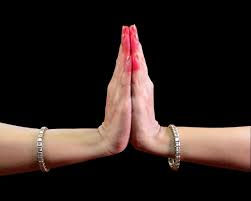
Anjali Mudrā is one of the most widely recognized mudrās in yogic, tantric, and devotional sādhanā, symbolizing reverence, salutation, and divine connection. In Sanskrit, Anjali means “offering with both hands,” representing humility, devotion, and unity of body, mind, and spirit. This mudrā is primarily used in sādhanā that focus on prayer, deity worship, mantra meditation, and the cultivation of inner harmony, making it an essential gesture for almost all pujā and meditation practices across Hindu and Buddhist traditions.
Anjali Mudrā is closely associated with Shiva, Vishnu, and Devi, but it is universally applicable to almost all deities. Its primary purpose is to invoke humility, respect, and receptivity in the practitioner, creating a sacred space for spiritual communion. Beyond deity invocation, it is also used in ritual offerings, yoga, meditation, and greeting (Namaste) as a symbolic spiritual alignment.
Usage in Sādhanā & Tantric Context
Anjali Mudrā is applied in:
-
Daily devotional practices (pujā, mantra chanting, and offerings) – expressing surrender and devotion
-
Meditation and yoga sādhanā – centering the mind, aligning prāṇa, and promoting mental clarity
-
Tantric rituals – to create sanctified energy and establish a connection with the deity
-
Greeting and reverence (Namaskāra) – harmonizing energy exchange and expressing respect
Deities commonly invoked with Anjali Mudrā include:
-
Shiva – for divine consciousness and protection
-
Vishnu – for sustaining cosmic balance
-
Devi – for energy, grace, and spiritual support
Anjali Mudrā can essentially be used for all deities, making it one of the most versatile and foundational mudrās in spiritual practice.
Invocation Method & Energetic Activation
To perform Anjali Mudrā:
-
Sit or stand in a comfortable posture with spine erect.
-
Bring both palms together in front of the chest, fingers pointing upward and thumbs gently touching the sternum (heart center).
-
Visualize light and prāṇa flowing from the palms through the heart into the body and mind, harmonizing energy and creating a sacred connection.
-
Recite mantras or prayers as needed, such as:
-
Om Namah Shivaya
-
Om Namo Bhagavate Vasudevaya
-
Specific deity mantras for pūjā or meditation
-
-
Maintain awareness of breath and energy, feeling devotion and reverence flowing through the gesture.
Energetically, Anjali Mudrā balances the prāṇa in the hands and heart, enhances concentration, deepens devotion, and creates a sanctified aura around the practitioner.
Scriptural References & Authentic Sources
Anjali Mudrā is documented in classical texts:
-
Hatha Yoga Pradipika – describing mudrās for mental focus, devotion, and prāṇa alignment
-
Gheranda Samhita – outlining mudrās for spiritual concentration and reverential practice
-
Shiva Samhita – detailing the use of gestures to invoke divine energy and spiritual focus
-
Tantra Sara – referencing Anjali Mudrā for offerings, sādhanā initiation, and deity invocation
These texts confirm that Anjali Mudrā is a foundational mudrā to harmonize energy, cultivate devotion, and establish sacred spiritual alignment.
Purpose, Benefits & Impact in Sādhanā
Anjali Mudrā provides multiple benefits:
-
Cultivates humility, devotion, and inner harmony
-
Centers and balances prāṇa, heart energy, and mind
-
Deepens connection with deities during puja and mantra practice
-
Enhances focus, concentration, and meditative receptivity
-
Creates a protective and sanctified energy field around the practitioner
During sādhanā, using Anjali Mudrā ensures a focused, respectful, and spiritually aligned practice, making it easier to connect with divine energies.
Beyond Deity Worship – Broader Applications
Apart from deity invocation, Anjali Mudrā is applied for:
-
Daily yoga and meditation practice for centering and balance
-
Spiritual greetings (Namaste) to harmonize energy exchange
-
Ritual offerings and devotional sādhanā
-
Emotional and mental stabilization, fostering humility and respect
-
Activation of heart-centered energy and prāṇa flow
In essence, Anjali Mudrā is the universal gesture of reverence, devotion, and inner alignment, allowing practitioners to connect deeply with spiritual energies, harmonize their prāṇa, and cultivate inner peace.
Apana Mudrā – The Gesture of Purification and Grounding

Apana Mudrā is a vital mudrā in yogic, tantric, and meditative sādhanā, focused on purification, elimination of toxins, and grounding of energy. In Sanskrit, Apana refers to the downward-moving vital force (prāṇa), responsible for excretion, detoxification, and stabilizing energy in the lower chakras. This mudrā is commonly used in sādhanā that aim to cleanse the body, balance energies, strengthen the lower chakras, and support spiritual practices that require stability and grounding.
Apana Mudrā is often associated with Ganapati for removal of obstacles, Durga for protective energy and vitality, and Shiva in meditation practices requiring detoxification of physical and subtle energies. Beyond deity invocation, it is frequently applied in yoga, pranayama, and meditation for physiological cleansing, grounding, and energy stabilization.
Usage in Sādhanā & Tantric Context
Apana Mudrā is applied in:
-
Detoxifying sādhanā – balancing apana vayu, facilitating elimination, and purifying the body
-
Chakra and energy practices – stabilizing the lower chakras (Muladhara and Svadhisthana)
-
Tantric rituals – grounding energy for safe invocation of higher energies
-
Yoga and pranayama – supporting energy circulation and stabilizing the body-mind connection
Deities commonly invoked with Apana Mudrā include:
-
Ganapati – removing obstacles and ensuring smooth sādhanā
-
Durga – providing protective and stabilizing energy
-
Shiva – assisting in meditation, grounding, and subtle energy control
Apana Mudrā can also be used in any sādhanā requiring detoxification, grounding, and stabilization of prāṇa.
Invocation Method & Energetic Activation
To perform Apana Mudrā:
-
Sit in a comfortable meditative posture (Padmasana or Sukhasana) with a straight spine.
-
Touch the tip of the middle and ring fingers to the tip of the thumb, keeping the index and little fingers extended. This forms the Apana Mudrā configuration.
-
Focus on downward flow of prāṇa, visualizing energy moving from the body into the earth, carrying impurities and stabilizing your energy field.
-
Recite mantras appropriate for purification and grounding:
-
Om Gan Ganapataye Namah
-
Om Dum Durgayei Namah
-
Specific mantra for detoxification or energy stabilization
-
-
Maintain breath awareness and energy visualization, allowing Apana Mudrā to facilitate detoxification, grounding, and prāṇa balance.
Energetically, Apana Mudrā activates the downward-moving energy, eliminates toxins, stabilizes the lower chakras, and grounds subtle energy in the body.
Scriptural References & Authentic Sources
Apana Mudrā is referenced in classical texts:
-
Hatha Yoga Pradipika – outlining mudrās for energy flow, purification, and chakra stabilization
-
Gheranda Samhita – describing gestures for prāṇa control and energy cleansing
-
Shiva Samhita – detailing mudrās to harmonize bodily functions, detoxify, and ground energy
-
Yoga Ratnakara – referencing Apana Mudrā for purification and vital energy regulation
These sources confirm that Apana Mudrā is a key gesture for detoxification, grounding, and prāṇa stabilization in spiritual and yogic practice.
Purpose, Benefits & Impact in Sādhanā
Apana Mudrā provides multiple benefits:
-
Facilitates physiological and energetic detoxification
-
Balances downward-moving prāṇa (Apana Vayu) and stabilizes lower chakras
-
Enhances grounding, stability, and endurance in meditation and sādhanā
-
Improves focus, energy flow, and control over subtle body functions
-
Supports obstacle removal and protective energy during rituals
During sādhanā, using Apana Mudrā ensures that the practitioner’s energy remains grounded, purified, and stable, allowing deeper meditative absorption and effective deity invocation.
Beyond Deity Worship – Broader Applications
Apart from deity invocation, Apana Mudrā is applied for:
-
Yoga and pranayama for grounding and energy stabilization
-
Detoxification and health-related energetic balancing
-
Chakra-focused sādhanā, especially Muladhara and Svadhisthana
-
Enhancing meditation depth, concentration, and physical-energetic stability
-
Managing stress, anxiety, and energetic imbalances
In essence, Apana Mudrā is the gesture of purification, grounding, and stability, enabling practitioners to release toxins, balance lower energies, and cultivate a solid foundation for spiritual and meditative practice.
Gyan Mudrā – The Gesture of Knowledge and Wisdom

Gyan Mudrā, also called Chin Mudrā in certain traditions, is one of the most fundamental mudrās in yogic, tantric, and meditative sādhanā, symbolizing wisdom, knowledge, and spiritual receptivity. In Sanskrit, Gyan means “knowledge” or “wisdom,” and this mudrā is designed to enhance mental clarity, intuition, and the flow of prāṇa into the brain and higher chakras, making it essential for meditation, mantra practice, and spiritual learning sādhanā.
Gyan Mudrā is commonly used in sādhanā dedicated to Saraswati, the goddess of learning and wisdom, Shiva, for meditation and higher consciousness, and Buddha, for insight and mental clarity. It can essentially be used with almost any deity when the focus is on enhancing awareness, concentration, or spiritual understanding, making it extremely versatile in both Tantric and general devotional practices.
Usage in Sādhanā & Tantric Context
Gyan Mudrā is applied in:
-
Meditation and mantra sādhanā – improving concentration, mental clarity, and intuition
-
Study and learning sādhanā – invoking the blessings of wisdom deities like Saraswati
-
Tantric rituals – enhancing receptivity to subtle energies and divine insight
-
Yoga practices – balancing prāṇa flow to the head, aiding focus, and stimulating higher chakras
Deities commonly invoked with Gyan Mudrā include:
-
Saraswati – wisdom, learning, and intellectual clarity
-
Shiva – meditation, higher consciousness, and insight
-
Buddha – inner wisdom and spiritual awakening
It is also applied in any sādhanā where focus, discernment, and knowledge are central goals.
Invocation Method & Energetic Activation
To perform Gyan Mudrā:
-
Sit in a comfortable meditative posture (Padmasana, Sukhasana, or Vajrasana) with a straight spine.
-
Touch the tip of the index finger to the tip of the thumb, keeping the other three fingers extended gently. This forms the symbolic circle of knowledge, representing union of individual consciousness with universal consciousness.
-
Rest the hands on the knees or thighs, palms facing upward for receptivity.
-
Visualize prāṇa flowing from the universe into the body, awakening intellect, wisdom, and higher awareness.
-
Optionally, recite mantras such as:
-
Om Saraswatyai Namah
-
Om Namah Shivaya
-
Personal or deity-specific mantras focused on knowledge and clarity
-
-
Maintain awareness on breath and prāṇa flow, allowing Gyan Mudrā to strengthen focus, memory, and intuitive capacity.
Energetically, Gyan Mudrā activates the subtle energy channels of the brain and higher chakras, enhances clarity, improves receptivity to spiritual knowledge, and harmonizes prāṇa for intellectual and spiritual growth.
Scriptural References & Authentic Sources
Gyan Mudrā is documented in classical texts:
-
Hatha Yoga Pradipika – outlining mudrās to enhance meditation, concentration, and prāṇa flow
-
Gheranda Samhita – describing mudrās for knowledge, mental stability, and spiritual receptivity
-
Shiva Samhita – detailing gestures to harmonize prāṇa and awaken higher consciousness
-
Yoga Ratnakara – referencing Gyan Mudrā for enhanced learning and intuitive insight
These sources confirm that Gyan Mudrā is foundational for mental clarity, spiritual learning, and awakening higher consciousness in sādhanā.
Purpose, Benefits & Impact in Sādhanā
Gyan Mudrā provides multiple benefits:
-
Enhances memory, focus, and mental clarity
-
Stimulates intellect and higher chakras
-
Facilitates spiritual insight and intuition
-
Balances prāṇa flow to the brain and nervous system
-
Creates receptivity for deity energies and mantra vibrations
During sādhanā, using Gyan Mudrā ensures improved concentration, clarity of thought, and deeper connection with divine knowledge, making meditation and mantra practice more effective.
Beyond Deity Worship – Broader Applications
Apart from deity invocation, Gyan Mudrā is applied for:
-
Meditation and yoga to sharpen intellect and enhance prāṇa circulation
-
Learning, study, and mental concentration practices
-
Spiritual sādhanā to awaken intuition and inner wisdom
-
Stress reduction and mental balance through prāṇa stabilization
-
Enhancing clarity and insight in decision-making and spiritual discernment
In essence, Gyan Mudrā is the gesture of knowledge, receptivity, and higher awareness, empowering practitioners to cultivate wisdom, mental stability, and a deep spiritual connection with higher consciousness.
Buddhi Mudrā – The Gesture of Intuition and Discrimination

Buddhi Mudrā is a specialized mudrā in yogic, tantric, and meditative sādhanā, designed to enhance intuition, inner wisdom, and mental discrimination. In Sanskrit, Buddhi means “intellect” or “discernment,” and this mudrā activates subtle energy channels associated with the mind, brain, and psychic awareness. It is widely used in sādhanā aimed at clarifying decisions, enhancing intuitive insight, awakening inner wisdom, and connecting with higher spiritual guidance.
Buddhi Mudrā is commonly employed during sādhanā dedicated to Saraswati, the goddess of learning and intellect, Shiva, for higher awareness and mental clarity, and Ganesha, for intellect, obstacle removal, and clarity in action. It can also be applied for any deity invocation or meditation practice where intuitive understanding, mental discernment, or strategic insight is required, making it an essential mudrā in both tantric and general sādhanā.
Usage in Sādhanā & Tantric Context
Buddhi Mudrā is applied in:
-
Meditation and mantra sādhanā – for sharpening mental clarity, insight, and awareness
-
Tantric sādhanā – for intuitive guidance and subtle energy perception
-
Decision-making or problem-solving rituals – cultivating discrimination and strategic foresight
-
Yoga and pranayama practices – enhancing prāṇa flow to the brain and third-eye (Ajna) chakra
Deities commonly invoked with Buddhi Mudrā include:
-
Saraswati – wisdom, knowledge, and intellect
-
Shiva – spiritual discernment and higher consciousness
-
Ganesha – obstacle removal, clarity, and decision-making
It can also be used in any sādhanā where mental clarity, wisdom, or intuitive understanding is needed.
Invocation Method & Energetic Activation
To perform Buddhi Mudrā:
-
Sit in a comfortable meditative posture with a straight spine, ensuring relaxed shoulders.
-
Touch the tip of the little finger to the tip of the thumb, keeping the other three fingers extended naturally. This creates the Buddhi Mudrā configuration, symbolizing the activation of subtle mental energies.
-
Rest the hands on the knees or thighs, palms facing upward for receptivity.
-
Visualize prāṇa flowing into the brain and Ajna chakra, enhancing intuition, mental clarity, and subtle awareness.
-
Recite mantras to strengthen discernment and intellectual clarity:
-
Om Saraswatyai Namah
-
Om Gam Ganapataye Namah
-
Personal mantras for insight and mental activation
-
-
Maintain mindful awareness of prāṇa and energy flow, allowing the mudrā to stimulate intuition and sharpen mental faculties.
Energetically, Buddhi Mudrā activates subtle prāṇa pathways to the brain, enhances discrimination, stimulates higher consciousness, and strengthens the intuitive mind, facilitating more focused and insightful meditation.
Scriptural References & Authentic Sources
Buddhi Mudrā is described in classical texts:
-
Hatha Yoga Pradipika – detailing mudrās for prāṇa activation, mental clarity, and higher consciousness
-
Gheranda Samhita – explaining mudrās for intellect, intuition, and mind-energy coordination
-
Shiva Samhita – describing mudrās for activating the subtle mind and Ajna chakra
-
Yoga Ratnakara – referencing Buddhi Mudrā for higher insight, intuitive wisdom, and mental discrimination
These texts confirm that Buddhi Mudrā is essential for enhancing intellect, intuition, and subtle mental energies during sādhanā.
Purpose, Benefits & Impact in Sādhanā
Buddhi Mudrā provides multiple benefits:
-
Enhances intuition and psychic awareness
-
Improves mental clarity, focus, and discrimination
-
Activates prāṇa flow to the brain and Ajna chakra
-
Supports obstacle removal through clear perception
-
Facilitates decision-making, problem-solving, and spiritual insight
During sādhanā, using Buddhi Mudrā ensures heightened awareness, intuitive understanding, and a deep connection with divine wisdom, allowing more precise and effective spiritual practice.
Beyond Deity Worship – Broader Applications
Apart from deity invocation, Buddhi Mudrā is applied for:
-
Meditation to cultivate intuition and higher mental faculties
-
Yoga for energy balancing and brain prāṇa activation
-
Problem-solving and strategic foresight in daily life
-
Study, learning, and memory enhancement
-
Spiritual discernment, subtle energy perception, and clairvoyance
In essence, Buddhi Mudrā is the gesture of intellect, discrimination, and subtle wisdom, empowering practitioners to refine their mind, awaken intuition, and connect deeply with higher consciousness during meditation and sādhanā.
Dharma Chakra Mudrā – The Gesture of Spiritual Turning and Cosmic Order

Dharma Chakra Mudrā is a profound mudrā in Tantric, yogic, and meditative sādhanā, symbolizing cosmic order, righteous action, and the turning of the wheel of Dharma. In Sanskrit, Dharma Chakra literally means “Wheel of Dharma,” representing the cycle of spiritual law, balance, and righteous action in the universe. This mudrā is typically used in sādhanā aimed at aligning personal actions with universal principles, promoting karmic balance, and activating spiritual protection.
Dharma Chakra Mudrā is particularly associated with Vishnu, as he is often depicted turning the wheel of cosmic law, Buddha, symbolizing the teaching and propagation of Dharma, and Durga, when invoked for righteous action and protection. It can be used for any deity or spiritual practice where the intention is to restore balance, overcome adharma (unrighteousness), or protect and empower sādhanā.
Usage in Sādhanā & Tantric Context
Dharma Chakra Mudrā is applied in:
-
Mantra and meditation sādhanā – to focus on cosmic order, moral alignment, and protection
-
Tantric rituals – invoking righteous forces, spiritual authority, and divine protection
-
Karmic cleansing practices – harmonizing personal action with universal laws
-
Yoga and prāṇa practices – balancing energy flows, activating the solar plexus, and aligning subtle energies with Dharma principles
Deities commonly invoked with Dharma Chakra Mudrā include:
-
Vishnu – for maintaining cosmic order and spiritual protection
-
Buddha – for wisdom, righteous action, and moral clarity
-
Durga – for protective and empowering energy in sādhanā
It can also be applied in any sādhanā or ritual where restoring balance, enforcing spiritual protection, or activating righteous energy is essential.
Invocation Method & Energetic Activation
To perform Dharma Chakra Mudrā:
-
Sit in a comfortable meditative posture with a straight spine.
-
Form the mudrā by interlacing the fingers in a circular pattern (specific variations may involve crossing hands and creating a symbolic wheel with thumbs and index fingers).
-
Rest the hands in front of the heart or in the lap, palms facing outward or upward depending on tradition.
-
Visualize a spinning wheel of cosmic energy (Dharma Chakra) radiating balance, protection, and righteous energy throughout your body and aura.
-
Recite mantras associated with righteousness, cosmic order, and spiritual protection:
-
Om Namo Bhagavate Vasudevaya
-
Om Dharmaya Namah
-
Deity-specific protective mantras
-
-
Maintain awareness of energy rotation, prāṇa flow, and alignment with cosmic laws, allowing the mudrā to activate karmic balance and spiritual empowerment.
Energetically, Dharma Chakra Mudrā stimulates prāṇa circulation in the central channels, harmonizes subtle energies with cosmic law, strengthens protective energy fields, and aligns the practitioner with righteous action and dharmic consciousness.
Scriptural References & Authentic Sources
Dharma Chakra Mudrā is documented in authoritative texts:
-
Gheranda Samhita – describing mudrās for spiritual protection and karmic alignment
-
Shiva Samhita – detailing gestures to harmonize energy and enforce righteous action
-
Hatha Yoga Pradipika – emphasizing mudrās for cosmic alignment and prāṇa stabilization
-
Yoga Ratnakara – referencing Dharma Chakra Mudrā for protection, balance, and spiritual empowerment
These sources confirm that Dharma Chakra Mudrā is essential for aligning sādhanā with cosmic order, enhancing spiritual protection, and activating karmic balance.
Purpose, Benefits & Impact in Sādhanā
Dharma Chakra Mudrā provides multiple benefits:
-
Restores alignment with cosmic law and Dharma
-
Activates protective energies and shields the practitioner during rituals
-
Enhances karmic balance and spiritual authority
-
Stimulates subtle energy circulation, particularly in the central channel (Sushumna)
-
Strengthens concentration, righteous action, and moral discernment
During sādhanā, using Dharma Chakra Mudrā ensures spiritual protection, karmic harmonization, and deeper connection with divine cosmic order, making rituals and meditation more potent.
Beyond Deity Worship – Broader Applications
Apart from deity invocation, Dharma Chakra Mudrā is applied for:
-
Meditation focused on righteous action and inner balance
-
Energy stabilization and protection in yoga and prāṇa practices
-
Karmic cleansing and alignment with spiritual law
-
Activation of moral clarity, discernment, and ethical insight
-
Empowering sādhanā that involves transformative or protective rituals
In essence, Dharma Chakra Mudrā is the gesture of cosmic balance, righteous action, and spiritual protection, enabling practitioners to align their energies with Dharma, enhance protective power, and deepen spiritual efficacy in sādhanā.
Ganesh Mudrā – The Gesture of Removal of Obstacles and Auspiciousness

Ganesh Mudrā is a powerful hand gesture used in Tantric, yogic, and meditative sādhanā to invoke the energies of Ganesha, the remover of obstacles (Vighnaharta), and the lord of auspicious beginnings. The mudrā is designed to stimulate auspiciousness, remove energetic blocks, and enhance clarity and focus in spiritual and worldly endeavors. In Sanskrit, this mudrā is often linked to invoking wisdom, protection, and success before commencing any sādhanā or ritual.
Ganesh Mudrā is primarily used in sādhanā dedicated to Lord Ganesha, but it can also be employed in general devotional practices, meditation, or tantric rituals where removal of obstacles, auspiciousness, and divine support is required. Its application is versatile, making it useful in rituals of prosperity, spiritual growth, and protection. While mainly for Ganesh-centric practices, it is also sometimes incorporated before invoking other deities to ensure a smooth and successful sādhanā.
Usage in Sādhanā & Tantric Context
Ganesh Mudrā is applied in:
-
Pre-sādhanā rituals – to remove obstacles and ensure successful meditation or mantra practice
-
Mantra sādhanā and meditation – for clarity, focus, and auspicious energy
-
Tantric rituals – to create protective and stabilizing energy around the practitioner
-
Yoga practices – harmonizing prāṇa, stabilizing the mind, and activating auspicious energies
Deities commonly invoked with Ganesh Mudrā include:
-
Ganesha – removal of obstacles, wisdom, and auspicious beginnings
-
Can be optionally combined with Lakshmi or Saraswati in rituals focusing on prosperity, knowledge, and auspiciousness
It is especially important in sādhanā where success, protection, and smooth energy flow are required, ensuring obstacles do not disrupt spiritual progress.
Invocation Method & Energetic Activation
To perform Ganesh Mudrā:
-
Sit in a comfortable meditation posture with a straight spine.
-
Clasp the fingers of both hands together, sometimes crossing the thumbs to represent the elephant trunk, forming a symbolic connection with Ganesha’s energy.
-
Rest the hands in front of the heart or lap, palms slightly upward or inward.
-
Visualize Lord Ganesha at the center of your sādhanā, radiating protective, auspicious energy and removing obstacles from your path.
-
Recite mantras to activate auspicious energy:
-
Om Gan Ganapataye Namah
-
Vakratunda Mahakaya Suryakoti Samaprabha
-
-
Maintain focused awareness on prāṇa and energy flow, allowing the mudrā to stabilize mind, body, and subtle energies while invoking the blessings of Ganesha.
Energetically, Ganesh Mudrā removes blockages, harmonizes prāṇa flow, enhances clarity, stabilizes the aura, and activates auspicious energies for spiritual and worldly success.
Scriptural References & Authentic Sources
Ganesh Mudrā is described in classical texts and Tantric manuals:
-
Gheranda Samhita – detailing mudrās for removal of obstacles and protective energies
-
Shiva Samhita – describing mudrās for auspiciousness and sādhanā stabilization
-
Hatha Yoga Pradipika – emphasizing mudrās for successful meditation and prāṇa harmonization
-
Ganapati Upanishad – referencing mudrās and practices to invoke Ganesha’s blessings
These texts confirm that Ganesh Mudrā is essential for invoking auspiciousness, removing obstacles, and enhancing spiritual and worldly success in sādhanā.
Purpose, Benefits & Impact in Sādhanā
Ganesh Mudrā provides multiple benefits:
-
Removes obstacles in sādhanā and daily life
-
Enhances focus, clarity, and auspiciousness
-
Activates protective energy fields around the practitioner
-
Stabilizes prāṇa flow and mental concentration
-
Supports successful beginnings in spiritual and worldly endeavors
During sādhanā, using Ganesh Mudrā ensures smooth energy flow, obstacle-free meditation, and divine guidance, enhancing both spiritual and practical outcomes.
Beyond Deity Worship – Broader Applications
Apart from deity invocation, Ganesh Mudrā is applied for:
-
Meditation focused on problem-solving and clarity
-
Pre-ritual preparations to ensure success and auspiciousness
-
Yoga for stabilizing prāṇa and energizing protective fields
-
Spiritual practices seeking smooth progress and removal of energetic blocks
-
Enhancing focus and mental stability in study, work, or creative endeavors
In essence, Ganesh Mudrā is the gesture of auspiciousness, obstacle removal, and divine protection, empowering practitioners to begin sādhanā with clarity, confidence, and aligned energy, invoking Lord Ganesha’s blessings for both spiritual and worldly success.
Prithvi Mudrā – The Gesture of Earth Element and Stability

Prithvi Mudrā is a yogic and tantric mudrā primarily aimed at balancing the Earth element (Prithvi Tattva) in the body, enhancing physical strength, vitality, stability, and grounding. In Sanskrit, Prithvi means “Earth,” and this mudrā is used in sādhanā to strengthen the body, improve endurance, and stabilize energies. It is also employed to connect with the energies of the Earth for spiritual grounding, material stability, and overall well-being.
Prithvi Mudrā is commonly utilized in sādhanā involving deities connected with Earth, sustenance, and abundance, such as:
-
Prithvi Devi – the personification of Earth, for grounding, fertility, and stability
-
Ganesha – for stability and obstacle removal in physical and spiritual endeavors
-
Kubera – for wealth, prosperity, and material security
It can also be applied in any meditation, yoga, or tantric sādhanā where strengthening the body, enhancing stamina, and maintaining grounding energy is required.
Usage in Sādhanā & Tantric Context
Prithvi Mudrā is applied in:
-
Yoga and meditation – to balance the Earth element, stabilize prāṇa, and enhance endurance
-
Tantric sādhanā – to anchor energies, increase vitality, and support long-term sādhanā
-
Healing and rejuvenation rituals – improving immunity, body strength, and tissue health
-
Spiritual grounding practices – connecting with Earth energies to maintain stability and focus
Deities commonly invoked with Prithvi Mudrā include:
-
Prithvi Devi – for grounding, fertility, and physical sustenance
-
Ganesha – to remove obstacles and stabilize efforts
-
Kubera – for wealth, abundance, and material security
It can also enhance sādhanā where practitioner needs stability, endurance, or stronger connection with the physical and subtle Earth energies.
Invocation Method & Energetic Activation
To perform Prithvi Mudrā:
-
Sit in a comfortable meditation posture with a straight spine.
-
Touch the tip of the ring finger (Prithvi finger) to the tip of the thumb, keeping the other fingers extended naturally. This activates the Earth element in the body.
-
Rest the hands on the knees, palms facing upward for receptivity.
-
Visualize Earth energy entering the body, strengthening bones, muscles, and internal organs, while grounding your mind and aura.
-
Recite mantras or affirmations associated with stability, strength, and abundance:
-
Om Prithvaye Namah
-
Personal mantras for grounding and vitality
-
-
Maintain mindful awareness of prāṇa flow, grounding energy, and elemental balance, allowing the mudrā to stabilize and energize both body and subtle energies.
Energetically, Prithvi Mudrā strengthens physical vitality, stabilizes prāṇa, balances the Earth element, anchors subtle energies, and enhances endurance and resilience in both spiritual and material spheres.
Scriptural References & Authentic Sources
Prithvi Mudrā is described in classical yogic and tantric texts:
-
Hatha Yoga Pradipika – describing mudrās for balancing the elements and strengthening the body
-
Gheranda Samhita – detailing mudrās for physical and energetic stability
-
Shiva Samhita – explaining elemental mudrās and grounding techniques
-
Yoga Ratnakara – referencing mudrās to harmonize elemental energies for sādhanā effectiveness
These texts confirm that Prithvi Mudrā is essential for grounding, strengthening, and harmonizing the Earth element in both spiritual and physical practices.
Purpose, Benefits & Impact in Sādhanā
Prithvi Mudrā provides multiple benefits:
-
Balances Earth element (Prithvi Tattva) in the body
-
Enhances physical strength, stamina, and immunity
-
Promotes stability, grounding, and endurance
-
Supports long-term sādhanā and meditation
-
Improves focus, concentration, and energetic balance
During sādhanā, using Prithvi Mudrā ensures a stable mind, anchored body, and harmonious connection with Earth energies, enhancing both spiritual and material effectiveness of practices.
Beyond Deity Worship – Broader Applications
Apart from deity invocation, Prithvi Mudrā is applied for:
-
Yoga and meditation for grounding and endurance
-
Healing practices to strengthen bones, muscles, and tissues
-
Rejuvenation rituals and Ayurvedic therapies
-
Spiritual sādhanā requiring stability, long-term energy, or elemental balance
-
Enhancing physical vitality, resilience, and connection with Earth energies
In essence, Prithvi Mudrā is the gesture of grounding, stability, and elemental strength, empowering practitioners to harmonize Earth energies, strengthen the body, and maintain stability during meditation and sādhanā.
Varun Mudrā – The Gesture of Water Element and Balance

Varun Mudrā is a yogic and tantric mudrā primarily associated with the Water element (Jala Tattva) in the body. In Sanskrit, Varun relates to Varuna, the Vedic deity of water, oceans, and cosmic balance, and this mudrā is used to harmonize bodily fluids, enhance emotional balance, and support clarity and flexibility in sādhanā. Practitioners employ Varun Mudrā to regulate hydration, purify the subtle energies, and maintain fluidity in mind, body, and aura, which is essential in both spiritual and health-oriented practices
Varun Mudrā is commonly used in sādhanā that focuses on healing, emotional balance, spiritual purification, and connecting with the energy of water. It is especially effective in meditation, tantric rituals, and yogic practices where controlling the flow of energy or enhancing receptivity is important. Deities invoked with this mudrā include:
-
Varuna – lord of water, oceans, and cosmic law, for elemental balance and purification
-
Ganga Devi – for cleansing, purification, and spiritual receptivity
-
Can also be applied in practices invoking Saraswati to enhance fluidity of mind, creativity, and communication
It can also be applied in any meditation or ritual where maintaining balance, purification, and smooth energy flow is essential, irrespective of the deity.
Usage in Sādhanā & Tantric Context
Varun Mudrā is applied in:
-
Yoga and meditation – to balance water element, stabilize bodily fluids, and promote emotional calm
-
Tantric rituals – enhancing receptivity, purification, and flow of subtle energies
-
Healing and detoxification practices – improving hydration, fluid balance, and internal cleansing
-
Spiritual purification sādhanā – removing blockages and enhancing spiritual receptivity
Deities commonly invoked with Varun Mudrā include:
-
Varuna – for elemental harmony and purification
-
Ganga Devi – for cleansing and spiritual purification
-
Saraswati – for mental fluidity, clarity, and communication
It is especially used where energetic flow, fluidity, or purification is central to the sādhanā or ritual.
Invocation Method & Energetic Activation
To perform Varun Mudrā:
-
Sit in a comfortable meditation posture with a straight spine.
-
Touch the tip of the little finger (Varun finger) to the tip of the thumb, keeping the other fingers relaxed and extended naturally.
-
Rest the hands on the knees, palms facing upward to receive subtle energies.
-
Visualize pure, flowing water energy entering the body, cleansing impurities, harmonizing energies, and enhancing emotional and physical balance.
-
Recite mantras associated with water, purification, and receptivity:
-
Om Varunaya Namah
-
Om Jala Tattvaya Namah
-
-
Maintain mindful awareness of energy flow, hydration, and fluidity, allowing the mudrā to activate the water element within the physical and subtle bodies.
Energetically, Varun Mudrā regulates fluids in the body, harmonizes the water element, promotes calmness and emotional balance, enhances subtle energy circulation, and supports receptivity in meditation and sādhanā.
Scriptural References & Authentic Sources
Varun Mudrā is described in classical texts:
-
Gheranda Samhita – detailing mudrās for elemental balance and purification
-
Shiva Samhita – explaining mudrās for water element regulation and subtle energy harmonization
-
Hatha Yoga Pradipika – emphasizing mudrās to harmonize bodily elements and support meditation
-
Yoga Ratnakara – referencing Varun Mudrā for purification, fluid balance, and spiritual clarity
These texts confirm that Varun Mudrā is essential for balancing the water element, enhancing fluidity and purification, and supporting meditation and ritual practices.
Purpose, Benefits & Impact in Sādhanā
Varun Mudrā provides multiple benefits:
-
Balances Water element (Jala Tattva) in the body and mind
-
Improves hydration, detoxification, and bodily fluid regulation
-
Promotes emotional calm, flexibility, and receptivity
-
Supports purification of subtle energies and aura
-
Enhances spiritual clarity, creativity, and meditation focus
During sādhanā, using Varun Mudrā ensures emotional stability, energetic flow, and enhanced receptivity to spiritual energies, making rituals and meditation more effective.
Beyond Deity Worship – Broader Applications
Apart from deity invocation, Varun Mudrā is applied for:
-
Yoga and meditation for emotional balance and receptivity
-
Healing, detoxification, and rejuvenation practices
-
Spiritual sādhanā requiring purification and smooth energy flow
-
Enhancing creativity, communication, and mental fluidity
-
Balancing water element for overall health and subtle energy harmonization
In essence, Varun Mudrā is the gesture of fluidity, purification, and emotional-spiritual balance, empowering practitioners to harmonize water energies, enhance receptivity, and maintain stability in meditation and sādhanā.
Lakshmi Mudrā – The Gesture of Wealth, Prosperity, and Abundance

Lakshmi Mudrā is a sacred hand gesture used in Tantric, yogic, and devotional sādhanā to invoke the blessings of Lakshmi, the goddess of wealth, prosperity, and abundance. This mudrā symbolizes the flow of material and spiritual abundance, and it is considered highly auspicious for rituals and meditation aimed at financial prosperity, divine blessings, and overall well-being.
This mudrā is primarily employed in sādhanā focused on wealth, prosperity, and auspicious beginnings. It is especially effective when combined with Ganesh Mudrā, as invoking Ganesha first ensures obstacles are removed and the blessings of Lakshmi are unobstructed. Lakshmi Mudrā can also be used in general prosperity-oriented sādhanā, pujas, and meditation practices to enhance receptivity to abundance in both material and spiritual realms.
Usage in Sādhanā & Tantric Context
Lakshmi Mudrā is applied in:
-
Puja and meditation dedicated to Lakshmi – to attract wealth, fortune, and prosperity
-
Tantric rituals for abundance – activating the flow of positive energies related to material and spiritual wealth
-
Combined sādhanā with Ganesh Mudrā – for removal of obstacles followed by attraction of prosperity
-
Financial and spiritual prosperity sādhanā – harmonizing energies to manifest abundance
Deities invoked with Lakshmi Mudrā include:
-
Lakshmi – primary deity for wealth, prosperity, and auspiciousness
-
Can also accompany Ganesha – for obstacle removal before abundance sādhanā
-
Optionally combined with Kubera – for financial stability and wealth accumulation
Invocation Method & Energetic Activation
To perform Lakshmi Mudrā:
-
Sit in a comfortable meditation posture, keeping the spine straight.
-
Place both hands in front of the heart, palms facing upward.
-
Join the tips of the thumbs and index fingers, forming a triangle, symbolizing abundance and energy flow. The other fingers remain extended naturally.
-
Visualize Goddess Lakshmi seated on a lotus, radiating divine light and prosperity into your life.
-
Recite mantras associated with abundance and prosperity:
-
Om Shreem Mahalakshmyai Namah
-
Om Shreem Hreem Shreem Kamale Kamalalaye Praseedha Praseedha Shreem Hreem Shreem Mahalakshmyai Namah
-
-
Maintain focused awareness on the flow of abundance, divine energy, and prosperity, allowing the mudrā to harmonize your material and spiritual energy channels.
Energetically, Lakshmi Mudrā activates abundance, attracts prosperity, harmonizes energy channels for wealth, and opens receptivity to both material and spiritual blessings.
Scriptural References & Authentic Sources
Lakshmi Mudrā is mentioned in classical Tantric and Puranic texts:
-
Lakshmi Tantra – describes mudrās for attracting wealth and abundance
-
Skanda Purana – references gestures for prosperity and auspiciousness
-
Shri Sukta – explains mudrās and offerings to invoke Lakshmi’s blessings
-
Tantra Sara – details mudrā techniques to harmonize energy for wealth and prosperity
These texts confirm that Lakshmi Mudrā is essential for invoking abundance, financial stability, and auspicious energies in devotional and tantric sādhanā.
Purpose, Benefits & Impact in Sādhanā
Lakshmi Mudrā provides multiple benefits:
-
Attracts material and spiritual abundance
-
Enhances financial stability and prosperity
-
Activates auspicious energies and divine blessings
-
Opens energy channels for flow of wealth and fortune
-
Supports meditation, puja, and ritual practices for success
During sādhanā, using Lakshmi Mudrā ensures a smooth flow of prosperity, divine grace, and abundant energy, helping practitioners manifest both worldly and spiritual wealth.
Beyond Deity Worship – Broader Applications
Apart from deity invocation, Lakshmi Mudrā is applied for:
-
Meditation focused on abundance and prosperity
-
Business or financial rituals – enhancing success and stability
-
Energy harmonization for attracting opportunities and positive outcomes
-
Combined sādhanā for balancing material and spiritual wealth
-
Enhancing confidence, optimism, and receptivity to success
In essence, Lakshmi Mudrā is the gesture of abundance, prosperity, and divine blessings, empowering practitioners to align with auspicious energies and attract both material and spiritual wealth.
Agni Mudrā – The Gesture of Fire Element and Transformative Energy

Agni Mudrā is a powerful yogic and tantric hand gesture associated with the Fire element (Agni Tattva). Agni in Sanskrit means “fire,” representing transformation, willpower, energy activation, and purification. This mudrā is primarily used in sādhanā to ignite inner energy, enhance digestive fire (jatharagni), transform stagnant energies, and accelerate spiritual awakening. By balancing the fire element in the body, Agni Mudrā strengthens vitality, mental focus, and determination.
Agni Mudrā is commonly used in sādhanā requiring transformation, purification, or activation of inner energies. It is particularly effective in mantra sādhanā, tantric rituals, Hatha Yoga, and Prāṇāyāma practices where inner heat (tapas) or energetic transformation is essential. Deities invoked with Agni Mudrā include:
-
Agni Dev – the primary deity of fire, transformation, and energy
-
Rudra – for purification and destruction of negativity
-
Shiva – especially in tantric sādhanā, to invoke transformative power
It can also be applied in general energy-activation sādhanā, detoxification rituals, or practices requiring increased willpower and internal heat.
Usage in Sādhanā & Tantric Context
Agni Mudrā is applied in:
-
Prāṇāyāma and Hatha Yoga – stimulating digestive fire, increasing vitality, and energizing the body
-
Tantric rituals – activating inner fire for transformation and destruction of negative energies
-
Meditation and mantra sādhanā – enhancing focus, determination, and spiritual heat
-
Healing and purification practices – burning toxins, balancing metabolism, and energizing subtle energy channels
Deities commonly invoked with Agni Mudrā include:
-
Agni Dev – for fire, transformation, and energy flow
-
Rudra – for purification and removal of obstacles
-
Shiva – for inner tapas, spiritual energy, and transformation
It is particularly used where energy activation, purification, and transformative power are central to sādhanā.
Invocation Method & Energetic Activation
To perform Agni Mudrā:
-
Sit in a comfortable meditation posture with a straight spine.
-
Fold the ring finger toward the base of the thumb and gently press it with the thumb, keeping other fingers extended naturally. This stimulates the Fire element in the body.
-
Rest the hands on the knees, palms facing upward or in front of the solar plexus for energy focus.
-
Visualize a warm, purifying fire spreading through the body, cleansing impurities, igniting inner energy, and activating prāṇa flow.
-
Recite mantras associated with fire and transformation:
-
Om Agnaye Namah
-
Om Rudraya Namah for inner purification
-
-
Maintain awareness of inner heat, prāṇa activation, and energy transformation, allowing the mudrā to harmonize the fire element in both physical and subtle bodies.
Energetically, Agni Mudrā activates digestive and spiritual fire, enhances vitality and willpower, purifies energy channels, and catalyzes transformation on physical, mental, and spiritual levels.
Scriptural References & Authentic Sources
Agni Mudrā is described in classical yogic and tantric texts:
-
Hatha Yoga Pradipika – detailing mudrās for fire element activation and purification
-
Gheranda Samhita – explaining mudrās for elemental balance, inner heat, and tapas
-
Shiva Samhita – describing fire-based mudrās for energetic transformation
-
Yoga Ratnakara – referencing mudrās to harmonize fire element and prāṇa activation
These texts confirm that Agni Mudrā is essential for purifying, energizing, and transforming both body and mind, especially in tantric and yogic sādhanā.
Purpose, Benefits & Impact in Sādhanā
Agni Mudrā provides multiple benefits:
-
Balances Fire element (Agni Tattva) in the body
-
Stimulates digestive fire, metabolism, and vitality
-
Enhances willpower, determination, and focus
-
Purifies subtle energies and removes negativity
-
Supports transformative spiritual practices and tapas sādhanā
During sādhanā, using Agni Mudrā ensures heightened energy, purification of prāṇa, strengthened inner will, and accelerated spiritual transformation, making meditation and rituals more potent.
Beyond Deity Worship – Broader Applications
Apart from deity invocation, Agni Mudrā is applied for:
-
Yoga and Prāṇāyāma to stimulate digestive fire and energy
-
Purification, detoxification, and healing rituals
-
Meditation for focus, determination, and internal energy activation
-
Spiritual sādhanā requiring tapas, transformation, or energetic purification
-
Enhancing mental clarity, motivation, and dynamic energy flow
In essence, Agni Mudrā is the gesture of inner fire, transformative energy, and purification, empowering practitioners to activate prāṇa, burn stagnation, and harmonize the fire element for physical, mental, and spiritual advancement.
Vāyu Mudrā – The Gesture of Air Element and Prāṇic Balance
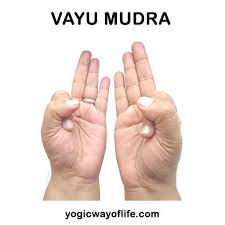
Vāyu Mudrā is a sacred yogic and tantric hand gesture associated with the Air element (Vāyu Tattva). Vāyu in Sanskrit means “wind” or “air,” representing movement, prāṇa flow, mental agility, and subtle energy circulation. This mudrā is primarily used in sādhanā to balance the air element in the body, enhance breath control, regulate nervous energy, and maintain mental clarity and stability. It is highly effective in practices aimed at controlling vata dosha, calming the mind, and promoting smooth energy flow throughout the body and subtle channels.
Vāyu Mudrā is commonly employed in meditation, pranayama, and tantric sādhanā where energy balance, nervous system regulation, or mental agility is crucial. It is particularly effective in healing practices, respiratory regulation, and sādhanā for mental focus or spiritual receptivity. Deities invoked with Vāyu Mudrā include:
-
Vayu Dev – lord of wind and prāṇa, for energetic balance and mental clarity
-
Hanuman – for vitality, courage, and controlled prāṇa flow
-
Shiva – especially in tantric or yogic sādhanā for controlling subtle energies
It can also be applied in general meditation, pranayama, and energy-balancing sādhanā, beyond deity-specific worship.
Usage in Sādhanā & Tantric Context
Vāyu Mudrā is applied in:
-
Prāṇāyāma and Hatha Yoga – controlling breath, balancing air element, and regulating nervous system energy
-
Tantric rituals – enhancing prāṇa flow, mental clarity, and subtle energy circulation
-
Meditation and mantra sādhanā – stabilizing the mind and increasing awareness
-
Healing and preventive practices – reducing anxiety, vata imbalance, and nervous tension
Deities commonly invoked with Vāyu Mudrā include:
-
Vayu Dev – for air element and prāṇa balance
-
Hanuman – for vitality, courage, and energetic flow
-
Shiva – for subtle energy control and spiritual transformation
It is particularly used where breath regulation, mental balance, and prāṇa control are essential for sādhanā.
Invocation Method & Energetic Activation
To perform Vāyu Mudrā:
-
Sit in a comfortable meditation posture, keeping the spine erect.
-
Fold the index finger toward the base of the thumb and gently press it with the thumb, keeping the other fingers extended naturally. This stimulates the Air element in the body.
-
Rest the hands on the knees, palms facing upward, or at the heart center for focused energy activation.
-
Visualize prāṇa circulating smoothly like the wind, clearing blockages, stabilizing nervous energy, and bringing mental clarity.
-
Recite mantras associated with wind, energy flow, and prāṇa balance:
-
Om Vāyave Namah
-
Om Hanumate Namah (for courage and vitality)
-
-
Maintain awareness of mental calm, breath flow, and subtle energy circulation, allowing the mudrā to harmonize the air element in the physical and subtle bodies.
Energetically, Vāyu Mudrā stabilizes the nervous system, balances prāṇa, regulates air element, enhances mental clarity, and improves vitality and concentration.
Scriptural References & Authentic Sources
Vāyu Mudrā is described in classical yogic and tantric texts:
-
Hatha Yoga Pradipika – mudrās for controlling prāṇa and balancing air element
-
Gheranda Samhita – detailing mudrās for energy flow, prāṇa, and mental balance
-
Shiva Samhita – describing air-based mudrās for subtle energy harmonization
-
Yoga Ratnakara – referencing mudrās to regulate vata and prāṇa circulation
These texts confirm that Vāyu Mudrā is essential for balancing the air element, enhancing prāṇa flow, and stabilizing mind and body in meditation and sādhanā.
Purpose, Benefits & Impact in Sādhanā
Vāyu Mudrā provides multiple benefits:
-
Balances Air element (Vāyu Tattva) in body and mind
-
Regulates breath, prāṇa, and nervous energy
-
Reduces anxiety, tension, and vata imbalance
-
Enhances mental clarity, focus, and agility
-
Supports meditation, mantra sādhanā, and tantric rituals
During sādhanā, using Vāyu Mudrā ensures smooth prāṇa flow, mental calm, balanced energies, and improved concentration, enhancing the effectiveness of spiritual practices.
Beyond Deity Worship – Broader Applications
Apart from deity invocation, Vāyu Mudrā is applied for:
-
Prāṇāyāma to improve breath and energy circulation
-
Meditation for mental clarity and focus
-
Energy-balancing rituals to harmonize subtle body and mind
-
Healing and preventive practices to reduce anxiety, nervous tension, and vata disorders
-
Enhancing agility, awareness, and cognitive flexibility in daily life
In essence, Vāyu Mudrā is the gesture of wind, prāṇa balance, and mental clarity, empowering practitioners to harmonize air energies, stabilize mind and body, and enhance vitality and subtle energy flow.

Kubera Mudrā – The Gesture of Wealth, Abundance, and Manifestation
Kubera Mudrā is a sacred yogic and tantric hand gesture associated with manifestation, wealth, and prosperity, named after Kubera, the god of riches, treasures, and financial abundance. This mudrā is primarily used in sādhanā to invoke financial stability, attract prosperity, and enhance the flow of wealth energy. It symbolizes clarity of intention, focus, and alignment of spiritual and material goals, and is widely practiced in wealth-oriented rituals, meditation, and tantric sādhanā.
Kubera Mudrā is commonly employed in sādhanā for wealth, success, abundance, and opportunity manifestation. It is particularly effective in mantra sādhanā, Lakshmi Puja, financial rituals, and meditation practices aimed at material and spiritual prosperity. Deities invoked with Kubera Mudrā include:
-
Kubera – primary deity for wealth, treasures, and financial abundance
-
Lakshmi – to attract auspiciousness, prosperity, and fortune
-
Ganesha – for removal of obstacles to financial growth
It can also be used in general prosperity-focused sādhanā, wealth manifestation practices, or combined with other abundance-oriented mudrās.
Usage in Sādhanā & Tantric Context
Kubera Mudrā is applied in:
-
Meditation for financial clarity and intention setting – to visualize wealth and abundance
-
Tantric rituals for prosperity – harmonizing energies to manifest treasures and success
-
Puja to Lakshmi or Ganesha – enhancing ritual efficacy and attracting blessings
-
Sādhanā for business, career, and wealth growth – directing prāṇa and focus toward material goals
Deities commonly invoked with Kubera Mudrā include:
-
Kubera – primary deity for wealth and treasures
-
Lakshmi – for auspicious fortune and abundance
-
Ganesha – for obstacle removal and smooth flow of prosperity
This mudrā is particularly used where focused wealth manifestation, financial clarity, and abundance-oriented intention are essential.
Invocation Method & Energetic Activation
To perform Kubera Mudrā:
-
Sit in a comfortable meditation posture, keeping the spine straight.
-
Touch the tips of the thumb, index, and middle fingers together, keeping the ring and little fingers bent toward the palm. This configuration is believed to activate the energy of abundance and material manifestation.
-
Rest the hands on the knees, palms facing upward, or at the heart center for focused energy activation.
-
Visualize divine energy of Kubera flowing into your hands and body, filling your life with abundance, opportunities, and prosperity.
-
Recite mantras associated with wealth and prosperity:
-
Om Kuberaaya Namah
-
Om Shreem Hreem Shreem Lakshmiyei Namah (for combined Lakshmi-Kubera blessings)
-
-
Maintain awareness of abundance, focus on financial goals, and alignment of spiritual and material energies, allowing the mudrā to harmonize wealth and opportunity energies.
Energetically, Kubera Mudrā stimulates wealth manifestation, channels abundance energy, aligns intention with material goals, and enhances spiritual prosperity flow.
Scriptural References & Authentic Sources
Kubera Mudrā is mentioned in classical Tantric and yogic texts:
-
Kubera Tantra – details mudrās for invoking Kubera’s blessings
-
Shri Sukta – references mudrās to harmonize wealth energy
-
Tantra Sara – explains techniques for wealth and prosperity manifestation
-
Lakshmi Tantra – outlines combined sādhanā with Kubera and Lakshmi
These sources confirm that Kubera Mudrā is essential for activating the energy of wealth, manifesting abundance, and aligning material and spiritual prosperity.
Purpose, Benefits & Impact in Sādhanā
Kubera Mudrā provides multiple benefits:
-
Attracts financial and material abundance
-
Strengthens manifestation power and clarity of intention
-
Harmonizes spiritual and material prosperity
-
Enhances success, opportunities, and smooth flow of wealth
-
Supports meditation, mantra sādhanā, and rituals for financial growth
During sādhanā, using Kubera Mudrā ensures focused energy for wealth manifestation, alignment of abundance forces, and enhanced spiritual and material prosperity.
Beyond Deity Worship – Broader Applications
Apart from deity invocation, Kubera Mudrā is applied for:
-
Meditation for personal wealth, financial goals, and opportunity manifestation
-
Business and career sādhanā – to enhance success and remove financial obstacles
-
Energy harmonization for abundance flow – activating prāṇa for material prosperity
-
Combined sādhanā with Lakshmi Mudrā or other prosperity gestures
-
Fostering confidence, focus, and positivity in wealth-related endeavors
In essence, Kubera Mudrā is the gesture of wealth, abundance, and manifestation, empowering practitioners to align with divine prosperity energies and attract both material and spiritual wealth.
Ākāśa Mudrā – The Gesture of Space/Ether Element and Consciousness Expansion

Ākāśa Mudrā is a profound yogic and tantric hand gesture associated with the space or ether element (Ākāśa Tattva). Ākāśa in Sanskrit means “space” or “ether,” symbolizing consciousness, subtle awareness, spiritual receptivity, and connection to the cosmos. This mudrā is primarily used in sādhanā to expand awareness, enhance intuition, harmonize subtle energies, and facilitate spiritual receptivity. By activating the ether element in the body, Ākāśa Mudrā promotes clarity of thought, heightened perception, and inner stillness, making it essential in meditation, mantra sādhanā, and advanced yogic practices.
Ākāśa Mudrā is commonly applied in spiritual sādhanā aimed at consciousness expansion, intuitive awakening, and energy harmonization. It is particularly effective in tantric rituals, meditation, and prāṇāyāma where the practitioner seeks subtle energy awareness and mental clarity. Deities invoked with Ākāśa Mudrā include:
-
Shiva – for cosmic consciousness, inner awareness, and subtle energy mastery
-
Vishnu – for balance of universal energies and cosmic harmony
-
Saraswati – for wisdom, intuition, and creative inspiration
It can also be used in general meditation, subtle energy activation, and consciousness-based sādhanā, beyond deity-specific rituals.
Usage in Sādhanā & Tantric Context
Ākāśa Mudrā is applied in:
-
Meditation for expanded awareness and subtle perception – heightening intuition and cosmic connection
-
Tantric rituals – activating subtle energies and harmonizing ether element
-
Prāṇāyāma and Hatha Yoga – balancing subtle energy channels and enhancing prāṇa circulation
-
Mantra sādhanā – increasing receptivity to higher vibrations and divine consciousness
Deities commonly invoked with Ākāśa Mudrā include:
-
Shiva – for subtle energy control and spiritual awakening
-
Vishnu – for universal energy alignment
-
Saraswati – for wisdom, learning, and clarity
It is particularly used where spiritual expansion, subtle energy activation, and higher consciousness development are central to sādhanā.
Invocation Method & Energetic Activation
To perform Ākāśa Mudrā:
-
Sit in a comfortable meditation posture with a straight spine.
-
Touch the tips of the middle finger to the base of the thumb, while keeping the other fingers extended naturally. This configuration activates the ether element and subtle perception.
-
Place the hands on the knees, palms facing upward or at the heart/mind center for energy focus.
-
Visualize cosmic space, divine energy, and infinite awareness filling your body and mind, expanding consciousness and harmonizing subtle energies.
-
Recite mantras associated with ether and awareness:
-
Om Ākāśāya Namah – invoking space element energy
-
Om Saraswatyai Namah – enhancing wisdom and intuition
-
-
Maintain awareness of inner spaciousness, subtle energy flow, and intuitive clarity, allowing the mudrā to harmonize the ether element in physical and subtle bodies.
Energetically, Ākāśa Mudrā enhances spiritual receptivity, intuition, cosmic awareness, subtle energy balance, and mental clarity.
Scriptural References & Authentic Sources
Ākāśa Mudrā is mentioned in classical yogic and tantric texts:
-
Hatha Yoga Pradipika – describing mudrās for subtle energy and element control
-
Gheranda Samhita – explaining mudrās for consciousness and subtle body activation
-
Shiva Samhita – detailing ether-based mudrās for spiritual awakening
-
Yoga Ratnakara – referencing mudrās for ether element harmonization and prāṇa flow
These texts confirm that Ākāśa Mudrā is essential for activating the ether element, expanding consciousness, and harmonizing subtle energies in meditation and sādhanā.
Purpose, Benefits & Impact in Sādhanā
Ākāśa Mudrā provides multiple benefits:
-
Balances Ether element (Ākāśa Tattva) in body and mind
-
Enhances intuition, subtle perception, and mental clarity
-
Promotes spiritual receptivity and consciousness expansion
-
Facilitates subtle energy flow and prāṇa harmonization
-
Supports meditation, mantra sādhanā, and tantric rituals
During sādhanā, using Ākāśa Mudrā ensures heightened awareness, stable energy flow, expanded consciousness, and alignment with higher cosmic vibrations.
Beyond Deity Worship – Broader Applications
Apart from deity invocation, Ākāśa Mudrā is applied for:
-
Meditation to increase intuitive capacity and mental clarity
-
Energy harmonization and subtle body alignment
-
Spiritual sādhanā for consciousness expansion and higher awareness
-
Prāṇāyāma and yoga practices to balance subtle energies and enhance cosmic connection
-
Developing receptivity for mantras, yantras, and divine guidance
In essence, Ākāśa Mudrā is the gesture of space, consciousness, and subtle energy mastery, empowering practitioners to expand awareness, harmonize ether element, and connect with higher spiritual realms.
Ādi Mudrā – The Primordial Gesture of Vitality and Spiritual Awakening

Ādi Mudrā is a sacred yogic and tantric hand gesture often referred to as the “primordial” or “first” mudrā, symbolizing original energy, prāṇa awakening, and spiritual grounding. The term Ādi in Sanskrit means “beginning” or “primordial,” highlighting its function in connecting the practitioner with the source of life force (prāṇa) and spiritual energy). This mudrā is primarily used in sādhanā to stimulate vitality, awaken subtle energy channels, and harmonize prāṇa flow, making it foundational for meditation, pranayama, and spiritual sādhanā aimed at awakening consciousness.
Ādi Mudrā is commonly applied in Hatha Yoga, tantric meditation, and prāṇāyāma practices where activation of the subtle body, deep breathing, and energy circulation are important. It is particularly effective in sādhanā involving Shiva, Shakti, or combined divine energies. Deities invoked with Ādi Mudrā include:
-
Shiva – for awakening inner prāṇa and spiritual potency
-
Shakti – for activating kundalini and primordial energy
-
Ganesha – for removing obstacles in energy flow and sādhanā
It can also be used in general meditation and pranayama practices to harmonize vital life force and enhance energy awareness, beyond deity-specific invocation.
Usage in Sādhanā & Tantric Context
Ādi Mudrā is applied in:
-
Meditation and Prāṇāyāma – to awaken and circulate prāṇa throughout the body
-
Tantric sādhanā – stimulating subtle energy channels and activating Shakti/inner vitality
-
Hatha Yoga practices – enhancing breathing efficiency, energy control, and internal focus
-
Mantra sādhanā – harmonizing mind, body, and subtle energies for effective chanting
Deities commonly invoked with Ādi Mudrā include:
-
Shiva – for primordial energy and spiritual awakening
-
Shakti – for kundalini and divine energy activation
-
Ganesha – for obstacle removal in spiritual energy flow
It is particularly used where awakening prāṇa, activating subtle energy, and grounding spiritual vitality are essential.
Invocation Method & Energetic Activation
To perform Ādi Mudrā:
-
Sit in a comfortable meditative posture with a straight spine.
-
Make a fist with both hands, tucking the thumb inside, and place the fists on the chest or near the navel depending on lineage and tradition.
-
Close the eyes and focus on the natural flow of prāṇa, feeling it circulating through the central energy channels (sushumna, ida, pingala).
-
Visualize primordial energy awakening at the base of the spine and flowing upward, energizing the mind, body, and subtle energy field.
-
Recite mantras to strengthen prāṇa and spiritual vitality:
-
Om Namah Shivaya – for Shiva energy and awakening
-
Om Shakti Namah – for activating divine feminine energy
-
-
Maintain awareness of vitality, energy flow, and inner awakening, allowing Ādi Mudrā to harmonize the life force and subtle energies.
Energetically, Ādi Mudrā activates prāṇa, strengthens vitality, stabilizes subtle energy channels, and awakens inner spiritual consciousness.
Scriptural References & Authentic Sources
Ādi Mudrā is referenced in classical yogic and tantric texts:
-
Hatha Yoga Pradipika – mudrās for prāṇa awakening and subtle energy control
-
Gheranda Samhita – foundational mudrā for energy circulation and meditation
-
Shiva Samhita – describing primordial mudrās for prāṇa and spiritual awakening
-
Yoga Ratnakara – references mudrās to harmonize vital energies and subtle body
These texts affirm that Ādi Mudrā is foundational in awakening prāṇa, harmonizing subtle energies, and preparing the practitioner for higher spiritual sādhanā.
Purpose, Benefits & Impact in Sādhanā
Ādi Mudrā provides multiple benefits:
-
Activates primordial prāṇa and life force
-
Strengthens subtle energy channels and internal vitality
-
Enhances meditation, focus, and energy awareness
-
Supports tantric and yogic sādhanā for spiritual awakening
-
Removes subtle energy blockages and facilitates smooth energy flow
During sādhanā, using Ādi Mudrā ensures heightened inner vitality, activation of subtle channels, stabilization of prāṇa, and enhanced effectiveness of spiritual practices.
Beyond Deity Worship – Broader Applications
Apart from deity invocation, Ādi Mudrā is applied for:
-
Prāṇāyāma and yoga for vitality and energy balance
-
Meditation to awaken subtle awareness and consciousness
-
Tantric sādhanā for activating kundalini and Shakti energy
-
Energy harmonization and grounding of prāṇa
-
Preparation for advanced sādhanā, mantra, or mudrā practices
In essence, Ādi Mudrā is the gesture of primordial energy, prāṇa awakening, and spiritual grounding, empowering practitioners to activate life force, harmonize subtle energies, and awaken inner spiritual potential.
Shuni Mudrā – The Gesture of Patience, Discipline, and Spiritual Restraint

Shuni Mudrā, also known as the gesture of Saturn or discipline, is a sacred yogic and tantric hand gesture associated with patience, spiritual restraint, focus, and karmic balance. The term Shuni in Sanskrit is linked to Saturn (Shani), discipline, endurance, and delayed but precise results. This mudrā is primarily used in sādhanā to cultivate patience, strengthen inner resolve, stabilize mind and emotions, and overcome obstacles, aligning practitioners with the stabilizing energies of Saturn. It is especially important in mantra sādhanā, tantric rituals, meditation, and spiritual practices requiring focus and karmic harmonization.
Shuni Mudrā is commonly applied in spiritual sādhanā for inner discipline, controlling impulses, overcoming delays, and karmic correction. It is particularly effective in rituals and meditations invoking deities associated with patience, justice, protection, and karmic balance. Deities invoked with Shuni Mudrā include:
-
Shani – primary deity for patience, karmic balance, and endurance
-
Saturn Planetary Deity – for astrological remedies and karmic alignment
-
Durga – for protection, endurance, and removal of obstacles
It can also be used in general meditation, energy balancing, and focus-enhancing sādhanā, beyond deity-specific invocation.
Usage in Sādhanā & Tantric Context
Shuni Mudrā is applied in:
-
Meditation for patience and karmic awareness – calming mental turbulence and emotional instability
-
Mantra sādhanā – enhancing focus, perseverance, and precise energy alignment
-
Tantric rituals – activating endurance and stabilizing energies in the subtle body
-
Astrological and remedial practices – mitigating malefic planetary effects, particularly of Saturn (Shani)
Deities commonly invoked with Shuni Mudrā include:
-
Shani – for karmic balance and discipline
-
Durga – for protection and obstacle removal
-
Planetary Saturn – for harmonizing astrological influences
It is particularly used where inner discipline, karmic stabilization, and patience in spiritual or worldly pursuits are essential.
Invocation Method & Energetic Activation
To perform Shuni Mudrā:
-
Sit in a comfortable meditation posture with a straight spine.
-
Touch the tip of the middle finger to the tip of the thumb, keeping the other fingers extended naturally. This configuration activates the stabilizing and patient energy of Saturn.
-
Place the hands on the knees, palms facing upward for meditation or at the heart center for focused energy activation.
-
Visualize Saturn’s stabilizing energy entering your hands and radiating through your body, strengthening patience, endurance, and karmic balance.
-
Recite mantras associated with Saturn and discipline:
-
Om Sham Shanicharaya Namah – invoking Saturn’s stabilizing influence
-
Om Dum Durgayei Namah – invoking Durga for protection and endurance
-
-
Maintain awareness of inner patience, karmic alignment, and steady mental focus, allowing Shuni Mudrā to harmonize your subtle energies and stabilize the mind.
Energetically, Shuni Mudrā enhances discipline, mental stability, karmic correction, focus, and endurance, aligning the practitioner with stabilizing cosmic energies.
Scriptural References & Authentic Sources
Shuni Mudrā is referenced in classical yogic, tantric, and astrological texts:
-
Gheranda Samhita – detailing mudrās for karmic energy and focus
-
Hatha Yoga Pradipika – mudrās for mental stability and subtle energy control
-
Shani Tantra – explaining mudrās to harmonize Saturn’s energy
-
Tantra Sara – describing the use of mudrās in patience and discipline-oriented sādhanā
These texts confirm that Shuni Mudrā is essential for cultivating patience, karmic awareness, inner discipline, and alignment with Saturn’s stabilizing energy.
Purpose, Benefits & Impact in Sādhanā
Shuni Mudrā provides multiple benefits:
-
Enhances patience, endurance, and mental stability
-
Strengthens karmic alignment and corrective energies
-
Supports meditation, mantra sādhanā, and tantric rituals
-
Mitigates malefic planetary effects, particularly of Saturn
-
Improves focus, self-discipline, and spiritual persistence
During sādhanā, using Shuni Mudrā ensures steady mind, controlled energy flow, harmonized karmic forces, and enhanced ability to overcome obstacles patiently.
Beyond Deity Worship – Broader Applications
Apart from deity invocation, Shuni Mudrā is applied for:
-
Meditation to strengthen patience and focus
-
Karmic balancing and subtle energy harmonization
-
Astrological remedies to stabilize Shani effects in one’s life
-
Developing endurance in spiritual practices and worldly tasks
-
Energy stabilization in prāṇāyāma and subtle body sādhanā
In essence, Shuni Mudrā is the gesture of patience, discipline, and karmic balance, empowering practitioners to cultivate endurance, align with Saturnian energies, and achieve steady progress in both spiritual and worldly pursuits.
Guru Mudrā – The Gesture of Wisdom, Guidance, and Spiritual Illumination

Guru Mudrā is a sacred hand gesture in yogic and tantric traditions that symbolizes wisdom, spiritual guidance, and alignment with higher knowledge. The term Guru in Sanskrit means “teacher” or “dispeller of darkness,” highlighting its connection to illumination, insight, and the guidance of a spiritual master or divine energy. This mudrā is primarily used in sādhanā to invoke the blessings of wisdom, awaken intuition, enhance learning, and deepen spiritual understanding. It is essential in meditation, mantra sādhanā, tantric rituals, and any practice where divine guidance or spiritual insight is sought.
Guru Mudrā is commonly applied in sādhanā aimed at acquiring knowledge, inner clarity, intuitive wisdom, and alignment with divine guidance. Deities and energies invoked with Guru Mudrā include:
-
Guru Brihaspati – the planetary deity of wisdom, intellect, and spiritual knowledge
-
Shiva – as the cosmic teacher and embodiment of knowledge
-
Saraswati – for learning, speech, creativity, and intuitive insight
Apart from deity invocation, Guru Mudrā can also be used in personal meditation, study-focused sādhanā, and energy alignment practices to enhance wisdom, guidance, and mental clarity.
Usage in Sādhanā & Tantric Context
Guru Mudrā is applied in:
-
Meditation for spiritual insight and clarity – strengthening mental focus and higher knowledge
-
Mantra sādhanā – increasing receptivity to divine guidance and enhancing mantra potency
-
Tantric rituals – invoking the guidance of cosmic or planetary teachers for correct sādhanā alignment
-
Study, learning, and intellectual practices – activating the energy of wisdom and discernment
Deities commonly invoked with Guru Mudrā include:
-
Guru Brihaspati – for wisdom, guidance, and cosmic insight
-
Shiva – for spiritual illumination and knowledge
-
Saraswati – for intuitive insight, creativity, and learning
It is particularly used where guidance, spiritual understanding, knowledge acquisition, and intuitive clarity are essential.
Invocation Method & Energetic Activation
To perform Guru Mudrā:
-
Sit in a comfortable meditation posture with a straight spine.
-
Join the tips of the index finger and thumb, keeping the other fingers extended naturally, or sometimes interlace fingers with specific hand positions depending on tradition, representing the connection between individual and divine wisdom.
-
Place the hands on the knees or at the heart center, palms facing upward to enhance energy reception.
-
Visualize divine guidance flowing into the mind and heart, awakening insight, knowledge, and clarity.
-
Recite mantras associated with guidance and wisdom:
-
Om Guruve Namah – invoking the guru principle and cosmic wisdom
-
Om Saraswatyai Namah – for knowledge, speech, and creative insight
-
-
Maintain awareness of inner clarity, discernment, and connection to higher guidance, allowing Guru Mudrā to harmonize subtle energies and illuminate consciousness.
Energetically, Guru Mudrā awakens intuition, strengthens wisdom, enhances learning, stabilizes mind, and aligns the practitioner with divine guidance.
Scriptural References & Authentic Sources
Guru Mudrā is referenced in classical yogic, tantric, and spiritual texts:
-
Hatha Yoga Pradipika – describing mudrās for knowledge, energy alignment, and mental clarity
-
Gheranda Samhita – detailing mudrās for spiritual guidance and intellect activation
-
Shiva Samhita – explaining mudrās that enhance wisdom and spiritual insight
-
Yoga Ratnakara – referencing mudrās for intellect, guidance, and subtle energy harmonization
These texts confirm that Guru Mudrā is essential for awakening wisdom, enhancing mental clarity, aligning with spiritual guidance, and deepening the effectiveness of sādhanā.
Purpose, Benefits & Impact in Sādhanā
Guru Mudrā provides multiple benefits:
-
Enhances intuition, wisdom, and spiritual insight
-
Strengthens mental clarity, focus, and learning capacity
-
Supports meditation, mantra sādhanā, and tantric rituals
-
Aligns subtle energies with divine guidance and cosmic intelligence
-
Facilitates correct spiritual decisions and path alignment
During sādhanā, using Guru Mudrā ensures mental stability, increased discernment, enhanced learning, and effective spiritual practice.
Beyond Deity Worship – Broader Applications
Apart from deity invocation, Guru Mudrā is applied for:
-
Meditation for insight and higher consciousness
-
Study and learning-focused sādhanā
-
Energy harmonization and mental clarity
-
Mantra and subtle energy practices to enhance receptivity and alignment with divine guidance
-
Spiritual counseling or preparatory practices for advanced sādhanā
In essence, Guru Mudrā is the gesture of wisdom, guidance, and spiritual illumination, empowering practitioners to receive divine knowledge, align with higher intelligence, and progress confidently on the spiritual path.
Kāli Mudrā – The Gesture of Fierce Power, Protection, and Transformation

Kāli Mudrā is a sacred tantric and yogic hand gesture associated with divine power, transformation, destruction of negative forces, and protection from obstacles. Named after Kali, the fierce manifestation of the Divine Mother, this mudrā embodies her energy of liberation, cosmic destruction of negativity, and empowerment for the practitioner. Kāli Mudrā is primarily used in sādhanā to invoke protective energy, remove inner and outer blockages, awaken transformative Shakti, and enhance spiritual courage. It is especially significant in Tantric rituals, Shakti sādhanā, and mantric worship where fierce protective energy is required.
Kāli Mudrā is commonly applied in Tantric sādhanā, protective rituals, energy-clearing practices, and intense meditation for spiritual transformation. It is primarily used to invoke the divine energies of:
-
Kali – for fierce protection, Shakti activation, and destruction of negativity
-
Durga – for protective energy and empowerment
-
Chamunda – for removing obstacles, negativity, and demonic influences
Apart from deity-specific invocation, Kāli Mudrā is also used in personal energy
clearing, protection from psychic or subtle attacks, and for awakening internal transformative Shakti, making it versatile in spiritual sādhanā beyond just deity worship.
Usage in Sādhanā & Tantric Context
Kāli Mudrā is applied in:
-
Shakti and Tantric Sādhanā – activating Kundalini and divine protective energy
-
Protective rituals and mantras – warding off negativity, fear, and psychic obstacles
-
Meditation for inner courage and transformation – fostering fearlessness and spiritual strength
-
Mantra sādhanā invoking fierce deities – aligning practitioner with cosmic Shakti energy
Deities commonly invoked with Kāli Mudrā include:
-
Kali – primary deity of fierce power and protection
-
Durga – protector and remover of obstacles
-
Chamunda – for removing demonic and negative influences
It is particularly used where spiritual courage, protection, transformation, and Shakti activation are needed.
Invocation Method & Energetic Activation
To perform Kāli Mudrā:
-
Sit in a stable meditation posture, with spine erect and relaxed shoulders.
-
Form the hands in a specific tantric mudrā resembling claw-like or protective gestures, depending on lineage, often symbolizing the fierce grip of divine energy.
-
Place the hands on the thighs or at the heart center, palms facing outward for projection of protective energy.
-
Visualize Kali’s fierce Shakti radiating through your body, dissolving fear, negativity, and blockages, and protecting your energy field.
-
Chant mantras associated with Kali or protective Shakti, such as:
-
Om Krim Kali Namah – invoking the transformative energy of Kali
-
Om Dum Durgayei Namah – for courage, protection, and empowerment
-
-
Focus on internal transformation, fearlessness, and energization of protective Shakti, letting the mudrā harmonize the body, mind, and subtle energies.
Energetically, Kāli Mudrā activates fierce protective Shakti, destroys negativity, enhances courage, and transforms inner and outer obstacles into spiritual growth.
Scriptural References & Authentic Sources
Kāli Mudrā is referenced in classical tantric and yogic texts:
-
Tantra Sara – detailing mudrās for Shakti activation and protection
-
Shakta Pramāṇam – describing mudrās invoking fierce divine energy
-
Kali Tantra – describing rituals, mudrās, and mantras to align with Kali’s energy
-
Hatha Yoga Pradipika – mentions mudrās for energy control, spiritual protection, and transformation
These texts confirm that Kāli Mudrā is a powerful tantric tool for protection, energy transformation, and activation of divine Shakti, essential for sādhanā where fearlessness, courage, and protection are required.
Purpose, Benefits & Impact in Sādhanā
Kāli Mudrā provides multiple benefits:
-
Activates protective and transformative Shakti
-
Removes fear, negativity, and subtle blockages
-
Enhances courage, spiritual strength, and energy focus
-
Supports meditation, mantra sādhanā, and tantric rituals
-
Empowers practitioner with divine protection and transformative energy
During sādhanā, using Kāli Mudrā ensures fearlessness, clarity in action, protection from psychic or subtle influences, and effective activation of transformative energies.
Beyond Deity Worship – Broader Applications
Apart from deity invocation, Kāli Mudrā is applied for:
-
Energy clearing and protection in personal space or aura
-
Activation of inner courage and spiritual empowerment
-
Tantric sādhanā focusing on Shakti awakening and transformation
-
Overcoming obstacles, fears, and negativity in personal or spiritual life
-
Preparing for advanced spiritual practices and intense meditation
In essence, Kāli Mudrā is the gesture of fierce divine Shakti, protection, and inner transformation, empowering practitioners to remove fear, dissolve negativity, activate courage, and channel divine protective energy for both spiritual and practical purposes.
Vishuddha Mudrā – The Gesture of Purity, Communication, and Spiritual Clarity

Vishuddha Mudrā is a sacred yogic and tantric hand gesture associated with the Vishuddha chakra (throat chakra), representing purity, clear communication, spiritual expression, and energetic cleansing. The term Vishuddha in Sanskrit means “pure, purified,” highlighting its function to purify the mind, body, and subtle energies, while enhancing the flow of divine wisdom and expression. This mudrā is primarily used in sādhanā to strengthen communication, harmonize energy centers, amplify mantra recitation, and facilitate spiritual clarity and intuition. It is especially significant in mantra sādhanā, chanting practices, meditations for Vishuddha chakra activation, and rituals involving knowledge or speech-oriented deities.
Vishuddha Mudrā is commonly applied in sādhanā targeting the throat chakra, divine expression, speech purity, and enhanced intuitive perception. Deities and energies invoked with Vishuddha Mudrā include:
-
Saraswati – goddess of speech, knowledge, and wisdom
-
Hayagriva – for wisdom, intellect, and articulation
-
Shiva – for mantra energy, clarity, and purification of subtle energies
Apart from deity invocation, Vishuddha Mudrā is also used in meditation, prāṇāyāma, mantra recitation, and subtle energy alignment practices to purify internal and external vibrations, making it versatile in spiritual sādhanā beyond deity-specific worship.
Usage in Sādhanā & Tantric Context
Vishuddha Mudrā is applied in:
-
Chakra sādhanā – activating and balancing the throat chakra for clear communication and higher intuition
-
Mantra sādhanā and chanting – amplifying the vibrational potency of mantras and spiritual vibrations
-
Tantric rituals for purity and energy alignment – cleansing negative energies and harmonizing subtle channels
-
Meditation for speech clarity, expression, and intellectual insight – enhancing intuitive and communicative faculties
Deities commonly invoked with Vishuddha Mudrā include:
-
Saraswati – for mastery over knowledge, speech, and wisdom
-
Hayagriva – for clarity, intelligence, and articulation
-
Shiva – for mantra effectiveness and energy purification
It is particularly used where purity, clear expression, mantra potency, and energy cleansing are required.
Invocation Method & Energetic Activation
To perform Vishuddha Mudrā:
-
Sit in a comfortable meditation posture, with spine erect and shoulders relaxed.
-
Form the hands by joining the tips of the index and thumb fingers, keeping the other fingers extended naturally (variations may exist depending on tradition) to symbolize purity and vibrational alignment.
-
Place the hands on the knees or at the heart center, palms facing upward or outward depending on practice, to facilitate energy flow.
-
Visualize pure, radiant energy entering the Vishuddha chakra at the throat, cleansing impurities and enhancing communication and spiritual expression.
-
Recite mantras associated with Saraswati, Hayagriva, or Shiva, such as:
-
Om Aim Saraswatyai Namah – invoking divine wisdom and mastery of speech
-
Om Namo Bhagavate Hayagrivaya – for knowledge, clarity, and intellectual strength
-
Om Namah Shivaya – to purify and harmonize subtle energies
-
-
Maintain awareness of purity, clarity, and expressive power, allowing Vishuddha Mudrā to harmonize mental, emotional, and energetic channels.
Energetically, Vishuddha Mudrā purifies the mind and subtle energies, enhances communication and speech, strengthens mantra vibrations, and aligns the practitioner with higher spiritual expression.
Scriptural References & Authentic Sources
Vishuddha Mudrā is referenced in classical yogic, tantric, and spiritual texts:
-
Hatha Yoga Pradipika – mudrās for chakra activation, energy purification, and mantra enhancement
-
Gheranda Samhita – detailing mudrās for communication, clarity, and subtle energy alignment
-
Shiva Samhita – describing mudrās for Vishuddha chakra and mantra potency
-
Yoga Ratnakara – referencing mudrās to purify mind, speech, and energy flow
These texts confirm that Vishuddha Mudrā is essential for activating the throat chakra, purifying speech, enhancing mantra vibrations, and aligning the practitioner with divine communication and spiritual clarity.
Purpose, Benefits & Impact in Sādhanā
Vishuddha Mudrā provides multiple benefits:
-
Purifies subtle energy channels and mental clarity
-
Enhances communication, speech, and intellectual faculties
-
Strengthens mantra potency and meditative focus
-
Activates Vishuddha chakra and spiritual expression
-
Supports energy alignment, creativity, and intuitive perception
During sādhanā, using Vishuddha Mudrā ensures clarity in thought and speech, enhanced intuitive insight, purified energy channels, and effective manifestation of mantra and meditative intentions.
Beyond Deity Worship – Broader Applications
Apart from deity invocation, Vishuddha Mudrā is applied for:
-
Mantra and chanting practices to increase vibrational potency
-
Meditation for intuitive communication and inner clarity
-
Prāṇāyāma for cleansing subtle energies and stabilizing mental functions
-
Enhancing creative expression, learning, and intellectual focus
-
Balancing energy flow in the throat chakra for emotional and spiritual expression
In essence, Vishuddha Mudrā is the gesture of purity, spiritual communication, and vibrational alignment, empowering practitioners to speak, think, and express with clarity, amplify mantra energies, and cultivate spiritual wisdom.
Ājñā Mudrā – The Gesture of Insight, Intuition, and Higher Perception

Ājñā Mudrā is a sacred hand gesture associated with the Ājñā chakra (third eye chakra), located between the eyebrows. The term Ājñā in Sanskrit means “command” or “perception,” symbolizing the seat of intuition, higher consciousness, inner vision, and spiritual insight. This mudrā is primarily used in sādhanā to enhance intuition, awaken inner wisdom, develop clairvoyance, and strengthen meditative focus. It is essential in practices like meditation, Kundalini awakening, mantra sādhanā, and tantric rituals aimed at spiritual insight and psychic perception.
Usage in Sādhanā & Tantric Context
Ājñā Mudrā is applied in:
-
Meditation for inner vision and heightened intuition – focusing on the third eye to access subtle knowledge
-
Mantra sādhanā and mantra visualization – enhancing the energy of mantras and mental clarity
-
Tantric and yogic rituals – activating psychic perception and intuitive faculties
-
Kundalini sādhanā – facilitating the rise of prāṇa to higher chakras for spiritual awakening
Deities commonly invoked with Ājñā Mudrā include:
-
Shiva – the supreme yogi, awakener of inner consciousness
-
Guru Brihaspati – cosmic teacher and guide for wisdom
-
Kali – for transformative insight and removal of ignorance
This mudrā is particularly used where spiritual insight, clarity of thought, intuition, and alignment with higher consciousness are needed.
Invocation Method & Energetic Activation
To perform Ājñā Mudrā:
-
Sit in a comfortable meditation posture, with the spine straight and shoulders relaxed.
-
Bring the tips of the index fingers together, sometimes joined with the thumbs or forming a triangle depending on tradition, representing the convergence of divine energy and awareness at the third eye.
-
Place the hands in the lap, near the third eye, or in front of the chest, palms facing inward or upward as per lineage instructions.
-
Visualize divine light and insight entering the Ājñā chakra, clearing mental fog, and activating intuition.
-
Recite mantras associated with insight and wisdom, such as:
-
Om Namah Shivaya – for higher consciousness and spiritual perception
-
Om Guruve Namah – invoking guidance and intuitive clarity
-
-
Maintain awareness of inner vision, clarity, and expanded perception, allowing Ājñā Mudrā to harmonize subtle energies and strengthen intuitive faculties.
Energetically, Ājñā Mudrā activates the third eye, enhances psychic perception, clarifies mental processes, and aligns the practitioner with higher spiritual knowledge.
Scriptural References & Authentic Sources
Ājñā Mudrā is referenced in classical yogic, tantric, and spiritual texts:
-
Hatha Yoga Pradipika – describing mudrās for chakra activation, intuition, and subtle energy control
-
Gheranda Samhita – detailing mudrās for mental clarity, insight, and intuitive awakening
-
Shiva Samhita – explaining mudrās for awakening higher perception and third eye energy
-
Yoga Ratnakara – referencing mudrās to purify mind, awaken intuition, and enhance subtle perception
These texts confirm that Ājñā Mudrā is essential for awakening the third eye, accessing intuitive wisdom, and enhancing meditative and mantra practices.
Purpose, Benefits & Impact in Sādhanā
Ājñā Mudrā provides multiple benefits:
-
Activates the third eye chakra and intuitive faculties
-
Enhances inner vision, clairvoyance, and spiritual insight
-
Strengthens concentration, meditation, and mental clarity
-
Facilitates higher awareness, discernment, and decision-making
-
Supports mantra sādhanā and subtle energy alignment
During sādhanā, using Ājñā Mudrā ensures heightened intuition, deep meditation, clarity of thought, and effective alignment with higher consciousness.
Beyond Deity Worship – Broader Applications
Apart from deity invocation, Ājñā Mudrā is applied for:
-
Meditation and mindfulness for spiritual insight
-
Mantra practice to enhance vibrational efficacy and mental focus
-
Energy alignment and chakra purification
-
Activation of clairvoyance and psychic abilities
-
Mental clarity, creativity, and intuitive decision-making
In essence, Ājñā Mudrā is the gesture of higher perception, spiritual insight, and intuitive wisdom, empowering practitioners to access inner vision, align with cosmic consciousness, and deepen their meditative and spiritual practice.
Abhaya Mudra – The Gesture of Fearlessness & Divine Assurance
Sahasrāra Mudrā is a sacred yogic and tantric hand gesture associated with the Sahasrāra chakra (crown chakra), located at the top of the head. The term Sahasrāra in Sanskrit means “thousand-petaled,” representing the full awakening of consciousness, divine connection, and liberation (moksha). This mudrā is primarily used in sādhanā to activate the crown chakra, attain higher states of consciousness, enhance spiritual perception, and facilitate union with the divine energy. It is essential in practices like advanced meditation, Kundalini awakening, Brahma sādhanā, and tantric rituals aimed at spiritual liberation and cosmic awareness
Usage in Sādhanā & Tantric Context
Sahasrāra Mudrā is applied in:
-
Meditation for spiritual awakening and enlightenment – focusing on the crown chakra to transcend ego and attain cosmic awareness
-
Kundalini sādhanā – enabling the prāṇa to rise through all chakras, culminating in Sahasrāra for divine union
-
Tantric rituals for Brahma consciousness – connecting with supreme Shakti or Shiva energy
-
Mantra sādhanā – amplifying mantras that invoke liberation, divine consciousness, and spiritual clarity
Deities and energies invoked with Sahasrāra Mudrā include:
-
Shiva – the supreme yogi and ultimate consciousness
-
Parashakti – cosmic energy for liberation and enlightenment
-
Vishnu – for sustaining cosmic order and divine alignment
This mudrā is particularly used where complete spiritual awakening, union with cosmic consciousness, and liberation from karmic bindings are desired.
Invocation Method & Energetic Activation
To perform Sahasrāra Mudrā:
-
Sit in a stable meditative posture, such as Padmāsana or Siddhāsana, with the spine erect and shoulders relaxed.
-
Form the hands according to the lineage-specific gesture (often bringing fingers together, forming a subtle seal pointing upward, or placing hands above the head in a triangular formation) to symbolize alignment with divine energy and cosmic consciousness.
-
Place the hands above the head, at the crown, or in the lap, palms facing upward, to facilitate the flow of divine energy into the crown chakra.
-
Visualize a thousand-petaled lotus opening at the crown, radiant with white or golden light, connecting the practitioner to infinite consciousness.
-
Recite mantras associated with liberation and cosmic awareness, such as:
-
Om Sahasraraaya Namah – invoking crown chakra activation and divine consciousness
-
Om Shreem Hreem Kleem Namah – aligning with cosmic Shakti for spiritual awakening
-
Om Namo Bhagavate Vasudevaya – for divine union and universal awareness
-
-
Maintain awareness of total surrender, cosmic alignment, and expansion of consciousness, allowing Sahasrāra Mudrā to harmonize subtle energies, awaken spiritual insight, and facilitate liberation.
Energetically, Sahasrāra Mudrā activates the crown chakra, connects the practitioner with cosmic energy, purifies the mind, and facilitates the realization of supreme consciousness.
Scriptural References & Authentic Sources
Sahasrāra Mudrā is referenced in classical yogic, tantric, and meditative texts:
-
Hatha Yoga Pradipika – describing mudrās for energy ascent, crown chakra activation, and spiritual liberation
-
Gheranda Samhita – detailing mudrās for Kundalini rise and connection to higher consciousness
-
Shiva Samhita – explaining mudrās for divine union, subtle energy alignment, and liberation
-
Yoga Ratnakara – referencing mudrās for crown chakra awakening, spiritual enlightenment, and energy purification
These texts confirm that Sahasrāra Mudrā is essential for attaining the highest state of spiritual consciousness, energy alignment, and liberation.
Purpose, Benefits & Impact in Sādhanā
Sahasrāra Mudrā provides multiple benefits:
-
Activates the crown chakra and spiritual awareness
-
Facilitates connection with cosmic energy and divine consciousness
-
Purifies subtle energies, transcends ego, and awakens enlightenment
-
Supports mantra sādhanā, meditation, and Kundalini awakening
-
Enhances spiritual insight, wisdom, and liberation from karmic limitations
During sādhanā, using Sahasrāra Mudrā ensures full spiritual alignment, heightened consciousness, energetic purification, and the awakening of divine perception.
Beyond Deity Worship – Broader Applications
Apart from deity invocation, Sahasrāra Mudrā is applied for:
-
Meditation and mindfulness to experience higher consciousness
-
Kundalini sādhanā for complete energy alignment from base to crown chakra
-
Mantra practice to amplify vibrations and facilitate liberation
-
Spiritual insight, universal awareness, and deep meditative states
-
Achieving inner peace, detachment from material bondage, and realization of moksha
In essence, Sahasrāra Mudrā is the gesture of supreme consciousness, cosmic alignment, and spiritual liberation, empowering practitioners to connect with the infinite, awaken divine insight, and attain ultimate spiritual fulfillment.
Mūlādhāra Mudrā – The Gesture of Stability, Grounding, and Vital Energy

Mūlādhāra Mudrā is a sacred yogic and tantric hand gesture associated with the Mūlādhāra chakra (root chakra), located at the base of the spine. The term Mūlādhāra in Sanskrit means “root support” or “foundation,” representing stability, grounding, survival, vitality, and the primal life force (Prāṇa Shakti). This mudrā is primarily used in sādhanā to strengthen foundational energy, stabilize the mind and body, awaken Kundalini energy at the base, and cultivate courage and vitality. It is essential in practices like Kundalini awakening, chakra sādhanā, tantric rituals for strength, and energy stabilization exercises.
Usage in Sādhanā & Tantric Context
Mūlādhāra Mudrā is applied in:
-
Meditation for grounding, stability, and inner strength – focusing on the root chakra to stabilize energy and mind
-
Kundalini sādhanā – awakening and directing energy from Mūlādhāra chakra upward through all chakras
-
Tantric rituals for vitality, protection, and resilience – connecting with divine energies that support foundational life force
-
Mantra sādhanā – enhancing the power of mantras that invoke stability, courage, and endurance
Deities commonly invoked with Mūlādhāra Mudrā include:
-
Ganesha – remover of obstacles, stabilizer of life’s beginnings
-
Bhuvaneshwari – earth energy and cosmic grounding
-
Shiva – primal energy and Kundalini activation
This mudrā is particularly used where stability, energy grounding, vitality, courage, and awakening of foundational energy are needed.
Invocation Method & Energetic Activation
To perform Mūlādhāra Mudrā:
-
Sit in a comfortable meditative posture, preferably with feet grounded and spine erect.
-
Form the hands according to the lineage-specific gesture, commonly by interlocking fingers or placing hands near the base of the spine, symbolizing connection with the earth and grounding energy.
-
Visualize a radiant red lotus at the base of the spine, stabilizing prāṇa, energizing the body, and anchoring the mind and spirit.
-
Recite mantras associated with grounding, stability, and vitality, such as:
-
Om Gam Ganapataye Namah – invoking Ganesha for stability and removal of obstacles
-
Om Bhumaye Namah – honoring earth energy for grounding
-
Om Namah Shivaya – awakening Kundalini and vital energy
-
-
Maintain awareness of strength, stability, and grounding, allowing Mūlādhāra Mudrā to harmonize subtle energies and awaken foundational vitality.
Energetically, Mūlādhāra Mudrā activates the root chakra, stabilizes life force energy, enhances courage, and prepares the practitioner for higher spiritual ascent.
Scriptural References & Authentic Sources
Mūlādhāra Mudrā is referenced in classical yogic, tantric, and meditative texts:
-
Hatha Yoga Pradipika – describing mudrās for grounding, Kundalini awakening, and foundational energy activation
-
Gheranda Samhita – detailing mudrās for stability, vitality, and root chakra activation
-
Shiva Samhita – explaining mudrās for primal energy, grounding, and spiritual initiation
-
Yoga Ratnakara – referencing mudrās for earth energy, foundational stability, and energy alignment
These texts confirm that Mūlādhāra Mudrā is essential for establishing life force, grounding energy, and preparing the practitioner for higher spiritual practices.
Purpose, Benefits & Impact in Sādhanā
Mūlādhāra Mudrā provides multiple benefits:
-
Activates the root chakra and strengthens foundational energy
-
Enhances physical vitality, endurance, and courage
-
Stabilizes the mind, body, and subtle energies
-
Supports Kundalini awakening and energy flow from base to higher chakras
-
Facilitates grounding, protection, and mental clarity
During sādhanā, using Mūlādhāra Mudrā ensures stability in meditation, vitality for spiritual practices, harmonized prāṇa flow, and courage to face life’s challenges.
Beyond Deity Worship – Broader Applications
Apart from deity invocation, Mūlādhāra Mudrā is applied for:
-
Meditation to enhance grounding and stability
-
Kundalini sādhanā for energy activation and ascent
-
Prāṇāyāma and energy purification practices
-
Strengthening mental resilience, physical vitality, and courage
-
Protection, rooting energy, and overcoming fear
In essence, Mūlādhāra Mudrā is the gesture of grounding, vitality, and foundational energy, empowering practitioners to stabilize body, mind, and spirit, awaken life force, and prepare for higher spiritual ascent.
Varuṇa Mudrā – The Gesture of Fluidity, Balance, and Water Element

Varuṇa Mudrā is a sacred yogic hand gesture associated with the water element (Āpas tattva) and linked to emotional balance, fluidity, and purification. In Sanskrit, Varuṇa is the deity of water, oceans, and cosmic order, representing flow, adaptability, purification, and the harmonious regulation of bodily fluids. This mudrā is primarily used in sādhanā to balance the water element in the body, regulate emotions, support healing, and enhance adaptability in spiritual and mundane life. It is commonly applied in mantra sādhanā, meditation, tantric practices for elemental alignment, and health-focused yogic exercises.
Usage in Sādhanā & Tantric Context
Varuṇa Mudrā is applied in:
-
Meditation for emotional balance and mental clarity – calming turbulent thoughts and fostering fluidity in consciousness
-
Mantra sādhanā invoking Varuṇa or water energies – enhancing purification and flow of prāṇa
-
Tantric rituals for elemental harmony – balancing bodily fluids and subtle energies associated with the water element
-
Health-oriented yogic practices – assisting with hydration, skin health, and regulation of bodily fluids
Deities commonly invoked with Varuṇa Mudrā include:
-
Varuna – the god of water, oceans, and cosmic equilibrium
-
Ganga Devi – representing sacred waters and purification
-
Bhuvaneshwari – for elemental balance and sustaining cosmic order
This mudrā is particularly used where fluidity, emotional harmony, detoxification, and elemental balance are needed.
Invocation Method & Energetic Activation
To perform Varuṇa Mudrā:
-
Sit comfortably in a meditative posture, keeping the spine erect and shoulders relaxed.
-
Touch the tip of the little finger to the tip of the thumb, keeping other fingers extended straight. This gesture symbolizes the flow of water energy and balance between body and mind.
-
Place the hands on the knees or thighs with palms facing upward, visualizing clear, pure water flowing through the body, washing away blockages and stagnation.
-
Recite mantras associated with water, purification, and emotional balance, such as:
-
Om Varunaya Namah – invoking Varuṇa for balance and purification
-
Om Shreem Hreem Kleem – for harmonizing elemental energies
-
Om Namo Bhagavate Gange – for purification and flow
-
-
Maintain awareness of fluidity, adaptability, and emotional clarity, allowing Varuṇa Mudrā to harmonize water elements, soothe emotions, and enhance vitality.
Energetically, Varuṇa Mudrā activates water-related energy channels, stabilizes fluid flow in the body, regulates emotions, and enhances adaptability.
Scriptural References & Authentic Sources
Varuṇa Mudrā is referenced in classical yogic, tantric, and Ayurvedic texts:
-
Hatha Yoga Pradipika – describing mudrās for elemental balance, energy flow, and health enhancement
-
Gheranda Samhita – detailing mudrās for balancing bodily humors and regulating water element
-
Shiva Samhita – explaining mudrās to harmonize prāṇa and fluid energies
-
Yoga Ratnakara – referencing mudrās to support health, energy purification, and elemental balance
These texts confirm that Varuṇa Mudrā is effective for balancing the water element, purifying subtle energies, and harmonizing body, mind, and emotions.
Purpose, Benefits & Impact in Sādhanā
Varuṇa Mudrā provides multiple benefits:
-
Balances water element in the body and subtle energies
-
Promotes emotional harmony, calmness, and adaptability
-
Supports health by regulating bodily fluids, skin, and hydration
-
Enhances mental clarity, intuition, and spiritual receptivity
-
Purifies energy channels and strengthens the flow of prāṇa
During sādhanā, using Varuṇa Mudrā ensures emotional equilibrium, clarity of mind, purification of subtle energies, and fluidity in meditation and spiritual practice.
Beyond Deity Worship – Broader Applications
Apart from deity invocation, Varuṇa Mudrā is applied for:
-
Meditation to soothe emotions and enhance adaptability
-
Health practices to regulate water balance and support detoxification
-
Kundalini and prāṇāyāma practices for elemental harmony
-
Psychic and intuitive enhancement, especially for emotional insight
-
Purification and flow of mental, emotional, and physical energies
In essence, Varuṇa Mudrā is the gesture of water, emotional balance, and fluidity, empowering practitioners to harmonize body and mind, enhance spiritual flow, and maintain equilibrium in sādhanā and daily life.
Kilaka Mudrā – The Gesture of Unlocking, Stabilization, and Spiritual Control

Kilaka Mudrā is a sacred yogic and tantric hand gesture used primarily in advanced sādhanā for unlocking blocked energies, stabilizing prāṇa, and controlling spiritual or elemental forces. The Sanskrit word Kilaka means “pin, bolt, or key,” symbolizing locking or unlocking subtle energy channels (nāḍīs) and activating latent spiritual potentials. This mudrā is particularly important in Kundalini sādhanā, tantra, mantra sādhanā, and rituals for controlling or directing cosmic energies. It acts as a spiritual “key” to ensure energy flows correctly and safely through the subtle body.
Usage in Sādhanā & Tantric Context
Kilaka Mudrā is applied in:
-
Kundalini sādhanā – securing and unlocking energy at specific chakras, often to control the rising prāṇa
-
Tantric rituals and mantra sādhanā – used to “lock in” the energy generated by intense sādhanā and focus it toward a deity or spiritual objective
-
Advanced meditation practices – controlling subtle energies and preventing energy dissipation during sādhanā
-
Rituals for protection, stabilization, and spiritual empowerment – securing spiritual progress and avoiding energy leaks
Deities and energies commonly invoked with Kilaka Mudrā include:
-
Shiva – master of energy, spiritual discipline, and Kundalini awakening
-
Durga – for protective and stabilizing energy in sādhanā
-
Kali – for unlocking transformative power while maintaining control
This mudrā is particularly applied when energy stabilization, spiritual control, and protection from dissipation or misdirection of prāṇa are essential.
Invocation Method & Energetic Activation
To perform Kilaka Mudrā:
-
Sit in a stable meditative posture, with a straight spine and relaxed shoulders.
-
Form the mudrā according to traditional tantric guidance, typically by locking the fingers or pressing specific fingertips in a manner that symbolically secures energy channels. This “locking” ensures prāṇa remains contained and focused.
-
Visualize a pin or bolt of light securing the flow of energy in your subtle body, particularly at the chakras that require stabilization.
-
Chant mantras that invoke protection, stabilization, or the deity guiding the energy, such as:
-
Om Hreem Namah – to harmonize and stabilize Kundalini energy
-
Om Dum Durgayei Namah – invoking protective and stabilizing forces
-
Om Kali Kalikayei Namah – unlocking transformative energy safely
-
-
Maintain awareness of control, stability, and focused energy, allowing Kilaka Mudrā to prevent energy leakage and maximize sādhanā results.
Energetically, Kilaka Mudrā locks and stabilizes prāṇa, directs energy toward spiritual objectives, and safeguards the practitioner from imbalance or dissipation of subtle energy.
Scriptural References & Authentic Sources
Kilaka Mudrā is referenced in classical yogic, tantric, and meditative texts:
-
Gheranda Samhita – describing mudrās to control and direct energy flow
-
Shiva Samhita – detailing techniques to lock and unlock prāṇa for safe sādhanā
-
Hatha Yoga Pradipika – explaining mudrās for stabilization, energy control, and spiritual discipline
-
Tantra Sara – providing instructions for using mudrās to secure and direct energy in ritual practices
These texts confirm that Kilaka Mudrā is crucial for controlled awakening, energy management, and ensuring safety and efficacy in advanced spiritual sādhanā.
Purpose, Benefits & Impact in Sādhanā
Kilaka Mudrā provides multiple benefits:
-
Locks and stabilizes prāṇa and subtle energies
-
Enhances concentration and focus during meditation and mantra sādhanā
-
Protects the practitioner from energy dissipation or imbalance
-
Supports Kundalini awakening in a controlled and safe manner
-
Facilitates deeper spiritual insight, empowerment, and progress in sādhanā
During sādhanā, using Kilaka Mudrā ensures energy containment, maximized spiritual output, and secure activation of subtle body channels, preventing potential disturbances or spiritual burnout.
Beyond Deity Worship – Broader Applications
Apart from deity invocation, Kilaka Mudrā is applied for:
-
Advanced meditative control of prāṇa and subtle energies
-
Stabilizing energy in healing or tantric practices
-
Regulating the flow of Kundalini energy and spiritual power
-
Enhancing mantra sādhanā and spiritual focus
-
Preventing psychic or energetic imbalances during intense sādhanā
In essence, Kilaka Mudrā is the gesture of unlocking, controlling, and stabilizing spiritual energy, empowering practitioners to manage prāṇa safely, achieve focused sādhanā, and awaken latent spiritual powers under precise guidance.
Hakini Mudrā – The Gesture of Mental Focus, Memory, and Inner Power

Hakini Mudrā is a powerful yogic hand gesture that primarily enhances mental clarity, concentration, memory, and intuitive abilities. The term Hakini refers to a subtle energy associated with the mind and intellect, often invoked to balance hemispheres of the brain and harmonize prāṇa within the head region. This mudrā is extensively used in meditation, mantra sādhanā, pranayama, tantric rituals, and practices aimed at awakening higher cognitive and psychic powers. Hakini Mudrā is particularly beneficial for practitioners seeking mental agility, heightened focus, spiritual insight, and alignment of subtle energies in the brain and nervous system.
Usage in Sādhanā & Tantric Context
Hakini Mudrā is applied in:
-
Meditation and mantra sādhanā – to improve focus, concentration, and mental stability
-
Kundalini practices and pranayama – to regulate prāṇa flow in the head region, balancing subtle energy centers
-
Tantric rituals and deity worship – enhancing clarity, perception, and psychic receptivity during sādhanā
-
Memory, intuition, and cognitive enhancement – used by practitioners for intellectual and spiritual development
Deities and energies commonly invoked with Hakini Mudrā include:
-
Saraswati – goddess of knowledge, wisdom, and speech
-
Ganesh – remover of obstacles, patron of intellect and learning
-
Durga – for mental focus and spiritual power
This mudrā can be used in sādhanā with any deity where clarity of thought, precision in ritual, and enhanced focus are necessary.
Invocation Method & Energetic Activation
To perform Hakini Mudrā:
-
Sit in a comfortable meditative posture, keeping the spine straight and shoulders relaxed.
-
Bring the fingertips of both hands to touch each other lightly, keeping palms slightly apart. The fingers should meet tip to tip, forming a symmetrical “mirror” gesture.
-
Place the hands in front of the chest or at the navel level, maintaining awareness of the energy circulating between the fingers and the brain.
-
Visualize a bright, focused light in the center of the forehead (Ajna Chakra), enhancing mental clarity, wisdom, and intuitive perception.
-
Recite mantras for knowledge, focus, and divine guidance, such as:
-
Om Saraswatyai Namah – invoking goddess Saraswati for wisdom and clarity
-
Om Gam Ganapataye Namah – invoking Ganesh to remove mental obstacles
-
-
Maintain deep awareness of mental presence, focus, and psychic energy, allowing Hakini Mudrā to harmonize the hemispheres of the brain and energize cognitive faculties.
Energetically, Hakini Mudrā stimulates the brain’s energy channels, balances subtle energies, and enhances prāṇa flow to support mental, intuitive, and spiritual growth.
Scriptural References & Authentic Sources
Hakini Mudrā is described in classical yogic and tantric texts for mental and spiritual enhancement:
-
Hatha Yoga Pradipika – describing mudrās for energy circulation, mental control, and focus
-
Gheranda Samhita – detailing mudrās for enhancing prāṇa flow and cognitive faculties
-
Yoga Ratnakara – highlighting mudrās for brain activation, intuition, and intellectual development
-
Shiva Samhita – referencing mudrās to improve focus, memory, and subtle energy alignment
These texts confirm that Hakini Mudrā is a potent practice for enhancing mental power, spiritual focus, and intuitive awareness in sādhanā.
Purpose, Benefits & Impact in Sādhanā
Hakini Mudrā provides multiple benefits:
-
Enhances concentration, mental clarity, and memory
-
Balances the left and right hemispheres of the brain
-
Supports prāṇa flow in the head, Ajna Chakra, and subtle energy channels
-
Strengthens intuitive and psychic perception
-
Facilitates more focused, effective, and precise sādhanā
During sādhanā, using Hakini Mudrā aligns mental and subtle energies, stabilizes thought patterns, enhances spiritual insight, and improves effectiveness of mantra recitation and deity worship.
Beyond Deity Worship – Broader Applications
Apart from deity invocation, Hakini Mudrā is applied for:
-
Meditation to sharpen mental faculties and clarity
-
Yoga practices to balance prāṇa in the head and nervous system
-
Enhancing intuition, creativity, and psychic abilities
-
Cognitive and memory improvement during sādhanā or learning practices
-
Supporting advanced Kundalini practices requiring mental focus and stability
In essence, Hakini Mudrā is the gesture of mental focus, energetic balance, and spiritual clarity, empowering practitioners to enhance intellect, intuition, and prāṇic harmony while performing advanced sādhanā.
Kamajayi Mudrā – The Gesture of Desire Control, Spiritual Victory, and Mind Mastery

Kamajayi Mudrā is a specialized yogic and tantric hand gesture designed to subdue uncontrolled desires, attain mastery over mind and senses, and achieve spiritual victory over worldly attachments. The Sanskrit term Kamajayi means “victory over desires,” symbolizing the discipline of the mind and the channeling of desire energy into spiritual growth. This mudrā is extensively used in advanced meditation, tantra, mantra sādhanā, and rituals aimed at self-control, spiritual purification, and energy mastery. Practitioners employ this mudrā to transform the pull of sensual or mental desires into focused spiritual power.
Usage in Sādhanā & Tantric Context
Kamajayi Mudrā is applied in:
-
Mantra sādhanā and meditation – for controlling the mind, desires, and sensory impulses
-
Tantric rituals for self-discipline and spiritual empowerment – converting the energy of desire into spiritual progress
-
Kundalini and prāṇāyāma practices – stabilizing energy and ensuring that vital forces are not scattered by distractions or attachments
-
Spiritual purification and mental mastery – overcoming habitual desires and cultivating detachment while maintaining energy balance
Deities commonly invoked with Kamajayi Mudrā include:
-
Shiva – representing ascetic mastery and control over mind and senses
-
Durga – invoked to conquer inner weaknesses and maintain mental discipline
-
Kali – for transformation of desires into controlled, transformative energy
This mudrā can be used for any deity or sādhanā where mind control, discipline, and sublimation of desires are crucial.
Invocation Method & Energetic Activation
To perform Kamajayi Mudrā:
-
Sit in a stable meditative posture with a straight spine and relaxed shoulders.
-
Form the mudrā by interlocking or positioning fingers according to classical tantric instruction, symbolizing the containment and control of desire energy within the subtle body.
-
Place hands on knees or thighs, maintaining a subtle awareness of energy circulating through the palm, fingers, and upper chakras, particularly around the heart and head regions.
-
Visualize desires and attachments being transformed into focused spiritual energy, strengthening willpower and inner victory.
-
Recite mantras for mastery, discipline, and transformation, such as:
-
Om Namah Shivaya – for inner control and mastery over mind and senses
-
Om Dum Durgayei Namah – invoking Durga for discipline and victory over inner weaknesses
-
Om Kali Kalikayei Namah – transforming desires into spiritual empowerment
-
-
Maintain deep awareness of mind control, energy stabilization, and the redirection of desire into spiritual growth.
Energetically, Kamajayi Mudrā transforms lower impulses into higher energy, stabilizes prāṇa, and ensures that mental and spiritual energy remains focused.
Scriptural References & Authentic Sources
Kamajayi Mudrā is referenced in classical yogic and tantric literature for mastery of mind and desires:
-
Gheranda Samhita – explaining mudrās for controlling prāṇa and mental energies
-
Shiva Samhita – describing mudrās to achieve self-discipline and spiritual victory
-
Tantra Sara – detailing mudrās to subdue desires and enhance spiritual focus
-
Hatha Yoga Pradipika – referencing mudrās to transform mental and sensory energy into spiritual power
These texts confirm that Kamajayi Mudrā is essential for conquering desires, achieving mind mastery, and advancing spiritually in disciplined sādhanā.
Purpose, Benefits & Impact in Sādhanā
Kamajayi Mudrā provides multiple benefits:
-
Subdues uncontrolled desires and mental distractions
-
Strengthens willpower, discipline, and inner focus
-
Transforms desire energy into spiritual progress
-
Supports prāṇāyāma, meditation, and mantra sādhanā by stabilizing subtle energies
-
Facilitates mastery over mind, senses, and psychic energy
During sādhanā, using Kamajayi Mudrā ensures concentration, mental clarity, energy stability, and disciplined spiritual progress, preventing dissipation of energy due to attachments or desires.
Beyond Deity Worship – Broader Applications
Apart from deity invocation, Kamajayi Mudrā is applied for:
-
Advanced meditation to cultivate detachment and inner discipline
-
Kundalini practices requiring control over rising energy and mental impulses
-
Mantra sādhanā where precision, concentration, and control of thoughts are crucial
-
Transforming habitual desires or impulses into spiritual energy for personal growth
-
Protecting subtle energy from being scattered by uncontrolled mental or emotional tendencies
In essence, Kamajayi Mudrā is the gesture of victory over desires and mental mastery, empowering practitioners to redirect the pull of worldly impulses into spiritual energy, achieve focused sādhanā, and maintain stability in mind and subtle energies.
Mushti Mudrā – The Gesture of Strength, Willpower, and Determined Energy

Mushti Mudrā is a powerful yogic and tantric hand gesture that symbolizes strength, determination, willpower, and the focused channeling of energy. The Sanskrit word Mushti means “fist,” representing power, protection, and the ability to overcome obstacles. This mudrā is widely used in tantric sādhanā, mantra meditation, pranayama, and rituals where courage, protection, or concentration of energy is required. Mushti Mudrā is especially applied when a practitioner wants to activate inner strength, enhance mental and physical resolve, or harness vital energy for spiritual or protective purposes.
Usage in Sādhanā & Tantric Context
Mushti Mudrā is applied in:
-
Meditation and mantra sādhanā – to cultivate willpower, inner discipline, and unwavering focus
-
Kundalini practices – to stabilize rising energy and prevent dissipation
-
Protective rituals and tantric sādhanā – invoking strength and courage to overcome obstacles or negative energies
-
Spiritual empowerment and self-confidence – increasing determination in both mundane and spiritual tasks
Deities commonly invoked with Mushti Mudrā include:
-
Durga – goddess of power, courage, and protection
-
Shiva – for internal strength, stability, and overcoming challenges
-
Hanuman – symbolizing devotion, power, and fearless energy
This mudrā can be used with any deity or sādhanā where strength, protection, or focused energy is required, not limited to just one deity.
Invocation Method & Energetic Activation
To perform Mushti Mudrā:
-
Sit in a comfortable meditative posture, spine erect and shoulders relaxed.
-
Form a fist by curling the fingers tightly into the palm, with the thumb placed over the fingers or along the side, depending on tradition.
-
Place the fists on thighs or at the level of the navel, maintaining awareness of strength, energy, and determination flowing through the hands into the body and subtle energy channels.
-
Visualize a concentrated sphere of energy within the fist, radiating courage, vitality, and protective power throughout the body.
-
Recite mantras for power, protection, and inner strength, such as:
-
Om Dum Durgayei Namah – invoking Durga for courage and protection
-
Om Namah Shivaya – invoking Shiva for inner stability and overcoming challenges
-
Om Hanumate Namah – invoking Hanuman for fearless devotion and strength
-
-
Maintain deep awareness of powerful, determined energy circulating throughout the body and mind, aligning physical, mental, and spiritual forces.
Energetically, Mushti Mudrā concentrates prāṇa, fortifies mental and physical resilience, and stabilizes energy during intense sādhanā or spiritual work.
Scriptural References & Authentic Sources
Mushti Mudrā is mentioned in classical yogic and tantric literature:
-
Gheranda Samhita – detailing mudrās for energy concentration, willpower, and protection
-
Shiva Samhita – describing mudrās to fortify internal strength and resist distractions or negative energies
-
Hatha Yoga Pradipika – referencing mudrās to stabilize prāṇa, empower the body, and increase courage
-
Tantra Sara – specifying mudrās to invoke determination, spiritual power, and protective energy
These texts confirm that Mushti Mudrā is essential for cultivating inner strength, focus, and protective energy in both spiritual and worldly undertakings.
Purpose, Benefits & Impact in Sādhanā
Mushti Mudrā provides multiple benefits:
-
Enhances willpower, determination, and inner strength
-
Stabilizes prāṇa and subtle energy during meditation or sādhanā
-
Supports protective rituals and spiritual empowerment
-
Increases courage, confidence, and resilience in overcoming obstacles
-
Strengthens mental and physical focus, enabling more effective sādhanā
During sādhanā, using Mushti Mudrā ensures energy concentration, courage, and determination, making the practitioner resilient to both internal and external challenges while deepening focus and spiritual power.
Beyond Deity Worship – Broader Applications
Apart from deity invocation, Mushti Mudrā is applied for:
-
Meditation to cultivate determination, courage, and energy stabilization
-
Kundalini practices requiring energy containment and focused activation
-
Rituals for protection, empowerment, and overcoming obstacles
-
Self-discipline practices – redirecting scattered mental or physical energy into constructive channels
-
Enhancing performance in challenging spiritual or worldly tasks
In essence, Mushti Mudrā is the gesture of concentrated energy, courage, and inner victory, empowering practitioners to channel their physical, mental, and spiritual strength effectively in sādhanā and daily life.
If you want, I can continue compiling the remaining mudrās in this same comprehensive, deity-linked, tantric-focused format, so you will have the full reference set.
Do you want me to continue with the next mudrā?
same details for Swadhisthana Mudra
Swadhisthana Mudrā – The Gesture of Creative Energy, Emotional Balance, and Vitality

Swadhisthana Mudrā is a yogic hand gesture that activates and harmonizes the Swadhisthana Chakra, the sacral energy center responsible for creativity, desire, emotions, vitality, and reproductive energy. The Sanskrit term Swadhisthana means “one’s own abode,” indicating the seat of personal creative and vital power. This mudrā is widely used in kundalini sādhanā, chakra meditation, tantric rituals, and mantra sādhanā to cultivate emotional balance, energy flow, and the conscious use of creative and sexual energies. It is particularly beneficial for practitioners seeking balance in desires, enhanced vitality, and mastery over emotional and creative impulses.
Usage in Sādhanā & Tantric Context
Swadhisthana Mudrā is applied in:
-
Chakra meditation and kundalini sādhanā – to awaken, balance, and energize the sacral chakra
-
Tantric rituals – for harnessing creative, sexual, and emotional energies in a controlled, spiritually productive way
-
Mantra sādhanā for vitality and abundance – enhancing prāṇa flow and stimulating life-force energy
-
Emotional stability and creativity cultivation – balancing desires, emotions, and instinctual drives
Deities commonly invoked with Swadhisthana Mudrā include:
-
Shakti – goddess of creative energy, power, and vitality
-
Ganesha – for flow, abundance, and the removal of energetic blocks
-
Vishnu – when performing sādhanā related to abundance, creativity, and life-force
This mudrā can be applied for any deity or sādhanā where activation of life-force, creativity, or emotional balance is required.
Invocation Method & Energetic Activation
To perform Swadhisthana Mudrā:
-
Sit in a comfortable meditation posture with the spine straight and shoulders relaxed.
-
Interlace or position the fingers according to classical instruction, ensuring energy circulation is directed toward the lower abdomen (Swadhisthana Chakra).
-
Place hands on the lower abdomen, just below the navel, visualizing a vibrant orange-red energy sphere radiating warmth, creativity, and vitality.
-
Breathe deeply and rhythmically, feeling prāṇa flowing from the hands into the sacral chakra, activating emotional, creative, and sexual energy.
-
Recite mantras that enhance vitality, creativity, and emotional balance, such as:
-
Om Shrim Shaktiyai Namah – invoking Shakti for creative energy
-
Om Gam Ganapataye Namah – invoking Ganesh to remove energy blockages
-
Om Namo Narayanaya – invoking Vishnu for vital energy and abundance
-
-
Maintain awareness of energy circulating in the lower abdomen, sacral region, and throughout the body, stabilizing emotional and creative forces.
Energetically, Swadhisthana Mudrā activates, harmonizes, and directs creative and vital energies, aiding in emotional balance and the conscious use of desire energy for spiritual development.
Scriptural References & Authentic Sources
Swadhisthana Mudrā is referenced in classical yogic and tantric texts:
-
Gheranda Samhita – detailing mudrās for chakra activation and prāṇa flow
-
Shiva Samhita – describing mudrās for awakening and balancing sacral energies
-
Hatha Yoga Pradipika – referencing mudrās to stabilize energy centers, enhance vitality, and control desires
-
Tantra Sara – specifying mudrās for controlling, transforming, and utilizing creative and sexual energies
These texts confirm that Swadhisthana Mudrā is essential for awakening sacral energy, balancing desires, and enhancing vitality, creativity, and emotional stability.
Purpose, Benefits & Impact in Sādhanā
Swadhisthana Mudrā provides multiple benefits:
-
Activates and balances the Swadhisthana Chakra
-
Enhances creativity, vitality, and sexual energy in a controlled way
-
Balances emotions and stabilizes desire energy
-
Supports prāṇa flow, energy transformation, and kundalini awakening
-
Facilitates focused sādhanā by harmonizing lower chakra energies
During sādhanā, using Swadhisthana Mudrā ensures energy stability, emotional balance, and heightened vitality, allowing the practitioner to channel creative and instinctual energies into spiritual growth rather than dispersing them.
Beyond Deity Worship – Broader Applications
Apart from deity invocation, Swadhisthana Mudrā is applied for:
-
Chakra meditation for emotional and creative balance
-
Kundalini sādhanā to awaken and stabilize sacral energy
-
Tantric practices for conscious control and transformation of desire
-
Enhancing vitality, health, and energy circulation in the lower abdomen
-
Improving creativity, intuitive flow, and productive expression of emotions
In essence, Swadhisthana Mudrā is the gesture of creative and vital energy mastery, empowering practitioners to transform desires into spiritual power, stabilize emotions, and cultivate balanced life-force energy during advanced sādhanā.
Surya Mudrā – The Gesture of Solar Energy, Vitality, and Transformation
Surya Mudrā is a powerful yogic hand gesture that activates the solar (Surya) energy within the body, enhancing vitality, willpower, digestion, and overall life force. The Sanskrit word Surya means “Sun,” symbolizing energy, radiance, transformation, and clarity. This mudrā is primarily used in yogic, pranayama, mantra, and tantric sādhanā to increase internal heat, strengthen physical and mental energy, and promote purification. Surya Mudrā is particularly beneficial for practitioners seeking enhanced vitality, energy management, and transformation of stagnant or low energy into active, positive prāṇa.
Usage in Sādhanā & Tantric Context
Surya Mudrā is applied in:
-
Prāṇāyāma and meditation – to boost vitality, focus, and mental clarity
-
Tantric and yogic rituals – to harness solar energy for transformation and purification
-
Kundalini sādhanā – activating the fire element within the body, supporting energy ascent
-
Health and vitality-focused sādhanā – enhancing digestion, metabolism, and overall physical strength
Deities commonly invoked with Surya Mudrā include:
-
Surya – the Sun God, representing life force, energy, and vitality
-
Agni – god of fire, transformation, and purification
-
Shiva – for internal heat, energy stabilization, and inner radiance
This mudrā can be applied to any sādhanā or deity invocation where activation of solar energy, vitality, or transformative power is desired.
Invocation Method & Energetic Activation
To perform Surya Mudrā:
-
Sit in a comfortable meditative posture with a straight spine and relaxed shoulders.
-
Form the mudrā by folding the ring finger toward the palm and pressing it with the thumb, while keeping other fingers extended.
-
Place hands on the knees or thighs, with palms facing upwards, visualizing bright solar energy radiating from the hands into the body and the solar plexus (Manipura Chakra).
-
Breathe deeply and rhythmically, feeling prāṇa intensifying, internal heat rising, and energy circulating throughout the body.
-
Recite mantras that enhance solar energy and vitality, such as:
-
Om Suryaya Namah – invoking Surya for vitality and radiance
-
Om Agnaye Namah – invoking Agni for internal transformation
-
Om Namah Shivaya – stabilizing energy and enhancing inner radiance
-
-
Maintain awareness of energy circulation, inner heat, and vitality, aligning body, mind, and prāṇa with solar force.
Energetically, Surya Mudrā activates the fire element, strengthens willpower, enhances metabolism, and purifies both physical and subtle energies.
Scriptural References & Authentic Sources
Surya Mudrā is mentioned in classical yogic and tantric texts:
-
Gheranda Samhita – describing mudrās for internal energy activation and vitality
-
Hatha Yoga Pradipika – referencing mudrās to enhance digestion, prāṇa flow, and inner heat
-
Shiva Samhita – detailing mudrās for transformation, purification, and solar energy activation
-
Yoga Sara – explaining the significance of fire and solar energy mudrās for sādhanā and prāṇāyāma
These texts confirm that Surya Mudrā is essential for enhancing vitality, radiance, digestion, energy flow, and transformative spiritual practices.
Purpose, Benefits & Impact in Sādhanā
Surya Mudrā provides multiple benefits:
-
Enhances vitality, energy, and life force
-
Activates solar plexus (Manipura Chakra) and internal heat
-
Supports prāṇāyāma, meditation, and kundalini energy stabilization
-
Improves digestion, metabolism, and physical strength
-
Transforms stagnant energy into dynamic, focused prāṇa
-
Strengthens willpower, confidence, and mental clarity
During sādhanā, using Surya Mudrā ensures energized focus, purification of body and subtle energies, and balanced flow of prāṇa, enhancing both spiritual and physical capacity.
Beyond Deity Worship – Broader Applications
Apart from deity invocation, Surya Mudrā is applied for:
-
Prāṇāyāma and meditation to enhance vitality and concentration
-
Kundalini practices requiring activation of the fire element
-
Tantric rituals for internal purification, energy transformation, and willpower
-
Health-related practices to improve metabolism, digestion, and energy balance
-
Mental and spiritual practices requiring courage, radiance, and confidence
In essence, Surya Mudrā is the gesture of solar energy, vitality, and transformative power, enabling practitioners to channel life force effectively, enhance willpower, and support both physical and spiritual sādhanā.
Karana Mudrā – The Gesture of Dispelling Negativity and Removing Obstacles

Karana Mudrā is a potent yogic and tantric hand gesture primarily used to ward off negativity, repel harmful influences, and remove obstacles in spiritual and worldly life. The Sanskrit word Karana means “action” or “cause,” reflecting its purpose of actively dispelling unwanted energies and creating a protective field around the practitioner. This mudrā is widely applied in mantra sādhanā, protective rituals, tantric practices, and spiritual sādhanā to safeguard the practitioner from malefic forces or negative entities. It is particularly beneficial when performing sādhanā that may involve intense energies, confronting internal or external obstacles, or requiring energetic purification.
Usage in Sādhanā & Tantric Context
Karana Mudrā is applied in:
-
Tantric rituals and protective sādhanā – to actively dispel malefic influences
-
Mantra meditation – enhancing the protective power of mantras
-
Kundalini sādhanā – preventing energy leaks or negative energy penetration
-
Obstacle removal in worldly or spiritual endeavors – creating a shield of energy against harm
Deities commonly invoked with Karana Mudrā include:
-
Durga – goddess of protection and energy clearance
-
Hanuman – symbolizing strength, courage, and removal of negativity
-
Shiva – for destruction of obstacles and purification of subtle energies
This mudrā can be used with any deity or sādhanā where protection, obstacle removal, or energetic cleansing is required.
Invocation Method & Energetic Activation
To perform Karana Mudrā:
-
Sit in a comfortable meditative posture, with spine erect and shoulders relaxed.
-
Raise the hand to shoulder level or above, extending the index and little fingers upward, folding the middle and ring fingers into the palm, and keeping the thumb pressed against them. This creates the classical “Karana” shape.
-
Visualize a protective shield of light emanating from the hand, dispelling negative energies and repelling harmful influences.
-
Breathe deeply and steadily, feeling prāṇa flowing through the arm and hand, radiating protective energy outward.
-
Recite protective or obstacle-clearing mantras, such as:
-
Om Dum Durgayei Namah – invoking Durga for removal of negativity and obstacles
-
Om Hanumate Namah – invoking Hanuman for courage and energetic protection
-
Om Namah Shivaya – invoking Shiva for transformation and purification of negative energies
-
-
Maintain awareness of negative energies dissolving and protective forces surrounding you, ensuring the sādhanā remains safe and energetically potent.
Energetically, Karana Mudrā channels concentrated energy to dispel negativity, enhance protection, and stabilize prāṇa during spiritual practices.
Scriptural References & Authentic Sources
Karana Mudrā is mentioned in classical yogic and tantric literature:
-
Gheranda Samhita – detailing mudrās for protective energy and obstacle removal
-
Shiva Samhita – describing mudrās to ward off harmful influences and negative energies
-
Hatha Yoga Pradipika – referencing mudrās for spiritual protection, energy stabilization, and purification
-
Tantra Sara – specifying mudrās for energetic cleansing, protection, and safeguarding sādhanā
These texts confirm that Karana Mudrā is a crucial gesture for protection, purification, and removal of obstacles in both spiritual and worldly endeavors.
Purpose, Benefits & Impact in Sādhanā
Karana Mudrā provides multiple benefits:
-
Removes negativity, obstacles, and harmful influences
-
Stabilizes prāṇa and strengthens energetic boundaries
-
Supports protective rituals and spiritual empowerment
-
Enhances courage, confidence, and focus in sādhanā
-
Purifies subtle energies in the practitioner and the surrounding environment
During sādhanā, using Karana Mudrā ensures a safe, energetically purified space, enhances the potency of mantras, and empowers the practitioner to proceed without fear or disruption.
Beyond Deity Worship – Broader Applications
Apart from deity invocation, Karana Mudrā is applied for:
-
Energetic protection during meditation or spiritual practices
-
Shielding against malefic influences in both worldly and spiritual activities
-
Ritual purification of spaces, objects, or sādhanā setups
-
Enhancing mental resilience, focus, and clarity during challenging spiritual work
In essence, Karana Mudrā is the gesture of protective energy, obstacle removal, and spiritual empowerment, allowing practitioners to proactively dispel negativity, maintain energetic stability, and strengthen spiritual focus during advanced sādhanā.
Anahata Mudrā – The Gesture of Heart-Centered Energy, Compassion, and Balance

Anahata Mudrā is a sacred yogic hand gesture that activates and balances the Anahata Chakra, the heart center, fostering love, compassion, emotional stability, and spiritual connection. The Sanskrit word Anahata means “unstruck” or “pure sound,” symbolizing the eternal, undisturbed, and harmonious energy at the heart. This mudrā is predominantly used in meditative sādhanā, heart chakra activation, mantra sādhanā, and tantric rituals to cultivate inner peace, emotional balance, empathy, and harmonious energy flow. It is especially significant for practitioners seeking spiritual love, emotional resilience, and alignment of the heart with higher consciousness.
Usage in Sādhanā & Tantric Context
Anahata Mudrā is applied in:
-
Heart chakra meditation and Kundalini sādhanā – to awaken and balance the Anahata Chakra
-
Mantra sādhanā for compassion, love, and inner harmony – enhancing the potency of heart-centered mantras
-
Tantric rituals involving divine love, devotion, and balance – harmonizing emotions and subtle energies
-
Emotional healing and relationship-oriented sādhanā – promoting empathy, forgiveness, and emotional stability
Deities commonly invoked with Anahata Mudrā include:
-
Vishnu – for heart-centered devotion, protection, and compassion
-
Shiva – for inner balance, calm, and transformation of desires into devotion
-
Radha-Krishna – for divine love, harmony, and blissful emotional energy
This mudrā can be used for any deity or sādhanā where activation of heart-centered energy, compassion, and balance is essential.
Invocation Method & Energetic Activation
To perform Anahata Mudrā:
-
Sit in a comfortable meditation posture with a straight spine and relaxed shoulders.
-
Bring your hands together in front of the heart, palms lightly touching, with fingers gently interlaced or forming a heart-centered shape according to classical instruction.
-
Visualize a green or rose-colored energy sphere radiating from the heart, expanding with every inhale and stabilizing with every exhale.
-
Breathe deeply and rhythmically, feeling prāṇa flowing into the chest and heart center, activating love, compassion, and harmony.
-
Recite heart-centered mantras, such as:
-
Om Hridayaya Namah – activating heart consciousness
-
Om Shreem Hreem Kleem Maha Lakshmi Namah – fostering emotional balance and abundance
-
Om Namo Bhagavate Vasudevaya – invoking divine love and protection
-
-
Maintain awareness of energy circulation in the heart center, emotional equilibrium, and loving presence, aligning the practitioner with higher consciousness.
Energetically, Anahata Mudrā activates love, compassion, and emotional harmony, allowing subtle energies to flow freely through the heart, enhancing spiritual devotion and emotional resilience.
Scriptural References & Authentic Sources
Anahata Mudrā is referenced in classical yogic and tantric texts:
-
Gheranda Samhita – detailing mudrās for chakra activation and prāṇa flow
-
Hatha Yoga Pradipika – referencing mudrās for heart chakra energy and emotional balance
-
Shiva Samhita – describing mudrās to harmonize emotions and awaken heart-centered consciousness
-
Tantra Sara – specifying mudrās for balancing desire energy and cultivating devotion through the heart
These sources confirm that Anahata Mudrā is vital for activating the heart center, cultivating compassion, emotional harmony, and spiritual love.
Purpose, Benefits & Impact in Sādhanā
Anahata Mudrā provides multiple benefits:
-
Activates and balances the Anahata Chakra (heart center)
-
Enhances love, compassion, and empathy
-
Supports spiritual devotion, emotional healing, and inner harmony
-
Stabilizes emotions and transforms desires into balanced energy
-
Facilitates prāṇa flow, energy integration, and emotional resilience
During sādhanā, using Anahata Mudrā ensures emotional stability, compassionate awareness, and harmonious energy flow, enabling the practitioner to channel emotions constructively for spiritual growth.
Beyond Deity Worship – Broader Applications
Apart from deity invocation, Anahata Mudrā is applied for:
-
Heart-centered meditation and emotional healing
-
Enhancing relationships through empathy and balanced emotions
-
Chakra balancing and Kundalini practices
-
Spiritual devotion and cultivating loving-kindness toward self and others
-
Harmonizing subtle energies in daily life for mental and emotional well-being
In essence, Anahata Mudrā is the gesture of heart-centered energy, compassion, and emotional balance, allowing practitioners to transform desire and emotion into spiritual love, stability, and harmonious energy flow during advanced sādhanā.
Nāga Mudrā – The Gesture of Serpent Energy, Protection, and Kundalini Activation

Nāga Mudrā is a potent yogic and tantric hand gesture that channels the energy of the nāga (serpent), symbolizing Kundalini, protection, and hidden spiritual power. The Sanskrit word Nāga refers to serpentine or divine serpent energy, representing latent potential, transformation, protection, and awakening of subtle energies. This mudrā is primarily used in Kundalini sādhanā, tantra, and protective rituals, as well as in sādhanā related to energy control, spiritual awakening, and removal of obstacles. It is particularly powerful for practitioners who seek inner strength, protection from malefic influences, and activation of subtle serpentine energy in the body.
Usage in Sādhanā & Tantric Context
Nāga Mudrā is applied in:
-
Kundalini sādhanā – awakening and safely guiding the serpentine energy along the spine
-
Protective rituals and tantric sādhanā – shielding against negative energies and malefic forces
-
Mantra meditation – enhancing subtle energy flow and empowering transformative mantras
-
Sādhanā for overcoming hidden obstacles, karmic effects, or serpent-related doshas (Nāga Dosha)
Deities commonly invoked with Nāga Mudrā include:
-
Nāga Dev – divine serpent deity representing protection, wealth, and fertility
-
Shiva – for Kundalini activation, transformation, and energy stabilization
-
Vasuki – serpent king, invoked for protection, control over latent energies, and spiritual empowerment
This mudrā can be applied to any sādhanā or deity invocation requiring protection, Kundalini activation, or serpent energy empowerment.
Invocation Method & Energetic Activation
To perform Nāga Mudrā:
-
Sit in a comfortable meditation posture with a straight spine and relaxed shoulders.
-
Form the mudrā by folding the middle and ring fingers inward, keeping the index and little fingers extended, and pressing the thumb against the folded fingers, symbolizing the coiled energy of the serpent.
-
Place hands on knees or in front of the heart, with palms facing outward or upward, visualizing serpent energy coiling at the base of the spine and rising along the chakras.
-
Breathe deeply and rhythmically, feeling prāṇa moving in spirals through the spine, activating latent potential and protective energy.
-
Recite mantras related to serpentine energy, Kundalini, or protection, such as:
-
Om Nageshwaraya Namah – invoking Nāga Dev for spiritual power and protection
-
Om Namah Shivaya – for energy purification and Kundalini guidance
-
Om Vasukaye Namah – activating serpent energy and removing obstacles
-
-
Maintain awareness of energy rising, coiling, and activating subtle centers, aligning body, mind, and prāṇa with serpent force.
Energetically, Nāga Mudrā guides latent spiritual energy (Kundalini), strengthens protective fields, and removes energetic blocks.
Scriptural References & Authentic Sources
Nāga Mudrā is referenced in classical yogic, tantric, and Hatha Yoga texts:
-
Shiva Samhita – describing mudrās for Kundalini activation and serpent energy control
-
Gheranda Samhita – detailing mudrās for protection, spiritual empowerment, and subtle energy flow
-
Hatha Yoga Pradipika – referencing mudrās to awaken latent energies, stabilize prāṇa, and remove obstacles
-
Tantra Sara – specifying mudrās for Nāga Dosha remedies, energy activation, and protective sādhanā
These sources confirm that Nāga Mudrā is essential for serpentine energy activation, spiritual protection, and removal of hidden obstacles.
Purpose, Benefits & Impact in Sādhanā
Nāga Mudrā provides multiple benefits:
-
Activates Kundalini and latent spiritual energy
-
Removes obstacles and karmic blockages, especially related to Nāga Dosha
-
Strengthens protective aura and shields from negative energies
-
Enhances focus, willpower, and subtle energy awareness
-
Facilitates transformational sādhanā, emotional balance, and energy alignment
During sādhanā, using Nāga Mudrā ensures safe awakening of serpent energy, protection from malefic influences, and enhanced subtle energy flow, supporting both spiritual and physical vitality.
Beyond Deity Worship – Broader Applications
Apart from deity invocation, Nāga Mudrā is applied for:
-
Kundalini yoga and advanced energy work
-
Protection from psychic, spiritual, or energetic disturbances
-
Removal of serpent-related doshas or karmic obstacles in astrology-based remedies
-
Enhancing personal strength, focus, and subtle energy sensitivity
-
Ritual purification and energy stabilization in tantric and yogic practices
In essence, Nāga Mudrā is the gesture of serpent energy, protection, and spiritual empowerment, allowing practitioners to safely awaken latent energies, remove hidden obstacles, and cultivate inner strength during advanced sādhanā.
Dirgha Swarna Mudrā – The Gesture of Long-Lasting Prosperity and Auspicious Energy

Dirgha Swarna Mudrā is a specialized yogic and tantric hand gesture that channels energy for extended prosperity, abundance, and divine protection. The Sanskrit term Dirgha means “long” or “extended,” and Swarna means “gold” or “wealth,” signifying a mudrā that attracts sustained prosperity, auspiciousness, and spiritual abundance. This mudrā is primarily used in wealth-oriented sādhanā, abundance rituals, tantric prosperity practices, and protective sādhanā to maintain long-term positive energies and remove obstacles to spiritual and material growth. It is especially effective for practitioners seeking financial stability, continuous flow of wealth, and alignment with divine abundance.
Usage in Sādhanā & Tantric Context
Dirgha Swarna Mudrā is applied in:
-
Prosperity and abundance rituals – attracting sustained material and spiritual wealth
-
Tantric sādhanā for Lakshmi, Kubera, or other wealth deities – enhancing long-term fortune
-
Mantra sādhanā for financial stability and energy alignment – strengthening flow of auspicious energies
-
Protective and clearing rituals – removing energetic blocks that impede prosperity
Deities commonly invoked with Dirgha Swarna Mudrā include:
-
Lakshmi – goddess of wealth, abundance, and prosperity
-
Kubera – treasurer of the gods, guardian of material riches
-
Vishnu – for spiritual abundance and protection of material resources
This mudrā can be used with any sādhanā or deity invocation focused on sustained wealth, abundance, and energetic prosperity.
Invocation Method & Energetic Activation
To perform Dirgha Swarna Mudrā:
-
Sit in a comfortable meditation posture with an erect spine.
-
Bring your hands in front of the chest or slightly lower, palms facing upward.
-
Interlace the fingers in a specific formation according to tradition, while keeping the thumbs extended or forming a symbolic golden channel for energy flow.
-
Visualize golden energy or divine light flowing through the mudrā, spreading abundance and prosperity throughout your life.
-
Breathe deeply and steadily, feeling prāṇa circulating in rhythmic waves, enhancing auspicious energy and long-term fortune.
-
Recite wealth-focused mantras, such as:
-
Om Shreem Maha Lakshmiyei Namah – invoking Goddess Lakshmi for wealth and abundance
-
Om Kuberaaya Namah – invoking Kubera for material prosperity
-
Om Shreem Hreem Kleem Maha Lakshmi Namah – for continuous and auspicious financial flow
-
-
Maintain awareness of energetic blocks dissolving, divine abundance flowing, and protective energy stabilizing your prosperity.
Energetically, Dirgha Swarna Mudrā channels long-term auspiciousness, stabilizes wealth energy, and safeguards the practitioner from obstacles affecting prosperity.
Scriptural References & Authentic Sources
Dirgha Swarna Mudrā is mentioned in classical yogic, tantric, and sādhanā texts:
-
Tantra Sara – specifying mudrās for wealth, abundance, and auspicious energies
-
Hatha Yoga Pradipika – referencing mudrās for prāṇa stabilization and energetic prosperity
-
Gheranda Samhita – detailing mudrās for attracting auspicious energies and stabilizing spiritual and material fortune
-
Shree Lakshmi Tantra – describing rituals and mudrās for continuous divine abundance
These sources confirm that Dirgha Swarna Mudrā is an essential gesture for attracting sustained prosperity, divine protection, and auspicious energy in spiritual and worldly pursuits.
Purpose, Benefits & Impact in Sādhanā
Dirgha Swarna Mudrā provides multiple benefits:
-
Attracts long-term material and spiritual prosperity
-
Stabilizes prāṇa and enhances auspicious energy flow
-
Removes energetic obstacles that block wealth and abundance
-
Supports mantra sādhanā for Lakshmi, Kubera, and other prosperity deities
-
Enhances confidence, focus, and alignment with divine abundance
During sādhanā, using Dirgha Swarna Mudrā ensures continuous flow of auspicious energy, protection of wealth, and alignment of spiritual and material prosperity, making the practitioner energetically prepared to receive abundance.
Beyond Deity Worship – Broader Applications
Apart from deity invocation, Dirgha Swarna Mudrā is applied for:
-
Energetic protection of material and spiritual assets
-
Manifestation practices for wealth, business success, and abundance
-
Meditation focused on prosperity, success, and harmonious life energy
-
Clearing karmic or subtle energy blocks that impede fortune
In essence, Dirgha Swarna Mudrā is the gesture of long-lasting prosperity, auspiciousness, and energetic alignment, allowing practitioners to safely attract wealth, stabilize energy flow, and harmonize material and spiritual abundance during advanced sādhanā.
Dhenu Mudrā – The Gesture of the Divine Cow, Abundance, and Nurturing Energy

Dhenu Mudrā is a sacred yogic and tantric hand gesture that channels the energy of Dhenu (Divine Cow), symbolizing nourishment, abundance, and prosperity. In Sanskrit, Dhenu refers to the sacred cow, which represents wealth, nourishment, fertility, and the sustaining energy of life. This mudrā is primarily used in prosperity sādhanā, abundance rituals, fertility practices, and protective sādhanā to enhance sustained material and spiritual nourishment, divine protection, and harmonious energy flow. It is particularly significant for practitioners seeking long-term prosperity, nourishment of spiritual practice, and stabilization of life energies.
Usage in Sādhanā & Tantric Context
Dhenu Mudrā is applied in:
-
Wealth and prosperity sādhanā – invoking abundance and continuous flow of resources
-
Tantric rituals dedicated to Lakshmi, Dhenu Devī, or Kubera – enhancing material and spiritual prosperity
-
Mantra sādhanā for nurturing energy, fertility, and life-sustaining forces
-
Protective rituals to maintain balance and safeguard wealth or resources
Deities commonly invoked with Dhenu Mudrā include:
-
Kamadhenu – the divine cow, bestower of abundance, prosperity, and fulfillment of desires
-
Lakshmi – goddess of wealth, fortune, and prosperity
-
Kubera – treasurer of the gods, guardian of wealth and resources
This mudrā can be applied to any sādhanā or deity invocation requiring abundance, nurturing energy, and protection of life-sustaining resources.
Invocation Method & Energetic Activation
To perform Dhenu Mudrā:
-
Sit in a comfortable meditation posture with a straight spine.
-
Place your hands in front of the chest or lower abdomen, palms facing inward.
-
Form the mudrā by folding specific fingers inward while keeping certain fingers extended, symbolizing the horns and body of the cow according to classical tradition.
-
Visualize golden or creamy white energy radiating from the mudrā, spreading nourishment, abundance, and life-sustaining vitality.
-
Breathe deeply, feeling prāṇa circulating through the body, activating energies of growth, abundance, and stability.
-
Recite mantras to invoke nurturing and abundant energy:
-
Om Shreem Kamadhenu Devyai Namah – invoking Kamadhenu for fulfillment of desires and abundance
-
Om Shreem Lakshmiyei Namah – for wealth, prosperity, and sustenance
-
Om Kuberaaya Namah – for protection and material abundance
-
-
Maintain awareness of energy expanding through the body, stabilizing, and nurturing all aspects of life, aligning both material and spiritual prosperity.
Energetically, Dhenu Mudrā activates the nurturing energy of the Divine Cow, enhances life force, abundance, and prosperity, and stabilizes subtle energies.
Scriptural References & Authentic Sources
Dhenu Mudrā is described in classical yogic, tantric, and wealth-focused texts:
-
Shree Kamadhenu Tantra – detailing mudrās for prosperity and fulfillment of desires
-
Gheranda Samhita – describing mudrās for abundance, prāṇa flow, and energetic prosperity
-
Hatha Yoga Pradipika – referencing mudrās for energy stabilization, fertility, and wealth attraction
-
Tantra Sara – specifying mudrās for prosperity, protection, and energy alignment
These sources confirm that Dhenu Mudrā is essential for invoking abundance, nurturing energy, and life-sustaining prosperity in spiritual and material practices.
Purpose, Benefits & Impact in Sādhanā
Dhenu Mudrā provides multiple benefits:
-
Attracts material and spiritual prosperity
-
Enhances life-sustaining energy and vitality
-
Balances prāṇa flow and stabilizes subtle energies
-
Removes energetic obstacles to abundance and sustenance
-
Supports sādhanā for deities of wealth, fertility, and protection
During sādhanā, using Dhenu Mudrā ensures continuous nourishment, balanced energy, and harmonized flow of prosperity, allowing practitioners to receive abundance while maintaining spiritual and material equilibrium.
Beyond Deity Worship – Broader Applications
Apart from deity invocation, Dhenu Mudrā is applied for:
-
Abundance and wealth manifestation practices
-
Enhancing fertility, growth, and life-sustaining energies
-
Meditation focused on nurturing, balance, and life energy
-
Protective energy stabilization in homes, businesses, and personal life
In essence, Dhenu Mudrā is the gesture of divine nurturing, abundance, and prosperity, allowing practitioners to harmonize life energy, attract wealth, and sustain spiritual and material growth during advanced sādhanā.
Yoni Mudrā – The Gesture of Divine Womb, Creative Energy, and Spiritual Fertility

Yoni Mudrā is a sacred yogic and tantric hand gesture symbolizing the divine womb, creative power, and the source of life energy. In Sanskrit, Yoni means “womb” or “origin,” representing creation, fertility, spiritual awakening, and the nurturing aspect of Shakti. This mudrā is primarily used in tantric sādhanā, fertility rituals, creative energy activation, and spiritual empowerment practices. It channels Shakti energy, facilitates inner transformation, and awakens kundalini through the sacral and root chakras, making it especially important for practitioners seeking spiritual creativity, manifestation of desires, and balance of feminine or creative energies.
Usage in Sādhanā & Tantric Context
Yoni Mudrā is applied in:
-
Tantric sādhanā and Shakti worship – awakening the divine feminine energy
-
Fertility and creative energy rituals – enhancing conception, artistic abilities, and manifestation power
-
Kundalini sādhanā – directing energy through the sacral and root chakras for spiritual awakening
-
Meditative practices focused on inner harmony and energy balance
Deities commonly invoked with Yoni Mudrā include:
-
Shakti – the supreme divine feminine energy
-
Kali – transformative power, destruction of negativity, and awakening of latent energies
-
Parvati – nurturing, fertility, and spiritual empowerment
This mudrā can also be applied in sādhanā for any deity or practice requiring activation of creative energy, manifestation, or life-giving force.
Invocation Method & Energetic Activation
To perform Yoni Mudrā:
-
Sit in a comfortable meditation posture with a straight spine.
-
Place hands in front of the lower abdomen, forming a symbolic shape representing the womb: fingers interlaced and thumbs creating a downward-pointing triangle or oval.
-
Visualize Shakti energy flowing into the mudrā, radiating life, creativity, and spiritual power through your body.
-
Breathe deeply, feeling prāṇa circulating through the sacral and root chakras, awakening latent creative and spiritual energies.
-
Recite mantras related to Shakti, creation, and fertility, such as:
-
Om Shaktiyai Namah – invoking the universal creative energy
-
Om Kleem Shreem Hreem Parameshwari Namah – for abundance, creation, and spiritual empowerment
-
-
Maintain awareness of energy coiling, expanding, and transforming within, connecting the practitioner to the source of divine creativity.
Energetically, Yoni Mudrā awakens the creative Shakti, stabilizes energy in lower chakras, and harmonizes spiritual and material manifestation.
Scriptural References & Authentic Sources
Yoni Mudrā is described in classical yogic, tantric, and Shakti-focused texts:
-
Shakti Tantra – detailing mudrās for Shakti activation and creative energy
-
Gheranda Samhita – describing mudrās for fertility, energy stabilization, and Kundalini awakening
-
Hatha Yoga Pradipika – referencing mudrās for balancing prāṇa, activating subtle energy, and spiritual awakening
-
Tantra Sara – specifying mudrās for spiritual empowerment, protection, and creative manifestation
These sources confirm that Yoni Mudrā is essential for activating Shakti, enhancing creative energy, and harmonizing lower chakra energies in spiritual practice.
Purpose, Benefits & Impact in Sādhanā
Yoni Mudrā provides multiple benefits:
-
Activates Shakti and divine creative energy
-
Enhances fertility, manifestation power, and life-giving energy
-
Balances prāṇa in sacral and root chakras
-
Removes energetic obstacles related to creativity, life force, and manifestation
-
Supports spiritual empowerment, transformation, and inner harmony
During sādhanā, using Yoni Mudrā ensures awakening of latent energy, harmonization of creative forces, and empowerment for manifestation of desires, aligning spiritual and material life.
Beyond Deity Worship – Broader Applications
Apart from deity invocation, Yoni Mudrā is applied for:
-
Enhancing creative, artistic, or manifesting abilities
-
Kundalini and energy activation in lower chakras
-
Fertility enhancement and balancing reproductive energies
-
Meditation for spiritual empowerment, life force stabilization, and inner harmony
-
Removal of subtle blockages affecting manifestation, creativity, or nurturing energy
In essence, Yoni Mudrā is the gesture of divine womb energy, creative empowerment, and Shakti activation, allowing practitioners to harmonize lower chakra energies, awaken latent creative forces, and manifest abundance and spiritual power in advanced sādhanā.
If you want, I can next provide Bīja Mudrā, which complements Yoni Mudrā in tantric and creative energy activation sādhanā.
Do you want me to continue with that?
Sankalpa Mudrā – The Gesture of Intention, Resolve, and Spiritual Will

Sankalpa Mudrā is a highly revered yogic and tantric hand gesture used to focus, manifest intentions, and strengthen spiritual resolve. In Sanskrit, Sankalpa means “firm resolve, determination, or intention,” signifying the practitioner’s focused willpower to align thought, action, and spiritual energy. This mudrā is primarily used in meditative sādhanā, mantra sādhanā, and rituals requiring conscious intention, helping the practitioner channel inner will, harmonize prāṇa, and manifest desires or spiritual objectives. It is particularly effective for practitioners seeking clarity of purpose, energy alignment, and successful outcome of spiritual or worldly endeavors.
Usage in Sādhanā & Tantric Context
Sankalpa Mudrā is applied in:
-
Mantra sādhanā – directing focused intention to enhance mantra potency
-
Rituals and puja – formally setting spiritual or worldly intentions before invocation of deities
-
Meditation practices – cultivating mental clarity, determination, and inner discipline
-
Energy alignment sādhanā – stabilizing prāṇa flow according to one’s purpose
Deities commonly invoked with Sankalpa Mudrā include:
-
Ganesha – remover of obstacles, granting clarity and success in intention
-
Shiva – for spiritual willpower, focus, and transformation
-
Lakshmi – for intention related to prosperity and abundance
This mudrā can be used with any sādhanā or deity invocation where conscious intention, focus, and successful manifestation are required.
Invocation Method & Energetic Activation
To perform Sankalpa Mudrā:
-
Sit in a comfortable meditation posture with an upright spine.
-
Place the hands in front of the chest or slightly lower, palms together or with fingers forming a symbolic seal of resolve according to tradition.
-
Visualize energy flowing through the mudrā, aligning mental focus and prāṇa with your specific intention or goal.
-
Breathe deeply, feeling inner concentration strengthening and spiritual willpower activating.
-
Recite a Sankalpa statement (affirmation) mentally or aloud, such as:
-
“I am aligned with my highest purpose; my sādhanā manifests successfully.”
-
“Om Ganapataye Namah” – seeking clarity and removal of obstacles in spiritual or material tasks
-
-
Maintain awareness of energy stabilizing, prāṇa harmonizing, and the intention radiating outward for manifestation.
Energetically, Sankalpa Mudrā channels mental focus, harmonizes subtle energies, and strengthens the spiritual and material potency of one’s intentions.
Scriptural References & Authentic Sources
Sankalpa Mudrā is mentioned in classical yogic, tantric, and ritual texts:
-
Gheranda Samhita – specifying mudrās for intention, energy alignment, and mantra potency
-
Hatha Yoga Pradipika – referencing mudrās for concentration, prāṇa control, and spiritual willpower
-
Tantra Sara – detailing mudrās for successful sādhanā, manifestation, and energy stabilization
-
Shree Lakshmi Tantra – including applications for intentional invocation of deities for worldly outcomes
These sources confirm that Sankalpa Mudrā is essential for focusing intention, harmonizing energy, and manifesting spiritual and worldly objectives.
Purpose, Benefits & Impact in Sādhanā
Sankalpa Mudrā provides multiple benefits:
-
Strengthens mental focus, determination, and spiritual resolve
-
Enhances the potency of mantra and ritual sādhanā
-
Aligns prāṇa with conscious intention, stabilizing energy flow
-
Facilitates manifestation of spiritual, material, or personal goals
-
Removes subtle obstacles in the process of sādhanā or worldly endeavor
During sādhanā, using Sankalpa Mudrā ensures clarity of purpose, focused energy, and alignment with divine forces, increasing the likelihood of successful manifestation and spiritual growth.
Beyond Deity Worship – Broader Applications
Apart from deity invocation, Sankalpa Mudrā is applied for:
-
Daily meditation to strengthen mental clarity and inner discipline
-
Manifestation of goals, projects, and personal growth intentions
-
Stabilizing prāṇa and subtle energies before major sādhanā or ritual
-
Supporting disciplined spiritual practice, energy activation, and focus in yoga or tantra
In essence, Sankalpa Mudrā is the gesture of focused intention and spiritual will, allowing practitioners to align mind, energy, and spirit for successful manifestation, disciplined sādhanā, and harmonious flow of divine support.
Mrigi Mudrā – The Gesture of Grace, Alertness, and Subtle Spiritual Flow

Mrigi Mudrā is a classical yogic and tantric hand gesture that embodies alertness, grace, and subtle energy flow, symbolizing the qualities of a deer (Mrigi in Sanskrit)—gentleness, swiftness, awareness, and intuitive perception. This mudrā is primarily used in meditative sādhanā, prāṇāyāma, and deity worship, especially where mental clarity, intuitive insight, and heightened spiritual receptivity are desired. It helps practitioners refine their awareness, harmonize subtle energies, and cultivate receptivity to divine guidance, making it suitable for advanced spiritual practices and subtle energy activation.
Usage in Sādhanā & Tantric Context
Mrigi Mudrā is applied in:
-
Meditative and contemplative sādhanā – fostering mental alertness and focused awareness
-
Deity invocation and mantra sādhanā – enhancing receptivity to subtle energies and divine instructions
-
Prāṇāyāma – supporting smooth energy flow and subtle prāṇa harmonization
-
Intuitive and psychic development practices – strengthening perception and inner insight
Deities commonly invoked with Mrigi Mudrā include:
-
Krishna – embodiment of grace, agility, and divine playfulness
-
Durga – for alertness, energy control, and protective grace
-
Saraswati – enhancing intuitive intelligence, awareness, and clarity
This mudrā can also be used in sādhanā or practices requiring mental clarity, receptivity to spiritual guidance, and refined subtle energy control.
Invocation Method & Energetic Activation
To perform Mrigi Mudrā:
-
Sit in a comfortable meditation posture with a straight spine.
-
Position the hands in front of the heart or upper abdomen, forming a gesture that mimics the attentive stance of a deer: fingers partially curved, palms relaxed, and thumbs aligned for subtle energy circulation.
-
Visualize energy flowing like a gentle, alert deer—nimble, aware, and graceful—through your hands and body, enhancing awareness and spiritual receptivity.
-
Breathe deeply, sensing prāṇa moving smoothly through the body, harmonizing mental and subtle energies.
-
Recite mantras for clarity, alertness, and grace, such as:
-
Om Saraswatyai Namah – for intelligence and insight
-
Om Krishnaya Namah – for grace, alertness, and intuitive perception
-
-
Maintain awareness of energy circulating smoothly, refining perception, and heightening spiritual alertness.
Energetically, Mrigi Mudrā enhances subtle prāṇa flow, cultivates alertness, and harmonizes mental and spiritual energies.
Scriptural References & Authentic Sources
Mrigi Mudrā is described in classical yogic, tantric, and meditative texts:
-
Gheranda Samhita – detailing mudrās for awareness, subtle energy control, and spiritual alertness
-
Hatha Yoga Pradipika – referencing mudrās for prāṇa harmonization, mental clarity, and focused sādhanā
-
Tantra Sara – specifying mudrās for enhanced perception, meditative clarity, and deity receptivity
-
Shiva Samhita – describing subtle energy flow, mental alertness, and spiritual receptivity
These sources confirm that Mrigi Mudrā is essential for enhancing subtle perception, mental clarity, and refined energy flow during spiritual practice.
Purpose, Benefits & Impact in Sādhanā
Mrigi Mudrā provides multiple benefits:
-
Enhances mental alertness and intuitive perception
-
Refines prāṇa flow and harmonizes subtle energies
-
Supports receptivity to divine guidance during meditation and mantra sādhanā
-
Strengthens focus, awareness, and spiritual agility
-
Removes subtle blockages in energy pathways and perception
During sādhanā, using Mrigi Mudrā ensures heightened awareness, harmonious subtle energy circulation, and readiness to receive spiritual insight, aligning practitioner consciousness with divine guidance.
Beyond Deity Worship – Broader Applications
Apart from deity invocation, Mrigi Mudrā is applied for:
-
Meditation to sharpen focus, alertness, and mental clarity
-
Kundalini or subtle energy practices – aiding smooth prāṇa circulation
-
Enhancing intuition, psychic abilities, and inner guidance
-
Supporting creative, intellectual, or spiritual work requiring alertness and perception
In essence, Mrigi Mudrā is the gesture of alertness, grace, and subtle spiritual perception, allowing practitioners to harmonize prāṇa, awaken intuitive faculties, and maintain refined awareness during advanced sādhanā.
Matangi Mudrā – The Gesture of Divine Speech, Intuition, and Inner Harmony

Matangi Mudrā is a sacred yogic and tantric hand gesture associated with inner wisdom, intuitive guidance, and mastery over communication and mental faculties. Named after Mātangī, the Tantric Goddess of speech, learning, arts, and subtle energies, this mudrā channels her energy to awaken intuitive intelligence, creative expression, and spiritual insight. It is primarily used in mantra sādhanā, japa, meditation, and tantric sādhanā focusing on learning, communication, or inner mental refinement. Matangi Mudrā harmonizes mental and subtle energies, activates the throat chakra (Vishuddha), and strengthens the link between thought, speech, and spiritual intention.
Usage in Sādhanā & Tantric Context
Matangi Mudrā is applied in:
-
Tantric sādhanā dedicated to Goddess Mātangī – activating divine speech, learning, and spiritual insight
-
Japa and mantra sādhanā – enhancing mantra clarity, vibration, and effectiveness
-
Meditation and concentration practices – fostering intuition, subtle perception, and mental clarity
-
Creative and intellectual pursuits – enhancing wisdom, communication, and artistic expression
Deities commonly invoked with Matangi Mudrā include:
-
Mātangī – for intuitive intelligence, arts, learning, and mastery over subtle energies
-
Saraswati – enhancing wisdom, knowledge, and eloquence
-
Kali – for removal of mental obstacles and transformative insight
This mudrā can also be applied in sādhanā for any deity or practice where mental clarity, intuitive guidance, and effective communication are required.
Invocation Method & Energetic Activation
To perform Matangi Mudrā:
-
Sit in a comfortable meditation posture with an upright spine.
-
Position the hands in front of the throat or chest area, forming the mudrā with fingers interlaced or touching in a pattern specific to the Matangi tradition, symbolizing the harmonization of speech and thought.
-
Visualize energy from the throat and heart chakras flowing through your hands, connecting with Goddess Mātangī, infusing the practitioner with clarity, intuition, and wisdom.
-
Breathe deeply, focusing on vibration and energy alignment.
-
Recite mantras associated with speech, learning, and insight, such as:
-
Om Aim Saraswatyai Namah – for knowledge, wisdom, and eloquence
-
Om Hreem Mātangyai Namah – invoking creative and transformative energy
-
-
Maintain awareness of prāṇa circulation, mental clarity, and intuitive alignment with divine guidance.
Energetically, Matangi Mudrā activates the throat and heart chakras, harmonizes thought and speech, and strengthens subtle perception and intuitive faculties.
Scriptural References & Authentic Sources
Matangi Mudrā is mentioned in classical tantric and yogic texts:
-
Shree Matangi Tantra – specifying mudrās for speech, knowledge, and creative energy activation
-
Gheranda Samhita – describing mudrās for subtle energy control, mental clarity, and mantra potency
-
Tantra Sara – detailing mudrās for spiritual empowerment, intuitive awakening, and mental purification
-
Hatha Yoga Pradipika – referencing mudrās for concentration, chakra activation, and mental refinement
These sources confirm that Matangi Mudrā is essential for activating intuitive intelligence, spiritual speech, and creative mental energies in advanced sādhanā.
Purpose, Benefits & Impact in Sādhanā
Matangi Mudrā provides multiple benefits:
-
Enhances intuitive intelligence and spiritual perception
-
Strengthens clarity, eloquence, and power of speech
-
Activates throat (Vishuddha) and heart (Anahata) chakras for balanced energy flow
-
Supports creative, intellectual, and artistic expression
-
Removes subtle mental obstacles, enhancing focus and concentration in meditation and mantra sādhanā
During sādhanā, using Matangi Mudrā ensures heightened mental clarity, refined subtle perception, and strong alignment with the divine feminine energy of wisdom and speech, amplifying the effectiveness of mantras and spiritual practices.
Beyond Deity Worship – Broader Applications
Apart from deity invocation, Matangi Mudrā is applied for:
-
Improving communication, eloquence, and expression
-
Enhancing intuitive faculties, creative ideas, and intellectual work
-
Balancing subtle energies in the throat and heart chakras
-
Supporting spiritual insight, psychic development, and refined perception
-
Activation of creativity, learning, and manifestation in personal or professional life
In essence, Matangi Mudrā is the gesture of divine speech, wisdom, and intuitive guidance, allowing practitioners to harmonize subtle energies, enhance creativity, and cultivate spiritual and intellectual clarity in sādhanā.
Dhanur Mudrā – The Gesture of Strength, Focus, and Dynamic Energy

Dhanur Mudrā is a classical yogic and tantric hand gesture symbolizing strength, focus, alertness, and the dynamic flow of spiritual energy, named after Dhanur, meaning “bow” in Sanskrit. This mudrā represents the archer’s readiness, aim, and precision, reflecting the practitioner’s ability to focus mental and prāṇic energies toward a goal with disciplined intent. Dhanur Mudrā is primarily used in meditation, mantra sādhanā, tantra, and spiritual practices that require activation of courage, energy, and precise intention, helping channel prāṇa, sharpen mental faculties, and cultivate spiritual power.
Usage in Sādhanā & Tantric Context
Dhanur Mudrā is applied in:
-
Tantric and yogic sādhanā – where precision, focus, and energy alignment are needed
-
Mantra sādhanā – to direct energy effectively toward the desired outcome
-
Meditation for courage, determination, and inner strength
-
Prāṇāyāma – harmonizing and energizing subtle prāṇic currents
Deities commonly invoked with Dhanur Mudrā include:
-
Vishnu – symbolizing strength, focus, and protection
-
Durga – for courage, energy, and dynamic spiritual power
-
Kartikeya – for precision, focus, and victory in challenges
This mudrā can also be used in sādhanā for any deity or practice where concentration, courage, and prāṇic activation are required.
Invocation Method & Energetic Activation
To perform Dhanur Mudrā:
-
Sit in a stable meditation posture with an upright spine.
-
Extend the arms forward as if drawing a bow, keeping fingers and hands aligned to represent the bow and arrow; the dominant hand forms the “arrow,” the other hand the “bow.”
-
Visualize prāṇa flowing along the arms and body like a taut bowstring, ready to release energy precisely toward your spiritual or worldly goal.
-
Breathe deeply, sensing strength, alertness, and focused energy building within.
-
Recite mantras invoking courage, power, or precision, such as:
-
Om Dum Durgaye Namah – for inner strength and protection
-
Om Sarvashaktaye Namah – for dynamic energy and determination
-
-
Maintain awareness of mental focus, prāṇa alignment, and energy readiness, feeling a sense of poised strength and spiritual alertness.
Energetically, Dhanur Mudrā activates the solar plexus, heart, and subtle energy channels, amplifying mental clarity, courage, and focused prāṇic energy.
Scriptural References & Authentic Sources
Dhanur Mudrā is documented in classical yogic and tantric texts:
-
Gheranda Samhita – detailing mudrās for strength, energy control, and precise spiritual practice
-
Hatha Yoga Pradipika – describing mudrās for prāṇa alignment, courage, and focused meditation
-
Shiva Samhita – specifying mudrās for energy flow, mental clarity, and dynamic sādhanā
-
Tantra Sara – mentioning mudrās for spiritual power, precision, and energy manifestation
These sources confirm that Dhanur Mudrā is essential for cultivating focused energy, courage, and precision in advanced sādhanā.
Purpose, Benefits & Impact in Sādhanā
Dhanur Mudrā provides multiple benefits:
-
Enhances concentration, focus, and mental precision
-
Activates inner strength, courage, and dynamic energy
-
Harmonizes prāṇa and subtle energy flow throughout the body
-
Supports disciplined action, determination, and spiritual resolve
-
Removes blockages in energy channels, enhancing the effectiveness of mantra and meditation
During sādhanā, using Dhanur Mudrā ensures mental alertness, focused intention, and alignment of subtle energies for powerful spiritual and practical outcomes.
Beyond Deity Worship – Broader Applications
Apart from deity invocation, Dhanur Mudrā is applied for:
-
Strengthening focus, discipline, and determination in daily life
-
Energy activation in yoga, prāṇāyāma, or martial spiritual practices
-
Manifestation and precise intention in spiritual or worldly goals
-
Enhancing mental clarity, courage, and resilience during challenges
In essence, Dhanur Mudrā is the gesture of focused energy, spiritual strength, and disciplined intent, allowing practitioners to align prāṇa, mind, and willpower for successful sādhanā, manifestation, and inner empowerment.
Brahma Mudrā – The Gesture of Creation, Stability, and Spiritual Wisdom

Brahma Mudrā is a sacred yogic and tantric hand gesture symbolizing creation, balance, and divine wisdom, named after Brahma, the Creator in Hindu cosmology. This mudrā represents the cosmic principles of creation, sustenance, and orderly energy flow, aligning the practitioner’s mental, prāṇic, and spiritual energies with universal creative consciousness. Brahma Mudrā is primarily used in mantra sādhanā, meditative practices, and Tantric rituals where the focus is on manifesting stability, divine insight, and harmonious energy flow.
Usage in Sādhanā & Tantric Context
Brahma Mudrā is applied in:
-
Meditation and contemplative sādhanā – to invoke cosmic balance, spiritual wisdom, and mental clarity
-
Tantric sādhanā for creation or manifestation – directing subtle energies toward constructive outcomes
-
Deity worship and mantra japa – enhancing receptivity to Brahman consciousness and creative intelligence
-
Prāṇāyāma – harmonizing prāṇa and subtle energy circulation for spiritual insight
Deities commonly invoked with Brahma Mudrā include:
-
Brahma – for creation, cosmic wisdom, and insight
-
Saraswati – for knowledge, learning, and intellectual clarity
-
Vishnu – for stability, order, and alignment of energies
This mudrā can also be used in any sādhanā or meditation where creative energy, wisdom, or cosmic balance is desired.
Invocation Method & Energetic Activation
To perform Brahma Mudrā:
-
Sit in a stable meditation posture with a straight spine.
-
Form the mudrā by interlacing fingers or joining palms in a specific pattern, symbolizing the unity of cosmic energies and creative principles.
-
Visualize energy flowing from the base of the spine through the hands to the crown, representing the flow of cosmic creation and divine wisdom.
-
Breathe deeply, feeling balance, stability, and creative energy permeating your mind and body.
-
Recite mantras to invoke creative intelligence and divine guidance, such as:
-
Om Brahmayai Namah – invoking the energy of creation and wisdom
-
Om Saraswatyai Namah – enhancing knowledge and intellect
-
-
Maintain awareness of prāṇa alignment, mental clarity, and connection with the cosmic creative principle.
Energetically, Brahma Mudrā activates the crown (Sahasrara), throat (Vishuddha), and heart (Anahata) chakras, harmonizing creation, expression, and stability.
Scriptural References & Authentic Sources
Brahma Mudrā is described in classical yogic, tantric, and meditative texts:
-
Gheranda Samhita – detailing mudrās for creation, mental clarity, and spiritual balance
-
Hatha Yoga Pradipika – referencing mudrās for prāṇa harmonization and cosmic energy alignment
-
Shiva Samhita – describing mudrās for divine wisdom, creative power, and subtle energy flow
-
Tantra Sara – specifying mudrās for manifestation, spiritual insight, and energy refinement
These sources confirm that Brahma Mudrā is integral for activating spiritual wisdom, creative energy, and cosmic alignment in advanced sādhanā.
Purpose, Benefits & Impact in Sādhanā
Brahma Mudrā provides multiple benefits:
-
Enhances spiritual wisdom, mental clarity, and intuitive perception
-
Strengthens creative energy and manifestation power
-
Harmonizes subtle energy flow throughout the body
-
Supports balance, stability, and cosmic alignment during meditation
-
Removes subtle blockages and enhances receptivity to divine guidance
During sādhanā, using Brahma Mudrā ensures alignment with cosmic creative energy, stability in mind and prāṇa, and enhanced spiritual insight, making practices more effective and potent.
Beyond Deity Worship – Broader Applications
Apart from deity invocation, Brahma Mudrā is applied for:
-
Meditation focused on creativity, manifestation, and mental clarity
-
Enhancing intellectual, artistic, or spiritual pursuits
-
Balancing mental, emotional, and prāṇic energies
-
Activating wisdom, insight, and intuition for spiritual or worldly tasks
In essence, Brahma Mudrā is the gesture of creation, divine wisdom, and spiritual stability, allowing practitioners to align subtle energies, awaken intuitive faculties, and channel creative and intellectual potential in sādhanā.
Manipura Mudrā – The Gesture of Power, Vitality, and Transformative Energy

Manipura Mudrā is a sacred yogic and tantric hand gesture associated with personal power, vitality, transformation, and inner energy activation. Named after Manipura Chakra, the third primary chakra in yogic tradition, this mudrā symbolizes the fire element (Agni), self-confidence, willpower, and the transformative energy within. It is primarily used in prāṇāyāma, meditation, tantric sādhanā, and mantra practices that focus on inner strength, energy purification, and empowerment, helping the practitioner awaken dynamic potential and overcome obstacles in both spiritual and worldly pursuits.
Usage in Sādhanā & Tantric Context
Manipura Mudrā is applied in:
-
Meditation and concentration practices – to activate inner fire, focus, and mental clarity
-
Prāṇāyāma and energy sādhanā – to stimulate prāṇic flow and awaken vital energy at the solar plexus
-
Tantric rituals – for empowerment, transformation, and manifestation
-
Mantra sādhanā for courage, strength, and spiritual power
Deities and energies commonly invoked with Manipura Mudrā include:
-
Agni – to harness transformative fire energy
-
Surya – for vitality, courage, and willpower
-
Durga – for inner strength, protection, and dynamic spiritual energy
This mudrā can also be used in sādhanā for any deity or practice where energy activation, courage, or personal transformation is required.
Invocation Method & Energetic Activation
To perform Manipura Mudrā:
-
Sit in a stable meditation posture with an upright spine.
-
Form the mudrā by placing the hands in front of the solar plexus, fingers positioned in a way that symbolizes concentration of energy and fire activation.
-
Visualize fiery energy radiating from the solar plexus, energizing the body and aligning the mind, body, and subtle energies.
-
Breathe deeply and feel dynamic energy, self-confidence, and transformation within.
-
Recite mantras invoking power and transformation, such as:
-
Om Hreem Durgaaye Namah – for courage and inner power
-
Om Suryaya Namah – for vitality and willpower
-
-
Maintain awareness of prāṇa flow, energy circulation, and fiery transformative vibrations throughout the body.
Energetically, Manipura Mudrā activates the solar plexus chakra, enhances Agni (fire) energy, stimulates courage, determination, and personal willpower, and purifies subtle energy pathways.
Scriptural References & Authentic Sources
Manipura Mudrā is mentioned in classical yogic and tantric texts:
-
Gheranda Samhita – detailing mudrās for chakra activation, prāṇa flow, and energy control
-
Hatha Yoga Pradipika – describing mudrās for solar plexus activation, strength, and vitality
-
Shiva Samhita – specifying mudrās for energy activation, mental clarity, and transformative sādhanā
-
Tantra Sara – mentioning mudrās for prāṇa purification, courage, and spiritual empowerment
These sources confirm that Manipura Mudrā is essential for cultivating vitality, courage, and transformative inner energy in advanced sādhanā.
Purpose, Benefits & Impact in Sādhanā
Manipura Mudrā provides multiple benefits:
-
Activates inner fire, courage, and willpower
-
Enhances personal strength, vitality, and energy circulation
-
Stimulates the solar plexus chakra and Agni energy
-
Supports transformation of obstacles into opportunities
-
Improves focus, determination, and spiritual confidence
During sādhanā, using Manipura Mudrā ensures dynamic energy activation, mental clarity, and a powerful sense of personal and spiritual empowerment, enhancing the effectiveness of meditation, mantra, and tantric practices.
Beyond Deity Worship – Broader Applications
Apart from deity invocation, Manipura Mudrā is applied for:
-
Enhancing personal courage, focus, and determination
-
Boosting physical vitality and metabolic energy
-
Transforming mental and emotional blockages
-
Strengthening prāṇic energy for yoga, martial, or meditative practices
-
Manifestation of goals requiring inner strength, willpower, and precision
In essence, Manipura Mudrā is the gesture of power, inner fire, and transformative energy, allowing practitioners to align prāṇa, mental focus, and willpower for effective sādhanā, personal empowerment, and spiritual transformation.
Venkateshwara Swamy (Sridevi & Bhoodevi) Sadhana Mudrās

🕉️ 1. Anjali Mudra
Definition: Joined palms offering devotion and surrender
Use: Opening invocation before mantra or dhyāna
Benefit:
-
Establishes bhakti alignment
-
Reduces ego interference
-
Creates receptivity to divine grace
🕉️ 2. Vishnu Hridaya Mudra
Definition: Heart-centered connection gesture for Vishnu consciousness
Use: During meditation on divine form
Benefit:
-
Deepens emotional devotion
-
Stabilizes mental focus on deity form
-
Enhances inner surrender feeling
3. Chakra Mudra (Sudarshana Alignment)
Definition: Circular energy activation gesture symbolizing Vishnu chakra
Use: Protection + energy activation phase
Benefit:
-
Removes negativity
-
Strengthens spiritual protection field
-
Activates divine justice energy
🕉️ 4. Padma Mudra
Definition: Lotus opening gesture symbolizing divine purity
Use: During visualization of Lord Venkateshwara
Benefit:
-
Enhances visualization clarity
-
Opens heart chakra devotion
-
Purifies emotional field
🕉️ 5. Dhyana Mudra
Definition: Meditative hand posture resting in lap
Use: Deep mantra japa phase
Benefit:
-
Stabilizes mind
-
Improves mantra absorption
-
Deepens sattvic consciousness
🕉️ 6. Varada Mudra
Definition: Boon-giving gesture of divine grace
Use: Closing blessing phase
Benefit:
-
Attracts divine blessings
-
Strengthens abundance flow
-
Completes sādhana energetically
🔱 2. Sridevi Sadhana Mudrās (Prosperity & Grace)
💛 1. Lakshmi Namaskara Mudra
Definition: Reverential offering gesture to Goddess Lakshmi
Benefit:
-
Opens prosperity reception channel
-
Enhances gratitude vibration
💛 2. Shree Mudra
Definition: Thumb-ring prosperity energy seal
Benefit:
-
Activates wealth attraction field
-
Stabilizes financial flow energy
💛 3. Purna Mudra
Definition: Cupped hands symbolizing fullness
Benefit:
-
Attracts abundance and completeness
-
Reduces financial anxiety
💛 4. Padma Mudra
Definition: Lotus expansion gesture
Benefit:
-
Enhances grace and beauty energy
-
Expands prosperity consciousness
💛 5. Varada Mudra
Definition: Blessing and giving gesture
Benefit:
-
Strengthens receiving capacity
-
Attracts opportunities and wealth
💛 6. Kamala Hridaya Mudra
Definition: Heart-lotus activation gesture
Benefit:
-
Balances emotion and wealth energy
-
Stabilizes prosperity mindset
🔱 3. Bhudevi Sadhana Mudrās (Stability & Grounding Energy)
🌍 1. Prithvi Mudra
Definition: Earth-element activation by finger connection
Benefit:
-
Strengthens physical stability
-
Improves grounding and patience
🌍 2. Bhoomi Sparsha Mudra (Adapted Sādhana Form)
Definition: Earth-touch awareness gesture (symbolic grounding)
Benefit:
-
Enhances connection to physical reality
-
Stabilizes mental turbulence
🌍 3. Shunya-Garbha Mudra
Definition: Inner womb of earth absorption gesture
Benefit:
-
Reduces stress and overthinking
-
Creates emotional stability
🌍 4. Ananta Bandha Mudra
Definition: Infinite grounding and continuity seal
Benefit:
-
Strengthens long-term stability
-
Helps sustain wealth and health energy
🌍 5. Abhaya Mudra (Bhudevi Protection Aspect)
Definition: Fearlessness and protection gesture
Benefit:
-
Removes insecurity and survival fear
-
Provides emotional grounding
🌍 6. Dhyana Mudra
Definition: Meditation stability posture
Benefit:
-
Enhances patience and consistency
-
Deepens earth-centered awareness
Maha Vishnu Sadhana Mudras

The 19 Mudras of Lord Vishnu used as the Pancharatra Agamas and Vaishnava Nitya Puja invoke his central energies, iconic weapons, and the Dashavatara
-
1. Shankha Mudra – Gesture mimicking his sacred conch shell.
-
2. Chakra Mudra – Represents the spinning Sudarshana wheel of cosmic order.
-
3. Gada Mudra – Represents his mace, symbolizing spiritual strength.
-
4. Padma Mudra – Mimics a blooming lotus flower, symbolizing purity.
-
5. Garuda Mudra – Represents his divine eagle vehicle (Garuda).
-
6. Sharanga Mudra – Mimics his celestial bow.
-
7. Khadga Mudra – Represents his sword of cosmic discrimination.
-
8. Srivatsa Mudra – Symbolizes the infinite mark of wealth on Vishnu’s chest.
-
9. Kaustubha Mudra – Represents his wish-fulfilling chest jewel.
-
10. Matsya Mudra – Invokes the Fish incarnation.
-
11. Kurma Mudra – Invokes the Tortoise incarnation.
-
12. Varaha Mudra – Invokes the Boar incarnation.
-
13. Narasimha Mudra – Invokes the Man-Lion incarnation.
-
14. Vamana Mudra – Invokes the Dwarf / Scholar incarnation.
-
19. Kalki Mudra – Invokes the future Eternity incarnation on a white horse.
-
15. Parasurama Mudra – Invokes the Warrior-Sage incarnation with an axe.
-
16. Ramachandra Mudra – Invokes the ideal king, Lord Rama.
-
17. Balarama Mudra – Invokes his elder brother holding a plow.
-
18. Krishna Mudra – Invokes Lord Krishna, typically mimicking playing a flute.
High level Sri Vidya Sadhana Mudra Practice:
-
Āvāhana (invocation)
-
Dhyāna (meditation)
-
Japa stabilization
-
Energy sealing (mudrā bandhana)
-
Completion & protection
Below is a practical sādhana-based compilation of multiple mudrās per Mahāvidyā:
Kali Sadhana
1. Khadga Mudra
Definition: Sword-like cutting gesture of ego destruction.
Advantage: Removes fear, karmic bondage, and mental hesitation.
2. Mahākālī Trishūla Mudra
Definition: Trident energy alignment of destruction forces.
Advantage: Breaks deep-rooted negativity and spiritual inertia.
3. Kapāla Mudra
Definition: Skull-cup awareness gesture symbolizing impermanence.
Advantage: Builds detachment and fearless awareness of death-reality.
4. Vajra Bandhana Mudra
Definition: Thunderbolt sealing gesture of energy containment.
Advantage: Stabilizes intense mantra energy without leakage.
Tara Sadhana
1. Pranava Mudra
Definition: AUM vibration alignment gesture.
Advantage: Enhances mantra clarity and vibrational accuracy.
2. Tarini Hridaya Mudra
Definition: Heart-opening guiding awareness gesture.
Advantage: Strengthens intuitive wisdom and inner guidance.
3. Neela Japa Mudra
Definition: Breath-controlled mantra stabilizing gesture.
Advantage: Increases mantra repetition endurance and focus.
4. Diksha Sandhi Mudra
Definition: Connection sealing gesture between guru–shishya energy.
Advantage: Improves receptivity to spiritual transmission.
Tripura Sundari Sadhana
1. Shodashi Mudra
Definition: Divine sixteen-fold completeness gesture.
Advantage: Awakens blissful concentration and inner harmony.
2. Yoni Mudra
Definition: Cosmic union gesture of Shiva–Shakti integration.
Advantage: Deep kundalini stabilization and bliss absorption.
3. Lajja Mudra
Definition: Inner humility and surrender gesture.
Advantage: Dissolves ego resistance during meditation.
4. Srī Chakra Alignment Mudra
Definition: Geometric consciousness alignment gesture.
Advantage: Enhances visualization of yantra-based sādhana.
Bhuvaneshvari Sadhana
1. Akasha Mudra
Definition: Space-expansion awareness gesture.
Advantage: Expands consciousness beyond physical limits.
2. Mahā Shunya Mudra
Definition: Void absorption gesture.
Advantage: Reduces mental noise and thought fluctuations.
3. Vyoma Bandha Mudra
Definition: Cosmic sealing of energy field.
Advantage: Stabilizes deep meditation states.
4. Sarva Vyapi Mudra
Definition: Omnipresence awareness expansion gesture.
Advantage: Enhances feeling of universal unity.
Chhinnamasta Sadhana
1. Vajra Shakti Mudra
Definition: Sudden energy awakening gesture.
Advantage: Rapid pranic activation and shock transformation.
2. Krodha Agni Mudra
Definition: Fierce fire emission gesture.
Advantage: Burns emotional stagnation and suppression.
3. Self-Severance Mudra
Definition: Ego-cutting symbolic gesture.
Advantage: Breaks identity-based attachments quickly.
4. Urdhva Prana Mudra
Definition: Upward energy surge alignment gesture.
Advantage: Forces kundalini upward movement.
Bhairavi Sadhana
1. Agni Mudra
Definition: Inner fire activation gesture.
Advantage: Increases discipline and tapas energy.
2. Krodha Bandhana Mudra
Definition: Controlled anger sealing gesture.
Advantage: Converts anger into spiritual power.
3. Vajra Tapas Mudra
Definition: Intense austerity stabilizing gesture.
Advantage: Builds mental endurance and resilience.
4. Shakti Utthana Mudra
Definition: Rising power activation gesture.
Advantage: Strengthens willpower and determination.
Dhumavati Sadhana
1. Shunya Mudra
Definition: Emptiness absorption gesture.
Advantage: Deep detachment from desires and attachment.
2. Vairagya Mudra
Definition: Renunciation alignment gesture.
Advantage: Reduces emotional dependency and craving.
3. Nirguna Dhyana Mudra
Definition: Formless awareness gesture.
Advantage: Strengthens formless meditation stability.
4. Smoke Dissolution Mudra
Definition: Dissolving identity gesture.
Advantage: Helps dissolve ego constructs slowly and steadily.
Bagalamukhi Sadhana
1. Stambhana Mudra
Definition: Immobilization of opposing forces gesture.
Advantage: Stops distraction and external interference.
2. Jihva Stambhana Mudra
Definition: Speech control sealing gesture.
Advantage: Enhances control over words and conflicts.
3. Vajra Grip Mudra
Definition: Firm control energy locking gesture.
Advantage: Strengthens concentration and dominance energy.
4. Shatru Nivaran Mudra
Definition: Enemy dissolution symbolic gesture.
Advantage: Neutralizes negativity and opposition influence.
Matangi Sadhana
1. Vagdevi Mudra
Definition: Divine speech activation gesture.
Advantage: Enhances communication and expression power.
2. Veena Nada Mudra
Definition: Sound resonance alignment gesture.
Advantage: Improves creativity, music, and rhythm sense.
3. Saraswati Alignment Mudra
Definition: Knowledge flow stabilization gesture.
Advantage: Strengthens memory and intellectual clarity.
4. Mantra Uchchara Mudra
Definition: Precision mantra articulation gesture.
Advantage: Improves mantra pronunciation and effectiveness.
Kamala Sadhana
1. Lakshmi Beeja Mudra
Definition: Prosperity seed energy flow gesture.
Advantage: Attracts wealth and abundance energy.
2. Varada Mudra
Definition: Boon-giving hand gesture.
Advantage: Opens receiving capacity for blessings.
3. Purna Mudra
Definition: Fullness and completeness gesture.
Advantage: Stabilizes financial and emotional abundance.
4. Shree Chakra Mudra
Definition: Wealth-field activation gesture.
Advantage: Strengthens material prosperity magnetism.
Sapta Ganapathi Mudras:

These mudras are highly grounding and are physically built using the thumbs and index fingers as locking anchors:
-
Abhaya Mudra: Raise your right hand to shoulder height with the palm flat, open, and facing directly forward toward the space in front of you.
-
Danta Mudra: Form a tight fist with your right hand. Keep the index finger extended perfectly straight out like a single tusk.
-
Pasha Mudra: Hook the index finger of your right hand into the index finger of your left hand, pulling gently horizontally across your chest.
-
Ankusha Mudra: Keep your right index finger extended straight. Wrap your thumb securely over the rest of your folded fingers to create a hook profile.
-
Vighna Mudra: Bring both hands to your chest. Interlock only your little, ring, and middle fingers, while keeping both index fingers pressing straight up against each other.
-
Parashu Mudra: Press your palms flat together at the heart (Anjali Mudra). Cross your thumbs over each other while keeping all eight fingers pointing straight up to mimic an axe blade.
-
Modaka Mudra: Bring the tips of all five fingers on your right hand together so they touch at a single point, creating a hollow dome shape inside your palm.
-
Abhaya Mudra: Raise your right hand to shoulder height with the palm flat, open, and facing directly forward toward the space in front of you.
-
Vighna Mudra: Bring both hands to your chest. Interlock only your little, ring, and middle fingers, while keeping both index fingers pressing straight up against each other.
-
Parashu Mudra: Press your palms flat together at the heart (Anjali Mudra). Cross your thumbs over each other while keeping all eight fingers pointing straight up to mimic an axe blade.
-
Modaka Mudra: Bring the tips of all five fingers on your right hand together so they touch at a single point, creating a hollow dome shape inside your palm.
Panchamukhi Hanuman Sādhana Mudrās

1. Anjali Mudra
Definition: Palm-folded devotion gesture.
Use: Opening invocation
Benefit: Aligns bhakti, stabilizes mind, removes ego resistance
2. Vajra Mushti Mudra
Definition: Fist of thunderbolt power.
Use: Protection activation phase
Benefit: Builds courage, removes fear, strengthens willpower
3. Abhaya Mudra
Definition: Fearlessness blessing gesture.
Use: Protective visualization
Benefit: Shields aura from negativity and psychic fear
4. Garuda Mudra
Definition: Eagle-energy expansion gesture.
Use: Energy clearing & prana expansion
Benefit: Removes energy blockages, enhances vitality
-
5. Dhyana Mudra
-
Definition: Meditative hand resting posture
Use: Deep mantra meditation
Benefit: Stabilizes mind, improves mantra absorption -
6. Hanuman Mukhya (Face-Focus Mudra)
-
Definition: Hands placed in front focusing third-eye gaze
Use: Panchamukhi visualization
Benefit: Enhances concentration on multi-face Hanuman form
Shree Mahalakshmi Ambigai Sādhana Mudrās

1. Lakshmi Namaskara Mudra
Definition: Reverential offering gesture
Benefit: Opens prosperity reception channel
2. Purna Mudra
Definition: Fullness sealing gesture (cupped hands)
Benefit: Attracts abundance and emotional fulfillment
3. Varada Mudra
Definition: Boon-giving hand gesture
Benefit: Activates receiving blessings from Devi
-
4. Shree Mudra
-
Definition: Thumb-ring prosperity circuit gesture
Benefit: Strengthens wealth magnetism field -
5. Padma Mudra
-
Definition: Lotus unfolding gesture
Benefit: Expands grace, beauty, prosperity flow -
6. Kamala Hridaya Mudra
-
Definition: Heart-centered lotus awareness
Benefit: Balances emotional + financial stability
Shree Mahalakshmi + Kubera Sādhana Mudrās

1. Kubera Dhanakarshana Mudra
Definition: Wealth-attraction energy pull gesture
Benefit: Enhances financial inflow opportunities
2. Sankhya Mudra (Counting Seal)
Definition: Structured abundance calculation gesture
Benefit: Improves financial discipline and planning
3. Dhanaprapti Mudra
Definition: Receiving wealth energy gesture
Benefit: Opens financial acceptance frequency
-
5. Dhyana Mudra
-
Definition: Meditative hand resting posture
Use: Deep mantra meditation
Benefit: Stabilizes mind, improves mantra absorption -
6. Hanuman Mukhya (Face-Focus Mudra)
-
Definition: Hands placed in front focusing third-eye gaze
Use: Panchamukhi visualization
Benefit: Enhances concentration on multi-face Hanuman form
Shree Ashta Lakshmi Ambigai Sādhana Mudrās

Each form uses a specific functional mudra set:
🟡 1. Adi Lakshmi (Root Wealth)
Mudra: Moola Shakti Mudra
Benefit: Foundation stability, survival prosperity
🟡 2. Dhanya Lakshmi (Food & Growth)
Mudra: Annapurna Mudra
Benefit: Growth of resources, nourishment stability
-
🟡 3. Dhana Lakshmi (Money Flow)
-
Mudra: Varada + Shree Mudra
Benefit: Direct monetary inflow activation -
🟡 4. Gaja Lakshmi (Royal Power)
-
Mudra: Simha Strength Mudra
Benefit: Authority, leadership, status growth -
🟡 5. Santana Lakshmi (Family Prosperity)
-
Mudra: Hridaya Protection Mudra
Benefit: Harmony in relationships and lineage stability -
🟡 6. Veera Lakshmi (Courage Wealth)
-
Mudra: Vajra Mushti Mudra
Benefit: Risk-taking ability and confidence -
🟡 7. Vijaya Lakshmi (Success Wealth)
-
Mudra: Victory Seal Mudra
Benefit: Achievement in career/business goals -
🟡 8. Vidya Lakshmi (Knowledge Wealth)
-
Mudra: Saraswati Alignment Mudra
Benefit: Intelligence, learning, wisdom growth
Shree Durga Ambigai Sādhana Mudrās

1. Abhaya Mudra
Definition: Fearlessness protection gesture
Benefit: Removes danger, emotional fear
2. Trishula Mudra
Definition: Three-force alignment (creation-protection-destruction)
Benefit: Removes negative forces from all directions
3. Simha Garjana Mudra
Definition: Lion-power activation gesture
Benefit: Builds courage and dominance energy
-
4. Shield Mudra (Kavacha Bandhana)
-
Definition: Energetic armor sealing gesture
Benefit: Psychic protection and aura shielding -
5. Durga Hridaya Mudra
-
Definition: Heart-centered divine strength activation
Benefit: Emotional strength + resilience -
6. Chakra Rotation Mudra
-
Definition: Energy wheel activation gesture
Benefit: Balances inner energy system and stamina
32 Purva & Uttara Gayatri Sadhana Mudras
